


Story by Diego Alcaraz-Monje
Photos by Kayden Mulrooney
For Kathryn Reetzke, an instructor in WKU’s History department from Leesburg, Florida, women in religion has been a topic present throughout her entire life.
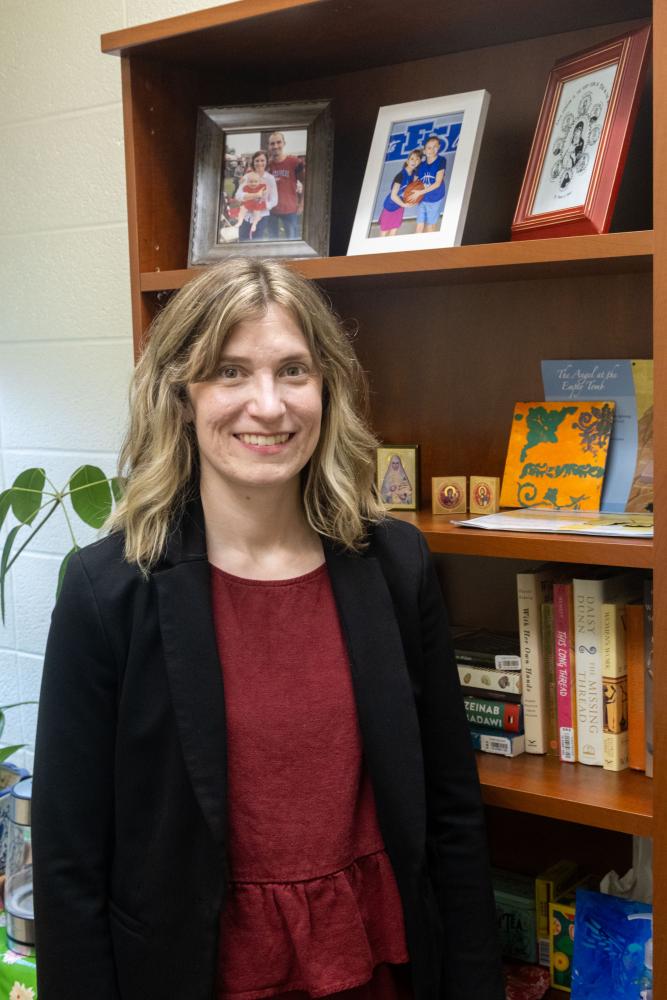
She said that growing up as part of the Church of Christ, saints of any gender weren’t part of that religious expression of the church. Once she came to WKU in 2006 as a junior double-majoring in history and religious studies, the lack of women in her studies made her curious to find out women’s role in religion.
“Where are the women?” Reetzke said. “They were there, so why aren’t we reading about them?”
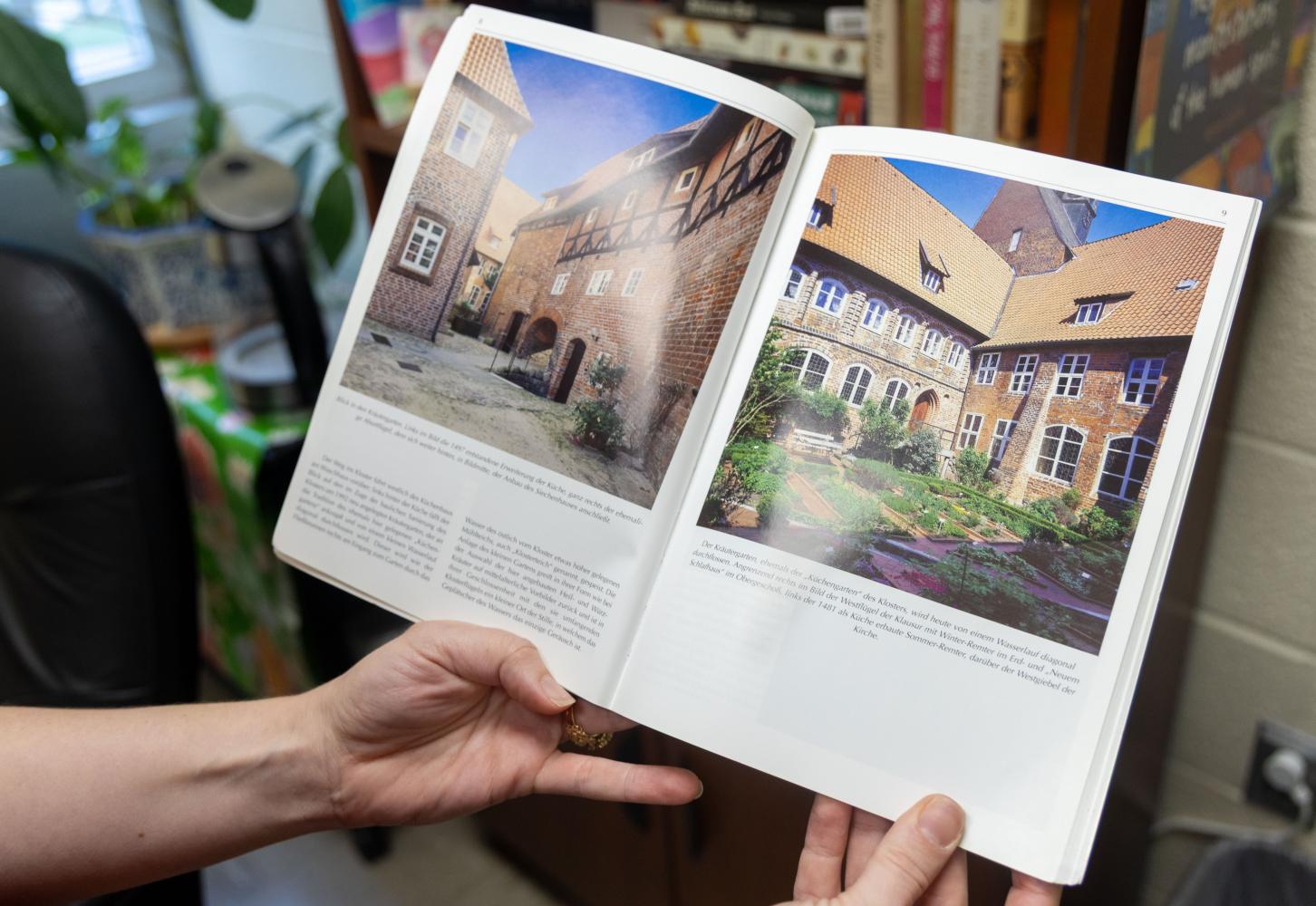
After graduating in 2008, Reetzke said she applied for a graduate assistantship in the history department, pursuing a thesis track within her master’s program. As a part of her track, she said she was required to study a foreign language, eventually landing on German.
Through an independent study with former history professor and her faculty mentor Beth Plummer, she said she learned about the world of female monasticism in Germany. She said that this eventually became part of her graduate thesis.
While studying German at WKU, she said she was invited by retired professor Laura McGee to become a graduate assistant on study abroad trips in the summers of 2009 and 2010. She said she was able to write her thesis while doing research in Germany, visiting archives in various cities and participating in an intensive German language program in Leipzig.
“It was a lot of studying and a lot of putting myself in social situations where I was speaking a foreign language,” Reetzke said.
She said she had no previous knowledge of German before picking it up for her master’s. This caused her to not just quickly learn conversational German for her trip.
Throughout her time in Germany, Reetzke immersed herself in the language through couchsurfing, where she was able to stay with people welcoming to foreigners. She said that while doing so, she was able to practice German with the people she stayed with.
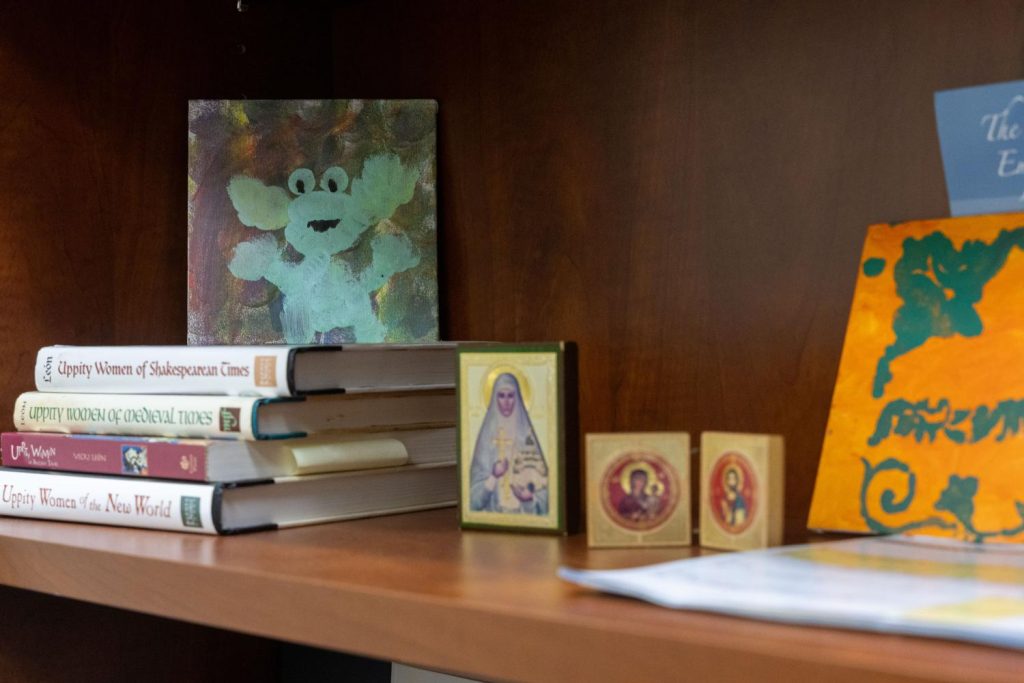
“Meeting up with other groups throughout surfing probably kind of buoyed my ability to practice, whereas if I was in a hostel or a hotel by myself, I wouldn’t have necessarily had those kind of social experiences,” Reetzke said.
She said she recalled an experience taking a connecting train to Hanover, where she befriended an older German woman after falling asleep waiting for her train.
“She couldn’t believe that I was from America and that Americans want to learn German,” Reetzke said. “When we got to Hanover, she [said], let’s put your baggage in storage, and I’ll take you around the city.”
Reetzke said she walked around Hanover for two hours, visiting tourist spots and getting to know the woman while trying to converse in a language she was unfamiliar with.
“There were certainly times in the conversation where I didn’t know what she was saying, she didn’t know what I was saying, but she never made me feel bad about that,” Reetzke said. “I think it helped me to have confidence to [think], I can speak to somebody who’s lived there their whole life, and the people here are nice.”
While forced to become familiar with conversational German on her trip, Reetzke also had to learn to read 15th-century German texts.
“My German friends that I met there were like, ‘we don’t even read that, what are you doing?’” Reetzke said. “Well, I have this dictionary, and I’m doing my best.”
She said she was the first person from the history department to graduate having translated her own sources for her thesis.
But Reetzke said she didn’t just use archival sources for her thesis on the development of Protestant nuns in Germany. While studying abroad for the second summer, Reetzke interviewed Sister Inge, an 86-year-old nun part of a currently active group of Protestant nuns.
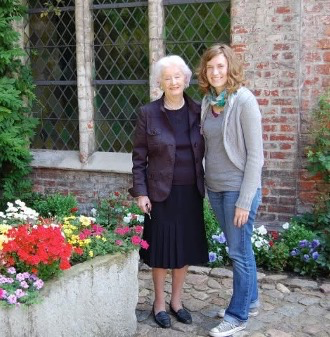
She said she even opened her thesis with a quote from Sister Inge: “We’re nuns, but we’re not nuns,” since they aren’t Catholic or necessarily celibate.
Interviewing her and studying the history of her covenant allowed Reetzke to know that women had power in religion, especially since the connotation for their lives is “restrictive.” Reetzke said that the nuns defied male Lutheran pastors attempting to convert them and force them to be married.
“Finding a space in which might seem restrictive, but actually provided more freedoms for women who fought against the kind of growing social norms…that was very refreshing,” Reetzke said.
After returning to the United States and graduating in 2011, Reetzke was asked to come back to WKU as an adjunct professor by former department head and current history professor Robert Dietel. She was officially hired as a full-time professor four years ago.
“Heading off to a foreign country with a language you’re not fully in command of takes a lot of gumption and some courage,” Dietel said. “The fact that she was curious enough, interested enough to do that is a testament to her, her willingness to follow her interests and to take action.”
Reetzke said that she took away lessons about history and teaching from her experiences abroad, mainly to never underestimate what can be in the past.
“As historians, [we can’t] go in with the idea that things are always a certain way, or that peoples of the past were not as complex as we are,” Reetzke said. “I think that’s something that I’ve learned not to do based on kind of these questions that I was asking in my own research.”
She said that through her history classes, she tries to teach her students to get rid of previous perceptions of history and to immerse themselves in the past.
“I think we all have a lot more in common than we might think, and when we’re put into uncomfortable situations, the default doesn’t have to be defense,” Reetzke said. “It could be curiosity about others.”
Addison Guiley, a freshman communication sciences and disorders major from Eaton, Ohio, said that through her two classes with Reetzke, she’s been able to listen to an honest source who’s experienced what she teaches firsthand.
“I think she’s really opened my eyes to the things of the past, and she’s inspired me to learn more about history in the past, specifically women’s roles, and think a little harder,” Guiley said.
Guiley said that Reetzke is good at breaking down the stigmas that students usually come in with regarding women in history.
“I feel like she’s just a wealth of information,” Guiley said. “It’s just really cool to see her delve into these broad topics, but she knows so much about all the little specifics of everything.”
Moreover, she said that Reetzke shows intentionality and integrity behind her teachings, adding passion to her teaching and allowing her to be a “great teacher.”
“History can be written by several people … and she’s opening the perspective, broadening the horizon for students and just showing them that there’s more,” Guiley said. “It’s inspiring.”