

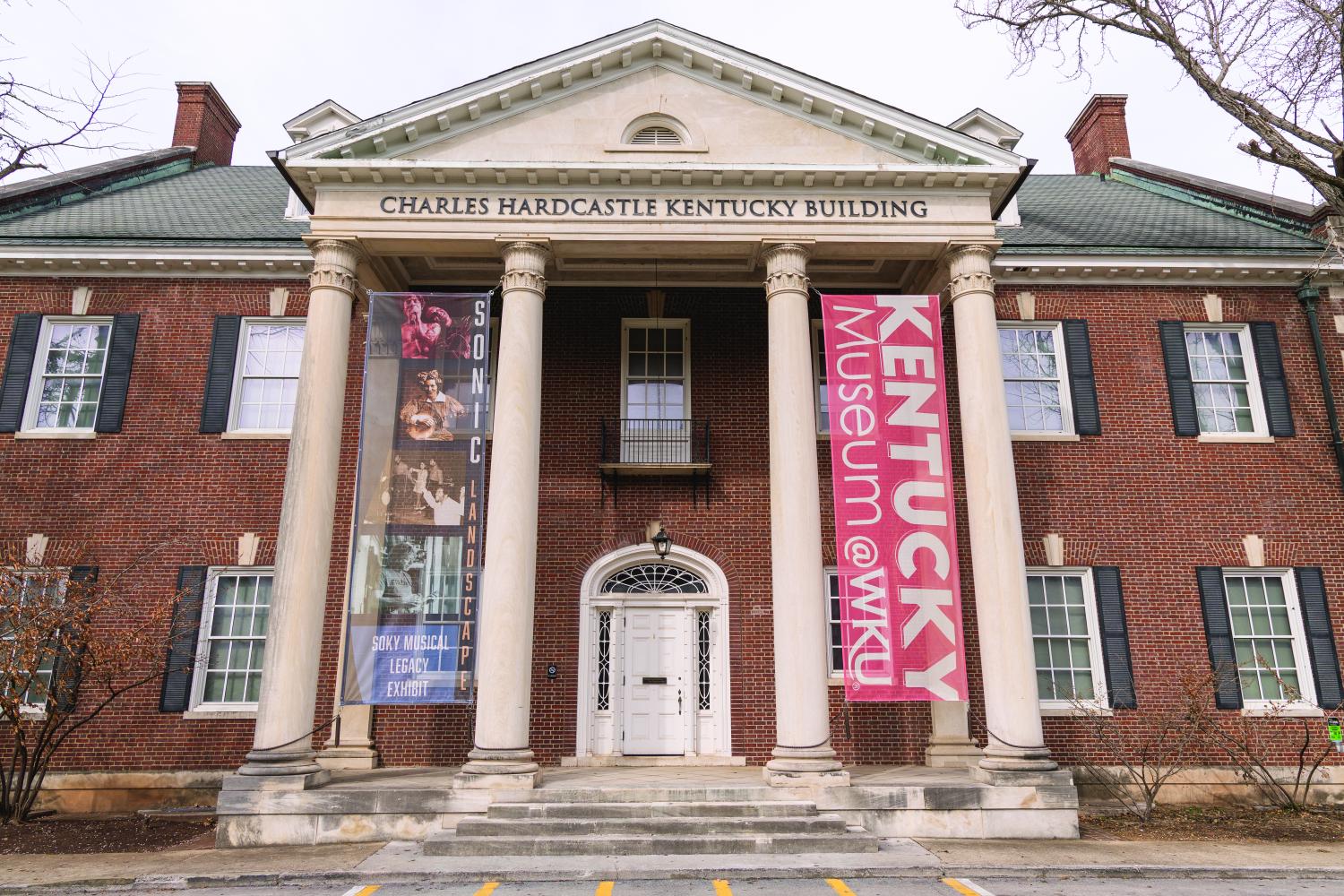

Preserving the past at the Kentucky Museum
Story by Hope Heffley
Photos by Nate Upchurch and Izzy Young
Design by Olena Makhnovets
Editor’s Note: This article was originally released in Issue 20 of the WKU Talisman print magazine. Click here to read more articles from the Talisman’s semesterly print.
In 1914, Gabrielle Robertson began teaching at WKU. Christy Spurlock, Kentucky Museum education curator, said Robertson realized later in her career that there was only one book about Kentucky in the school’s library. This realization led to decades of history and preservation work.
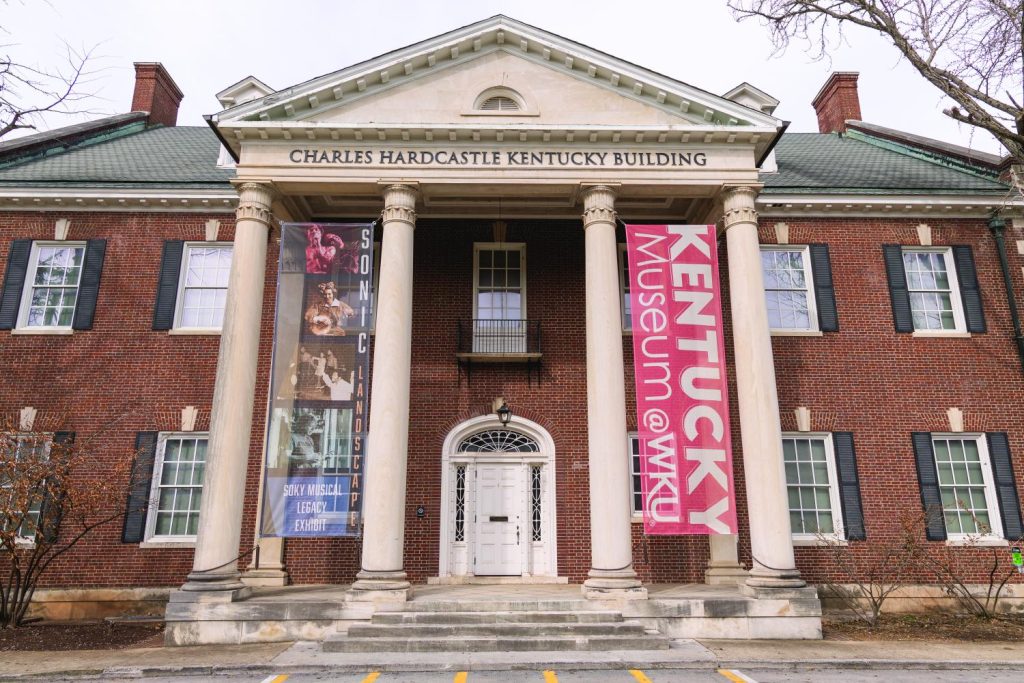
Spurlock said that Robertson’s efforts caught the attention of WKU’s founder, Henry Hardin Cherry, who began fundraising through the College Heights Foundation in 1928.
Brent Bjorkman, a WKU folklorist, became director of the Kentucky Museum in January 2015. He said that while the core of the museum’s mission is the same, to educate, there has been much evolution.
Bjorkman said one of the fundraising initiatives created was “The School Children’s Fund.”
“They used coin banks, and kids went around and collected money for this, and that was part of how in November of 1939 the building was completed,” Bjorkman said.
According to the WKU Alumni Association’s website, Cherry died in 1937, which was two years before the opening of what was initially called the Kentucky Library.
Mary T. Moore was the librarian hired to oversee the Kentuckiana collection. According to a booklet from special collections detailing the events of the opening day, Nov. 16, 1939, Moore spoke of Cherry’s dreams for the building.
According to the booklet, Moore said in her speech, “He wanted his people to know, to understand, and consequently to love their state and its history.”
Now, in 2026, 87 years after the Kentucky Museum opened, Bjorkman said it’s not only the building’s physical aspects that have changed.
According to the Kentucky Museum’s website, one of the museum’s most recent exhibits, “Sonic Landscape: The Musical Legacy of Southcentral Kentucky,” delves into the “insiders that keep the Southcentral Kentucky soundscape alive.”
The exhibit features more than 90 oral history interviews, several immersive scenes, a recording studio — and a collection of artifacts, such as Sam Bush’s first fiddle.
According to The Denver Folklore Center, Bush was born in Bowling Green in 1952. He gained national recognition as a teen fiddle competitor and, in 1970, joined the band Bluegrass Alliance, helping to develop the Newgrass music style.
“It’s nostalgic for me and him,” Bjorkman said. “His father, Charlie Bush, was from here and used to play the fiddle on their farm on the south side of town.”
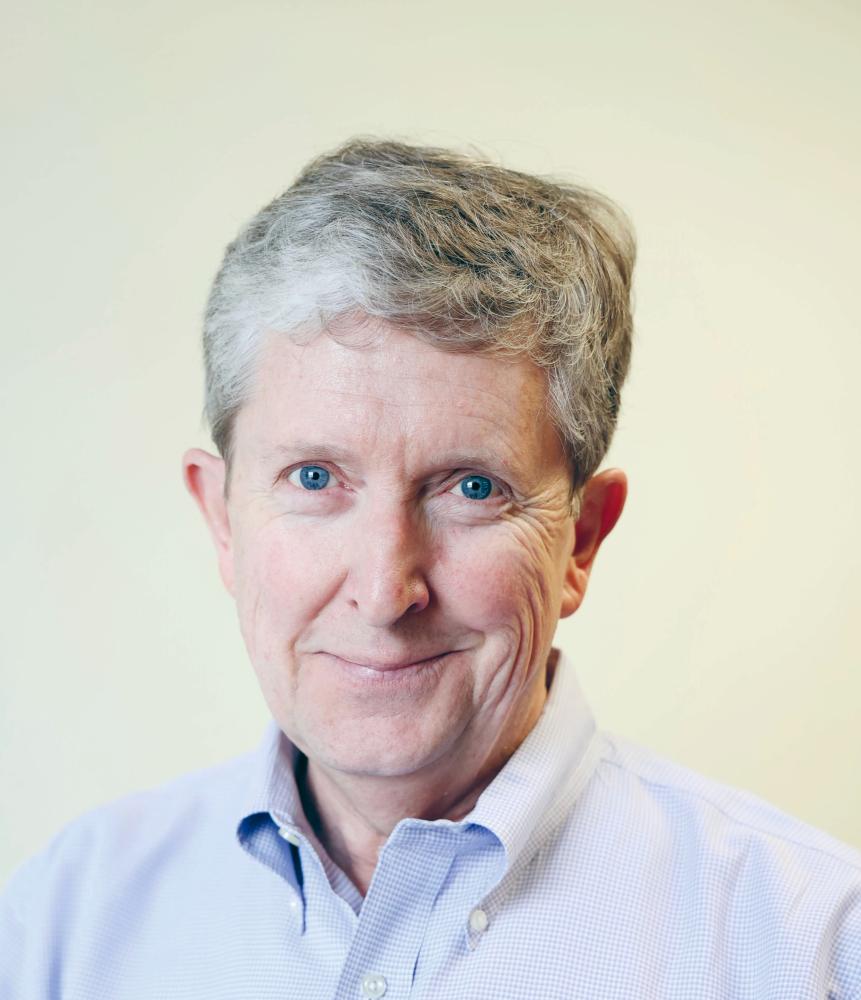
and WKU folklorist, said that many items in the
Kentucky Building resonate with him, including a
fiddle. (Photo by Izzy Young)
Bjorkman said this item is meaningful to him because Bush trusted him to leave it in their care.
According to Moore’s opening day speech, Cherry envisioned the museum as a way to honor Kentuckians. Bjorkman aims to amplify voices that have been overlooked.
“It’s a slow and very meaningful process that changes you, opens up your worldview,” Bjorkman said. “And by virtue of creating an exhibit, it opens up the worldview of others as well.”
When he first stepped into the role, Bjorkman said he saw the museum as a launching pad for community-based research projects that allow people to tell their stories.
“When I first came here, we did an exhaustive oral history interview with the Bosnian community here,” Bjorkman said. “That’s when I found that their story really hadn’t been told very well.”
Bjorkman said the museum reached out to many Bosnian youth for help with research on the community. He said the goal of the exhibit was to tell their story as they wanted it told.
“We talked about genocide,” Bjorkman said. “We talked about forced migration; we talked about resilience. It was all in the form of stories, but also weaving in the artifacts that they brought with them.”
He said the exhibit ran at the Kentucky Museum from 2017 to 2019. Bjorkman said the exhibit coincided with a program on campus at the time called “International Year Of.” According to WKU’s website, “International Year Of” is an initiative that highlights a different country each academic year.
“Each year for about five years, WKU would choose a country to concentrate on,” Bjorkman said.
Spurlock said the museum’s objective has changed significantly. She said they have shifted from honoring the “glorious history of Kentucky” to focusing on deeper dives into everyday people and diverse cultures.
She said this shift began in the 1960s, as cultural change and more accurate historical documentation led museums to move away from glorifying “individual Kentucky men”.
“Not to throw shade on our wonderful predecessors of the past, but when you look at the literature, it was very much a glorification of the ‘great man of history’ sort of thing,” Spurlock said.
Spurlock said this limited perspective influenced both which stories were told and their intended audience.
“Back then, it was serving a very narrow audience of the white students who went here and faculty and staff who were all very homogenous, really in a lot of ways,” Spurlock said.
Spurlock said that now, museum curators and directors consistently consider whose voices are missing when creating exhibits.
She said not only the themes but the target audience have changed. Historically, the museum primarily served Kentucky communities, especially K-12 groups.
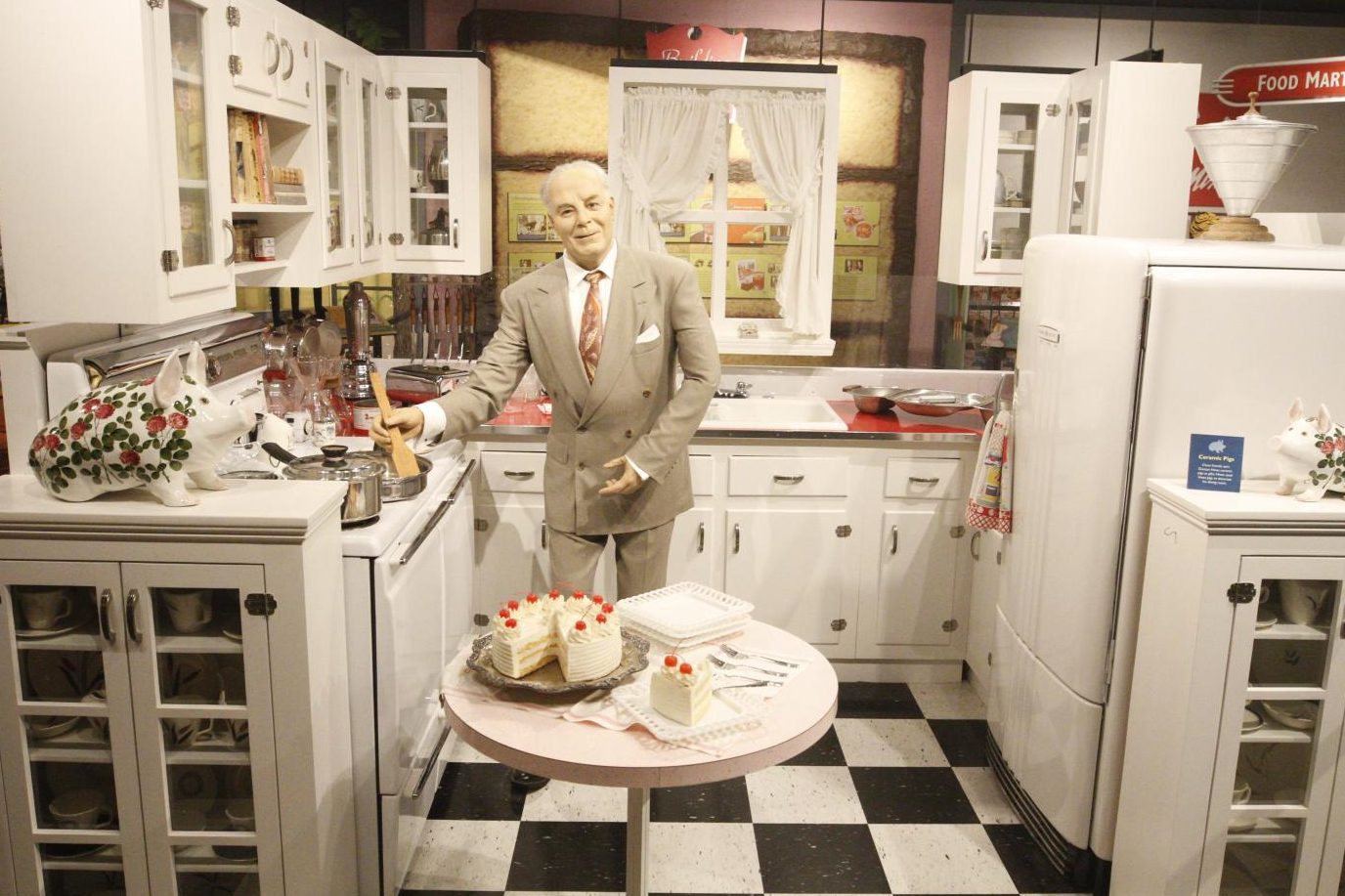
appear on the packaged cake boxes, according to the
information in the “Recommended by Duncan Hines”
exhibit on the Kentucky Museum’s first floor. (Photo by
Nate Upchurch)
However, Spurlock said that over the years, the museum turned its focus to WKU’s students and faculty.
Bjorkman said the museum houses both permanent and temporary exhibits. The Kentucky Museum has featured a diverse variety of historical moments, from recognizing the history of Jonesville to the story of famed baker Duncan Hines.
Spurlock said preservation and collection are central to that work.
“We say we have approximately 50,000 objects in the collection,” Spurlock said.
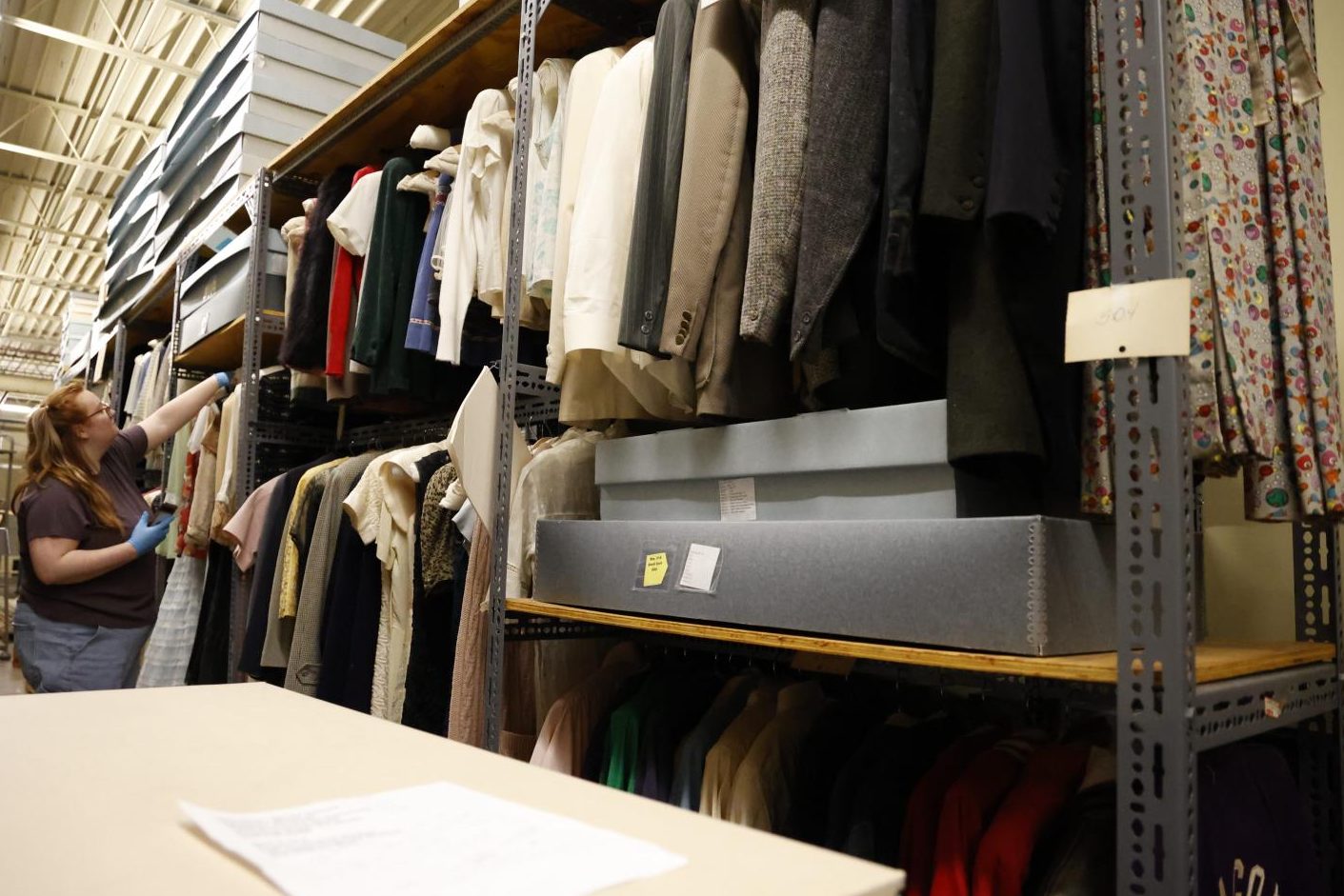
Bjorkman said artifacts are stored across campus. Some are in-house at the museum, restricted to staff access and others are housed in the Service and Supply building.
“You feel like you’ve walked into a national treasure,” Spurlock said. “It’s just insane.”
Bjorkman said that less than 10% of the museum’s collection is currently on display.
Beyond what’s publicly visible, Bjorkman said the museum’s holdings connect to a much wider archival ecosystem at WKU.
He said he would describe the museum and WKU Special Collections & University Archives as separate yet connected.
“Our collection is what I would call 3D and special collections,” Bjorkman said. “Our partner is 2D.”
He said Special Collections preserves diaries, letters and photographs, while the museum focuses on objects such as art, furniture and archaeological materials.
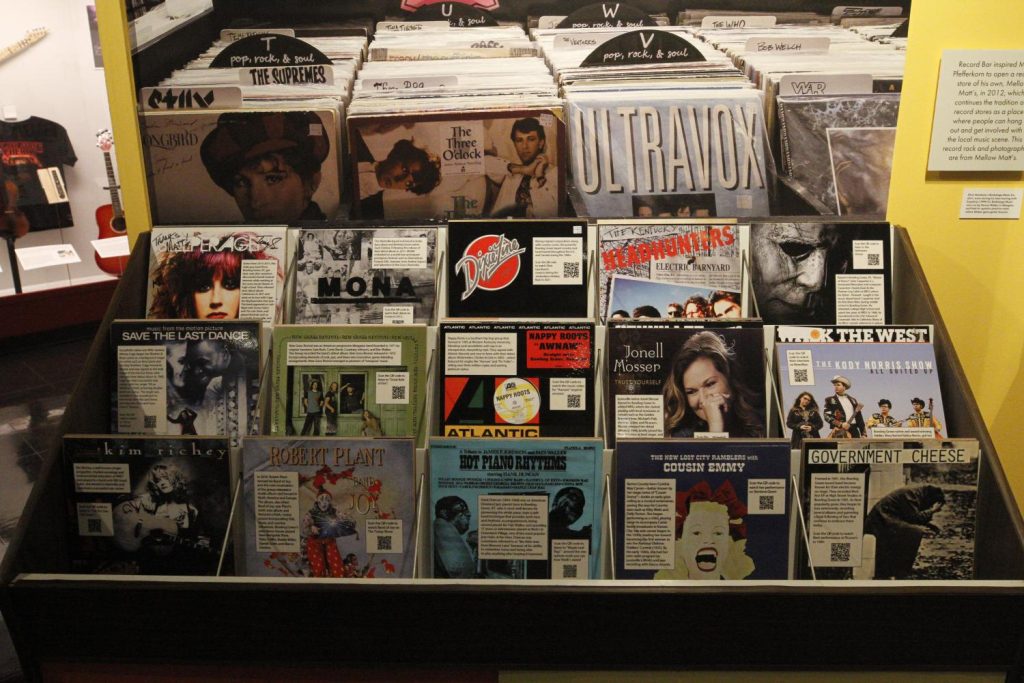
Nancy Richey, WKU’s special formats librarian, said she has been in the position since 2008.
“Being a librarian satisfies an innate curiosity,” Richey said. “Every day is Christmas; every day is something different.”
Richey said she got her love of learning from her father. She said her main memory of him is always him sitting in a chair with a book.
“He loved to learn, and it was like a disease that I caught,” Richey said.
Sebastian Themelis, university archivist, said he just began his role in February.
“It’s a huge responsibility to be an archivist, you’re basically in charge of stewarding and curating evidence that researchers and journalists will use to frame how they write about history,” Themelis said.
Themelis, who came into this position from Seattle, said that because he’s not from Kentucky, he has to handle the job with dedicated care and grace.
“You decide to take a certain thing away, then that’s no longer a part of the record; it disappears,” Themelis said.
Themelis said he has spent the last four weeks diving in and familiarizing himself with the collection.
“I found this scrapbook from 1926, and it’s this woman’s scrapbook,” Themelis said. “She was a student here, and it’s called ‘just a book,’ that’s what she wrote on the front of it.”
He said that with small, personal things like the scrapbook, you get a sense of what it felt like to be a student on campus.
Themelis said that even with the seemingly mundane things, “you can parse out some bigger insights.”
Spurlock said that one of the most popular exhibits in the museum has been their “Facing the Freshman Year” exhibit.
The exhibit is on the third floor and features student letters and photos from 2018. Spurlock said this project, which was started by Daniel Super, director of Kelly M. Burch Institute for Transformative Practices in Higher Education, aimed to represent the typical WKU freshman, what they struggled with, what they loved and everything in between.
“What’s always so interesting to me is that everyone’s freshman year experience is different,” Spurlock said. “My freshman year on this campus in 1980 is certainly different from the freshman experience in fall of 2018, and yet, I still find things that these students wrote that resonate with me, and I think resonate with all people who have ever been freshman.”
Richey said that through this collaborative work and documentation, the museum, collections and archives have an opportunity to be discovered.
“Special Collections is a place for original scholarship,” Richey said. “If you could really do some digging as a student, you could come up with some never-before-seen scholarship.
Among the recent acquisitions, Bjorkman said his favorite items would be a set of dining room chairs.
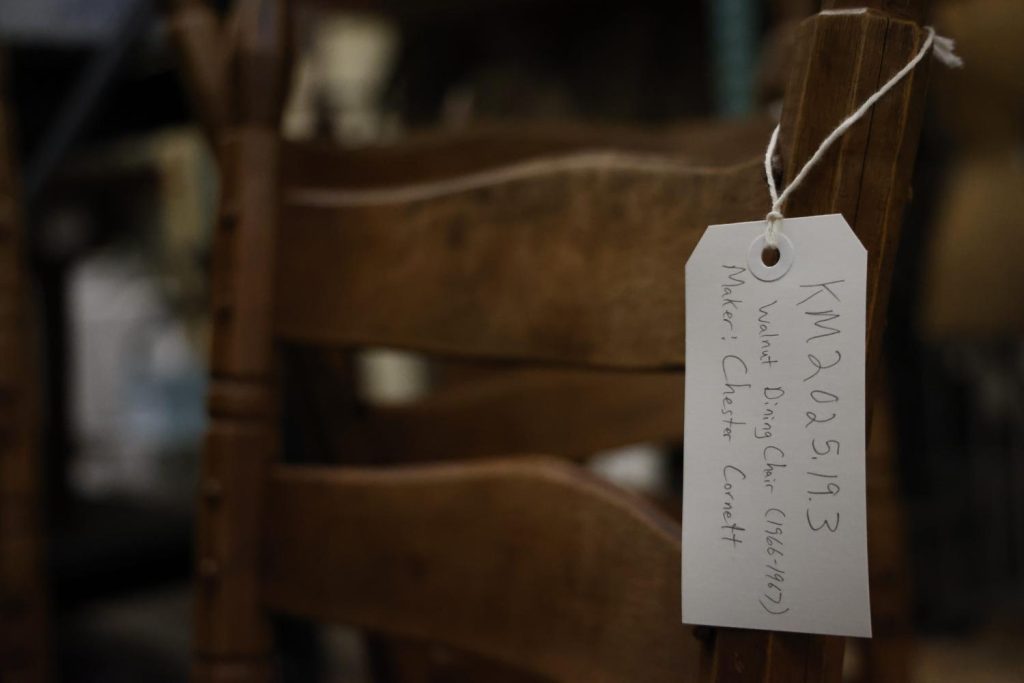
“[There are] hickory bottoms on them, made by eastern Kentucky chair maker Chester Cornett,” Bjorkman said. “Folk art has always been a big thing for me as a folklorist.”
Bjorkman said that because of this passion for folklore, he has an equal passion for handmade items.
“It was all by hand,” Bjorkman said. “There are some kinds of construction techniques that are universal for those kinds of chairs, but he puts different flourishes on them.”
Bjorkman said it’s not just the beauty of the craftsmanship, but also the connection the item carries.
“To know that’s going to be used by another person, to give something back to somebody’s life, that’s wonderful,” Bjorkman said.
Bjorkman said that whether it be someone’s first fiddle or dining room chairs, handmade items connect us to those who have made or used them.
Bjorkman said it reminds us “that we’re not alone and we’re part of something bigger.”
It’s a feeling Spurlock said is echoed through most of their items, especially in one of their largest categories, the toy collection.
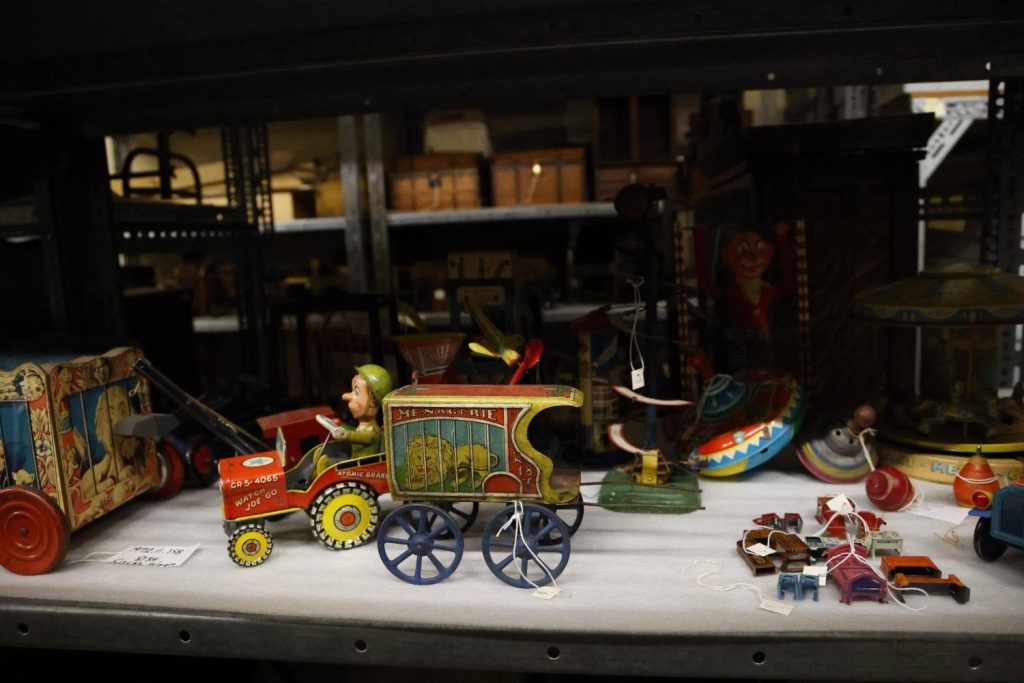
stored by the Kentucky Museum in the Service and Supply
Building. The toys feature themes such as the circus, “G.I. Joe”
and fair rides. (Photo by Izzy Young)
“One thing we have is a really cool toy collection,” Spurlock said. “All the way from Barbie and modern toys to some of the first toys.”
Spurlock said children’s toys are particularly fascinating because their physical changes over time are easy to observe. She said it shows you things like economic status, demographics and social classes within the toy’s time period.
Just as toys offer clues to the past, Richey said that other artifacts, like photographs, capture powerful details about social life and identity.
Richey said that one of her favorite things to sift through is the photographs. She said that there is something so unique that a photo can tell us about society. From the clothes to the ways different demographics are represented, Richey said there is much to be revealed.
“There’s a thing about the photograph that it goes directly to your heart, it skips your brain in some sense because it draws on your emotions,” Richey said.
That deep emotional pull is something that Spurlock said the museum strives to capture in its exhibits.
Spurlock said she recalls an exhibit called “A Seat at the Table,” which celebrated the anniversary of the 19th Amendment. The displays focused on representing different Kentucky women.
Spurlock said she had recruited some students to aid in the research for this exhibit.
“We were researching all of these women, some of them had a lot of documentation about their lives, and some of them did not,” Spurlock said. “I remember thinking, there are stories here to be told.”
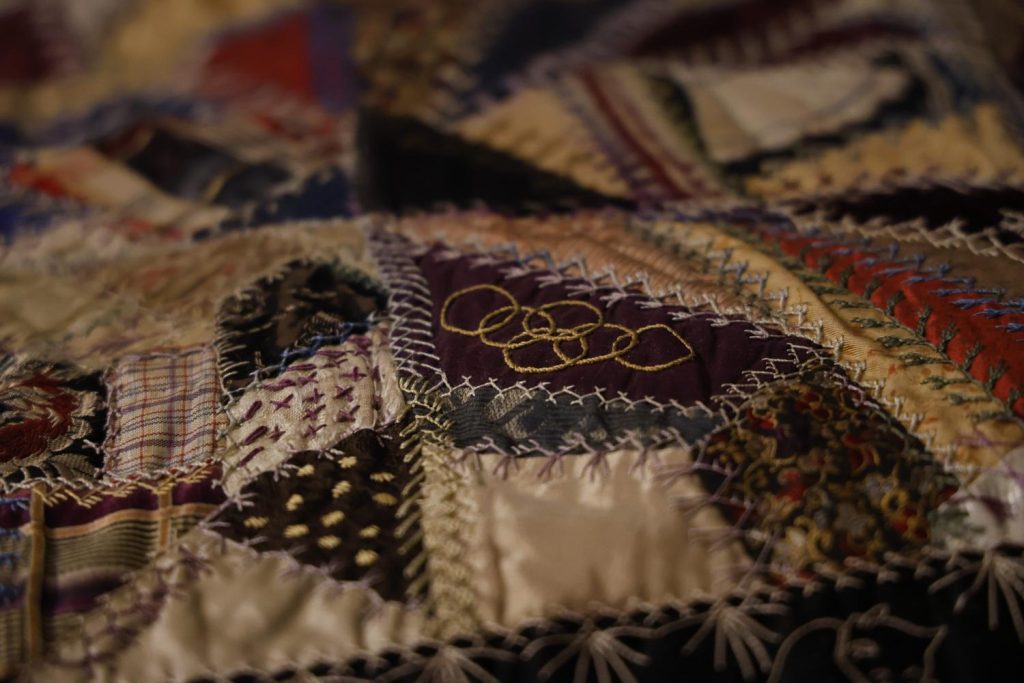
Spurlock said that the lack of respect for women’s history was clear not only in the documentation of their lives, but also in the early understanding of quilt-making.
She said that throughout its evolution, quilt-making has gained greater respect and recognition as an art form.
“They should be afforded the same respect as a painting or sculpture or any other type of medium,” Spurlock said. “They’re now given more respect for their craftsmanship or craftswomanship.”
Bjorkman said one piece that reflects that same appreciation for artistry in everyday design is a familiar favorite of his.
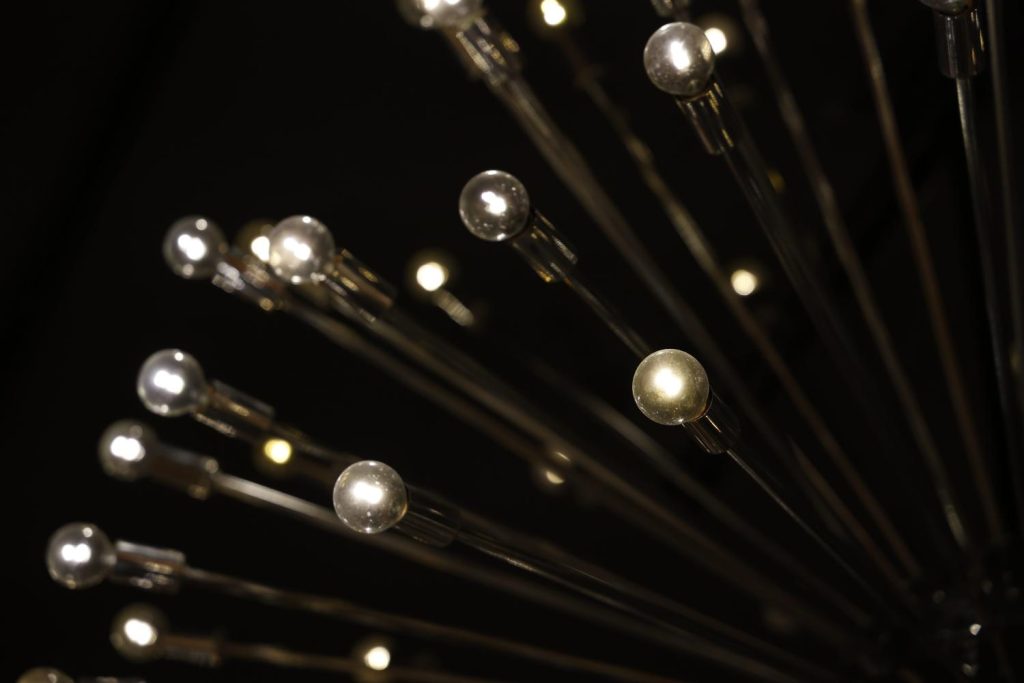
“Snell-Franklin Decorative Arts Gallery” exhibit in the Kentucky
Museum. More than 50 vintage furniture pieces are arranged
for museum visitors. (Photo by Izzy Young)
“There has been something that’s been up, and it’s an iconic piece in our decorative arts collection, the Sputnik light fixture,” Bjorkman said.
Bjorkman said this light fixture is inspired by the satellite Sputnik and that it embodies the history of the space race in the late 1950s.
He said the piece resonates with him because it was a memorable period of time in his life. He said he remembers being in kindergarten and watching the moon landing on an old videotape system. Bjorkman said items like this light fixture represent our collective story.
“Keepsakes that tell that really innate story about who you are, where is your place,” Bjorkman said. “To think about the public consciousness and things that are emblematic of the story that we all share.”
Spurlock said that most people don’t realize the amount of preparation and timing that goes into creating an exhibit.
“It’s this constant flow, and people are not aware of it, but we’re working on an exhibit that’s going to go up three years from now,” Spurlock said.
The museum curates its collection with pieces it has already procured and pieces it loans for the exhibit from other museums around the state.
Bjorkman said exhibition work is a collaborative process where all partners hope for success.
“I think that’s just human nature,” Bjorkman said. “If there’s a great project that seems like it’s from the heart, you want it to succeed.”
Bjorkman said ideas often begin with a specific piece or community interest, then expand to funding, items and physical space.
“The scheduling is long-term, finding the funding is part of that, but also finding the right partners that have the expertise to help you out,” Bjorkman said.
He said that while the exhibits are a cornerstone of the museum, they are not the only thing that represents the human story. He said programs like their annual “Abound Credit Union Art Show” represent what Kentucky is and the talent that we have here in our own backyard.
“I think it speaks to the creativity of the human spirit, but it also speaks to the creativity of this group of people who are in a 65-mile radius of the Kentucky Museum,” Bjorkman said.
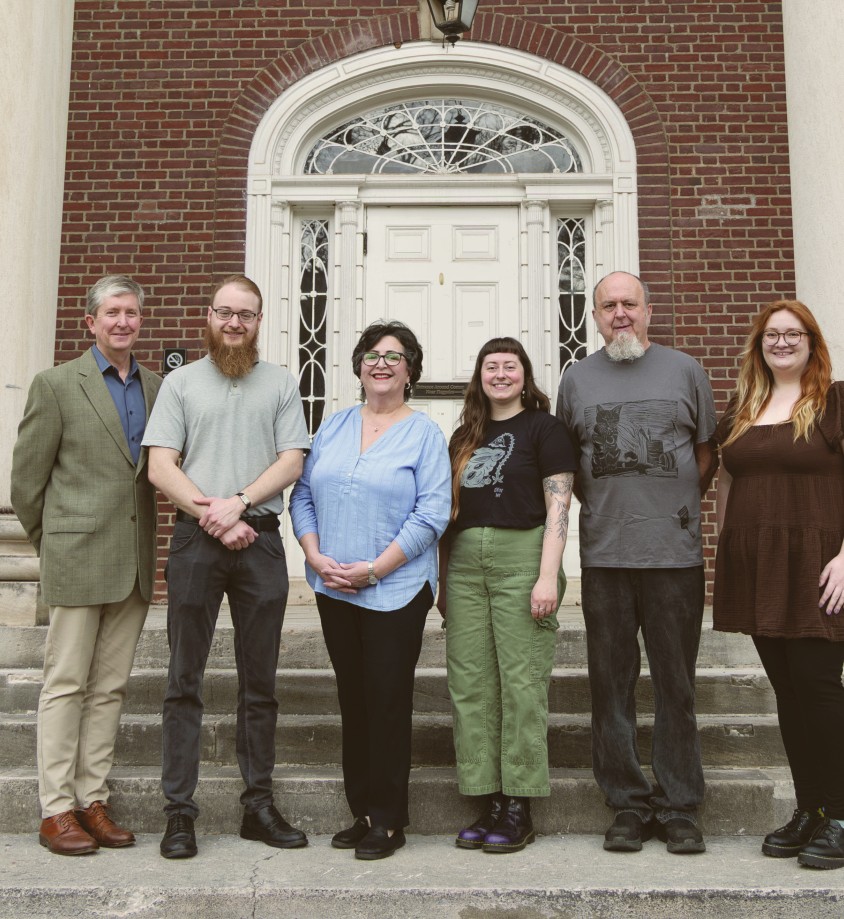
Bjorkman said the museum team and their partners spend significant time refining exhibit themes and visitor takeaways. He said this process often leads to ideas and discoveries they didn’t set out to look for, but that this is exactly the goal.
“We want to be lifelong learners, Bjorkman said. “I think that’s the best way to go through life.”