

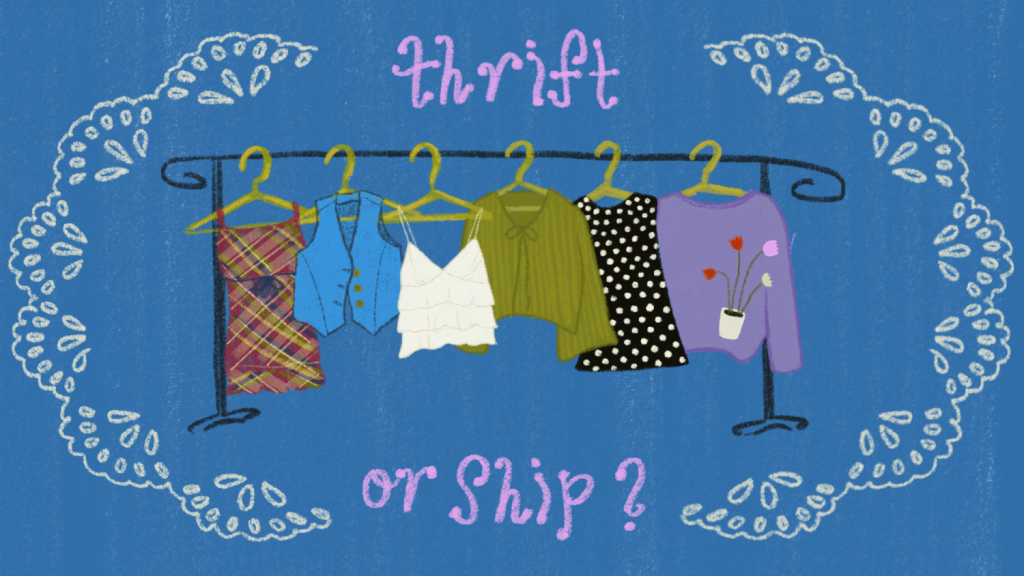
Thrifting, also known as buying items secondhand instead of brand new, according to Thrifters, has recently stepped into the limelight as a popular method of shopping.
According to ThredUp, it has become a trend, creating an exponentially growing market. According to Thrift World, thrifting as a movement has been around since the late 19th century. It was presented as a way to reuse clothes at a more affordable price for working-class families.
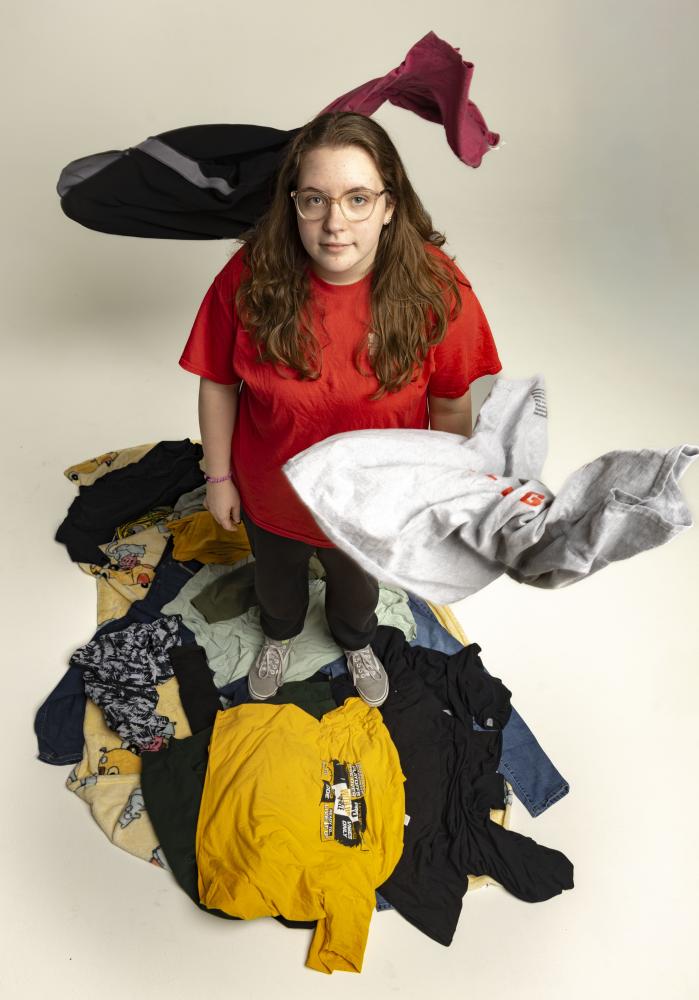
Morgan Jones, a junior graphic design major from Bowling Green, said that she has been thrifting due to its affordability.
“If I wanted a hoodie, it would be like $5 at Goodwill, but if I wanted to go somewhere like Urban Outfitters, it’s like $70 to $150,” Jones said.
Due to rises in popularity, it has caused an increase in need and price, according to the Daily Bruin.
“I kind of don’t like that it’s becoming so popular, it makes it harder for people that actually can’t afford it to get their pieces,” Jones said.
Fast fashion is a term that refers to clothing that is mass-produced quickly and cheaply to match current fashion trends, according to Earth.org.
According to Earth.org, fast fashion has been known to create significant environmental damage through the depletion of non-renewable resources. Thus, polluting the environment in its manufacturing process and furthering overconsumption, which leads to clothes ending up in landfills.
Fast fashion’s affordability also comes at a cost to the people making the clothes, being so cheap and made so quickly through financially and physically exploiting workers, according to Ethical Consumer.
Ashtyn VanHook, a senior psychology major from London, Kentucky, said that she has been buying fast fashion from brands like H&M since high school.
VanHook said that she thinks that many people buy fast fashion because of the cost.
“I’ve had overall negative experiences with fast fashion, but it is more difficult to [thrift] because being a college student, you can’t necessarily afford anything more than fast fashion,” VanHook said.
VanHook said that the fast fashion items she has bought haven’t lasted long, with clothes getting rips and tears after owning them for a short period of time.
However, VanHook said that ever since coming to Bowling Green, she has been fulfilling her goal of thrifting more.
“I realized that you can find better quality clothes and they can still be on the more affordable side,” VanHook said. “It’s just like a moral thing for me too. I really want to try to be better for the environment.”
Amber Brooks, a native of Bowling Green and owner of Becky Brooks Vintage located on Fountain Square Park, said that she has seen the thrifting community grow in Bowling Green over the past five years of having her shop open.
“Quality as a whole is better if you’re shopping local, you know,” Brooks said. “If you know where things are made or how they’re made, then it’s definitely going to last you longer.”
Beginning in the 1960s, according to Thrift World, thrifting became a way for people to expand their fashion horizons by finding unique, good-quality pieces not found in everyday stores.
Brooks said that she has been thrifting for the past 15 years. She said that she initially began thrifting because of the affordability. She said she has since used it as an opportunity to be more fashion-forward.
“It’s not like you can look at a rack and find four sizes of every item,” Brooks said. “You really have to find what works for your body and what works for your closet.”
Brooks said that even though sustainability isn’t her number one focus when thrifting, she feels like it’s a part of the package deal that comes with thrifting.
“It’s all a part of that circle of vintage, which is why I like it so much,” Brooks said. “Fast fashion, so much of it is what is marketed to a consumer. Whereas when you’re usually buying a vintage item, it’s because you love the piece itself and how it incorporates into your wardrobe.”
Jones said that she thinks pieces made during and before the 2000s were made with such time and intention, which is part of the appeal for her.
“I love it because the clothing that you get from [the thrift store] has lived a whole other life, and it’s kind of like continuing its story with other people,” Jones said. “It’s like reincarnation with a clothing item.”