


Bowling Green’s Burmese community holds true to tradition
Story by Annie Hutchins
Photos by Gabriel Milby and Bradi Hawkins
Design by Olena Makhnovets
Editor’s Note: This article was originally released in Issue 20 of the WKU Talisman print magazine. Click here to read more articles from the Talisman’s semesterly print.
The Burmese community of Bowling Green has grown quickly since it first formed in 2021. Ling Kee, president of the Burmese Community of Bowling Green, said the population has risen from approximately 2,000 Burmese people to between 5,000 and 6,000.
Kee said the Burmese culture includes several subgroups, or smaller groups, such as Chin, Karen and Zomi.
“We all have our different traditions,” Kee said. “Chin has their own, and Karen has their own, but we are all Burmese.”
Kee, who moved from Mindat, Chin, Myanmar, to Bowling Green in 2019, said Americans who might not be educated on the different languages and cultures that Burmese people follow may be confused.
“It’s hard to explain,” Kee said. “They think we all speak the same language, but we have a lot of different ones and cultures to go along with them.”
Cing Siang, who moved from Yangon, Myanmar, to Bowling Green in 2019, said Burmese people speak many languages but use Burmese as a shared language to communicate between subgroups.
“It’s different because we grew up in the village,” Siang said. ”Small city and big city mean different languages; Zomi language and Mindat languages are national languages, and not everybody understands them.”
While many Burmese people speak the Burmese common language, as well as national languages like Zomi, Mindat or English, Siang said that those who grow up in America typically do not understand Burmese.
“We can use the Burmese language and a lot of people understand, but we can speak Burmese language only because we grew up there,” Siang said. “The Burmese people who grow up here will understand the national language instead of Burmese.”
Moses Lian is an English as a second language teacher from Chin State, Myanmar. Lian said he believes the greatest struggle for Burmese people is the language barrier.
“When you don’t speak the English language, it is hard to articulate yourself, and that leads to a decrease in confidence,” Lian said. “But a lot of us are highly educated, and a lot of us have leadership skills.”
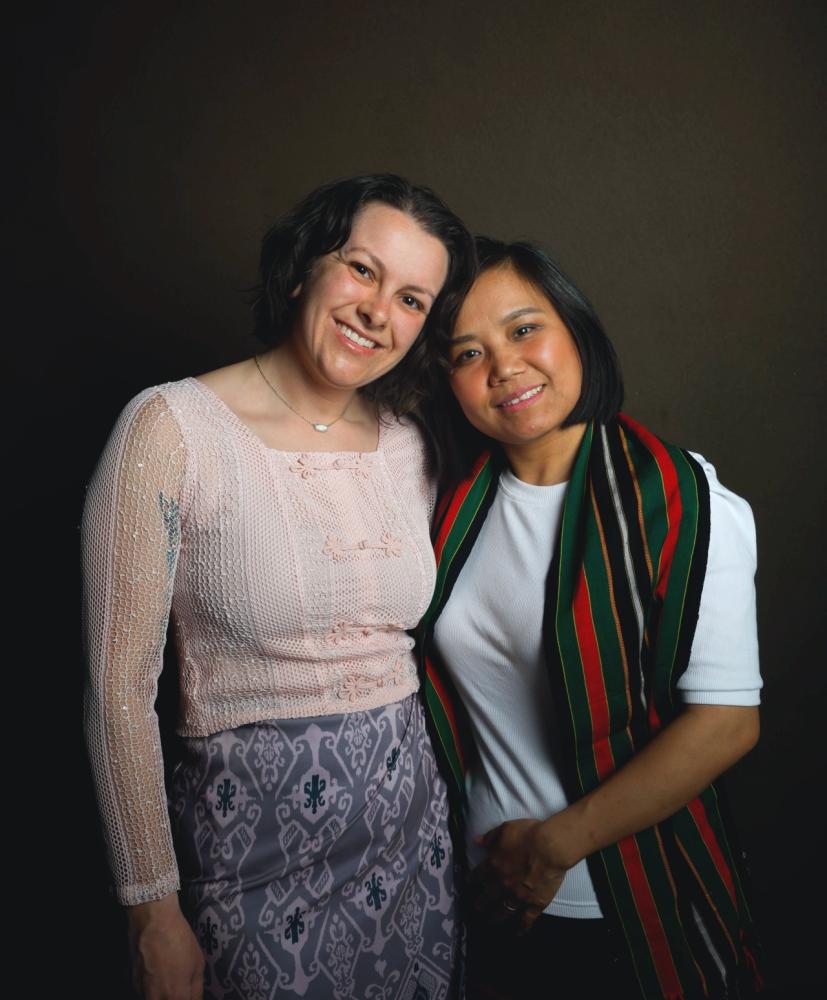
dresses called “htamein.” Thompson said she helped Siang with the
probate after Siang’s husband died. Siang bought Thompson
traditional Burmese clothing in return. (Photo by Gabriel Milby)
Krystalin Thompson, an American and Siang’s neighbor from Madisonville, Kentucky, said she tries to understand Siang’s culture as much as possible to communicate with her.
“I just try my best and communicate with them using very simple vocabulary,” Thompson said. “I’ve found the Burmese community to be very accepting.”
Siang said one way she learns to speak English is through something everybody can use, such as music.
“I learn to speak more foreignly, and that’s why I listen to more English music,” Siang said.
Music isn’t only used as a learning tool; as Kee said, it plays a significant role in Burmese culture as a source of pleasure.
“The Burmese people love it,” Kee said. “We really like music.”
Kee said he and other English-proficient Burmese people try to help contribute to the community by providing interpretation.
“I’ve been helping people out when we go to clinics, hospitals or workplaces,” Kee said.
Lian said that the need for interpretation is growing because the Burmese community is growing too. He said the reason for this is that many Burmese people traveled to America after the military seized power through a coup in 2021.
Kee said he’d like people to know that while he is grateful for the ability to express his culture freely in America, he, and most of the rest of the Burmese community, are not here by choice.
“We are here because of the military force back in our country,” Kee said. “We are so grateful to the USA for accepting us; we try to contribute and give back where we can.”
While language helps keep their culture alive, Burmese traditions also live on through dishes and clothing. Siang said the traditional clothing the Burmese people wear consists of many colorful dresses and skirts.
“We have a lot of color,” Siang said. “Not every day; only when we go to traditional celebrations, parties and weddings.”
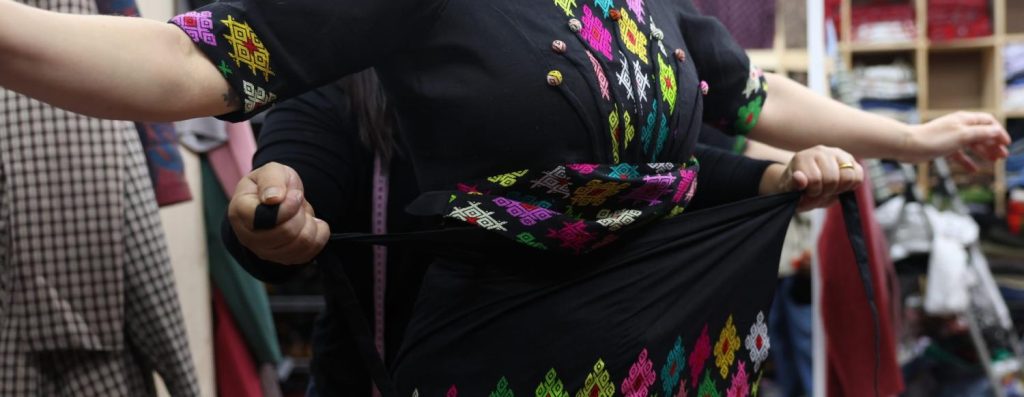
Thompson said she was surprised by how form-fitting Siang wanted her clothing to be when they visited a Burmese clothing shop together.
“It’s very different, like literally skin tight,” Thompson said. “Specifically tailored to you.”
As vividly as clothing expresses identity, Siang said her culture’s food still carries just as much importance. She said that in her home country, they have a lot of okra, corn, fish, ladyfinger, sunflower seeds and noodles.
“In our country, we have farms,” Siang said. “I love my culture’s food.”
Siang said that the thing she misses the most about her home country is the easy access to food through the fresh market.
“In my neighborhood, I could go buy food anytime,” Siang said. “Everything was fresh; I miss that.”
Lian said the food practices are what bring him the most nostalgia, as he loved looking after his herd of cows.
“I had a small-town countryside life without technology,” Lian said. “That’s what I miss the most.”
The Burmese people also bring many dishes to festivals, parties and funerals. Siang said when her husband passed away in December of 2025, the Burmese community was generous and quick to support her.
“Some bring sunflowers, some bring food, some bring money,” Siang said. “The community together helps.”
Thompson said she witnessed the Burmese community’s support firsthand. She said that for seven days after Siang’s husband passed away, there were more than 50 Burmese visitors in her house nightly, giving her gifts.
“We had to push all the furniture to the walls,” Thompson said. “Everyone brought money. If they didn’t have money, they brought sunflower seeds.”
Kee said the Burmese community tries to support both their homeland and each other. Thompson said if anyone is ever in a Burmese house, the owner will always offer them something.
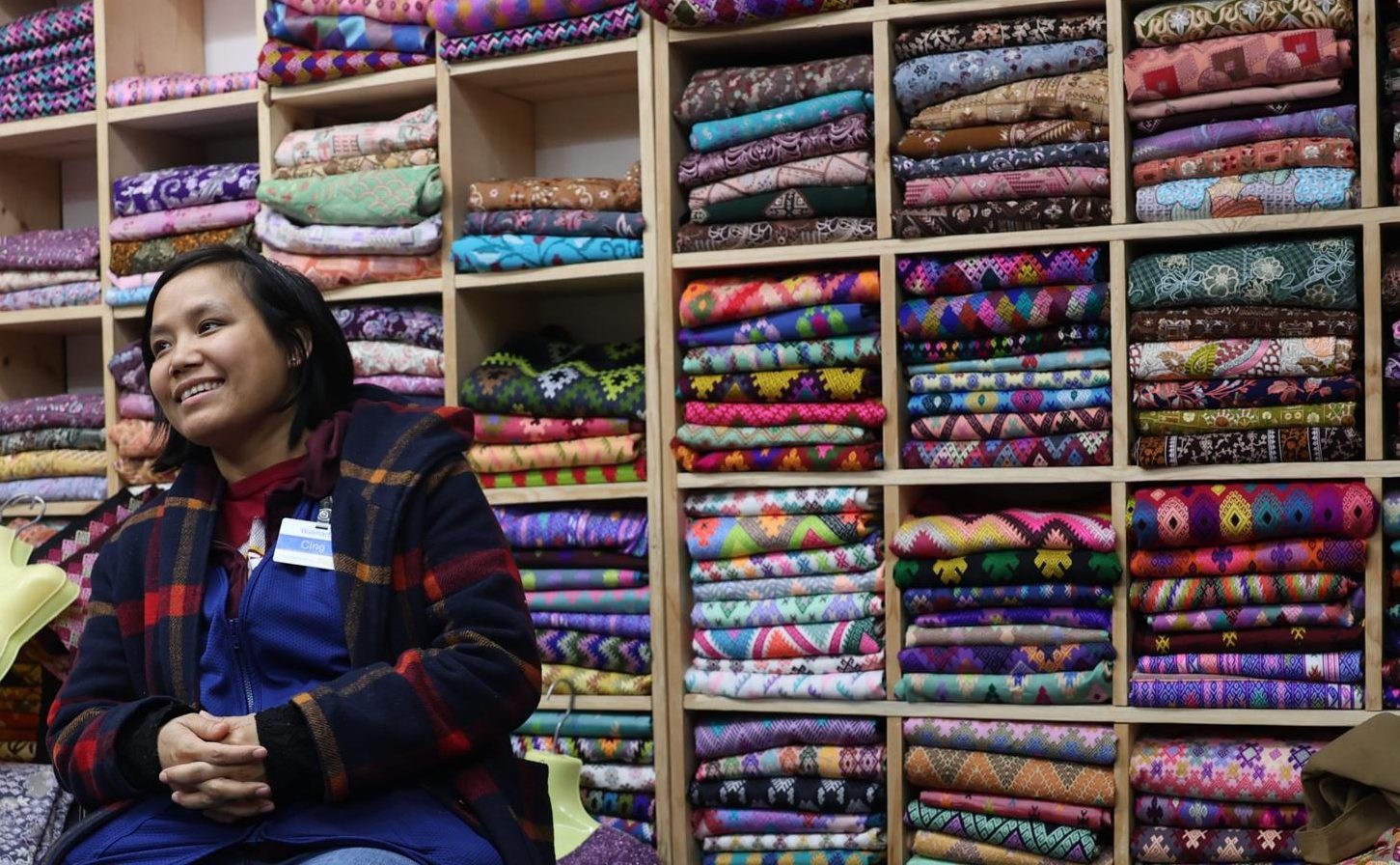
clothing on Feb. 7 in Bowling Green. Siang said she bought Thompson
clothes as a thank-you gift. (Photo by Bradi Hawkins)
“That’s how it is, always, in Burmese culture,” Thompson said. ”You give any little bit you can. It’s just what you do as a Burmese person.”
Lian said the community participating and coming together also helps pass down their culture to the children.
“It says this is our identity,” Lian said. “It tells the younger generations.”
Siang said Burmese communities celebrate many holidays, including their national days and the Water Festival, held in mid-April, to celebrate the new year.
“We wash away the previous year by splashing water,” Siang said. “It’s very happy.”
While most people in Myanmar are Buddhist, Kee said that 70% to 85% of Burmese people in Bowling Green are Christian. Siang said she considers herself a Catholic Christian and practices her religion through church and listening to worship music.
“Our national people, our Zomi people, are all Catholic Christians,” Siang said.
Siang also said honesty is an important value in their community and religion, and Americans sometimes aren’t as comfortable being vulnerable with each other.
“If you have no money, you say ‘No money, I’m broke,’” Siang said. ”We can say things like this simply. People who grew up in America are not like that. Some are quiet.”
Siang also said it’s a struggle to keep her culture alive while raising her children in America, where she has to work and only has time to teach them two languages. Due to only being able to teach them English and one cultural language, she chose Zomi.
“My children can speak Zomi language because my mom and dad were Zomi,” Siang said. “They don’t understand Burmese common language; they don’t have a need for it.”
Kee said he has seen more Burmese-American children lose or never learn their cultural languages.
“All the parents are worried about the language because our kids here are studying, and then they don’t really speak our language,” Kee said. “And we want to preserve our language.”
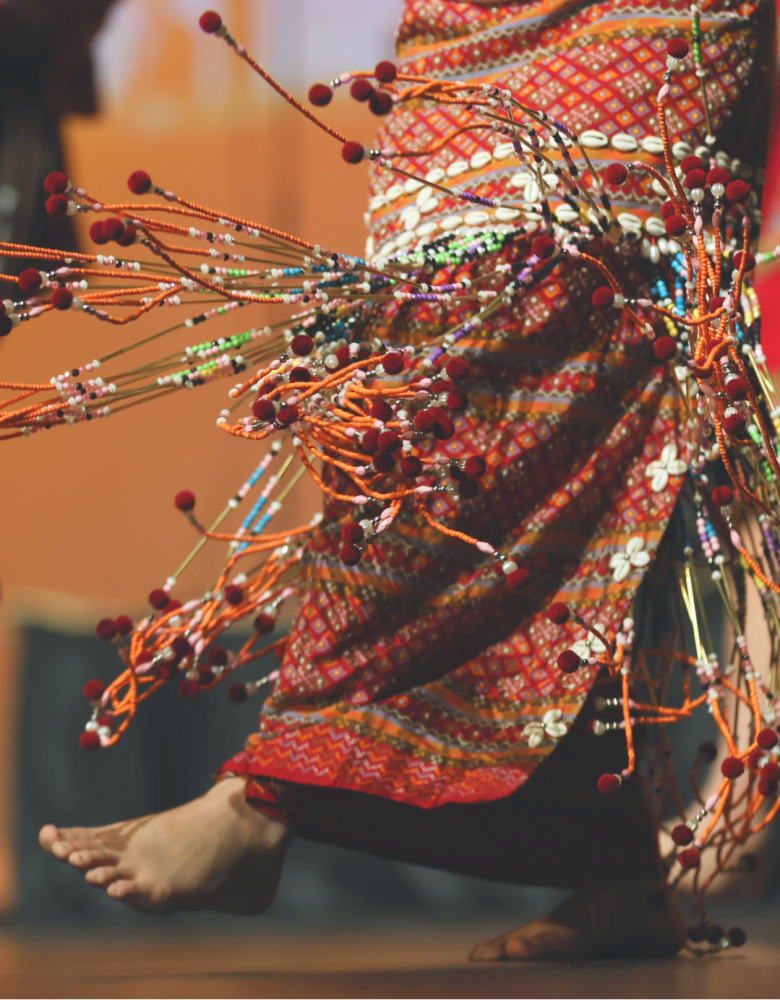
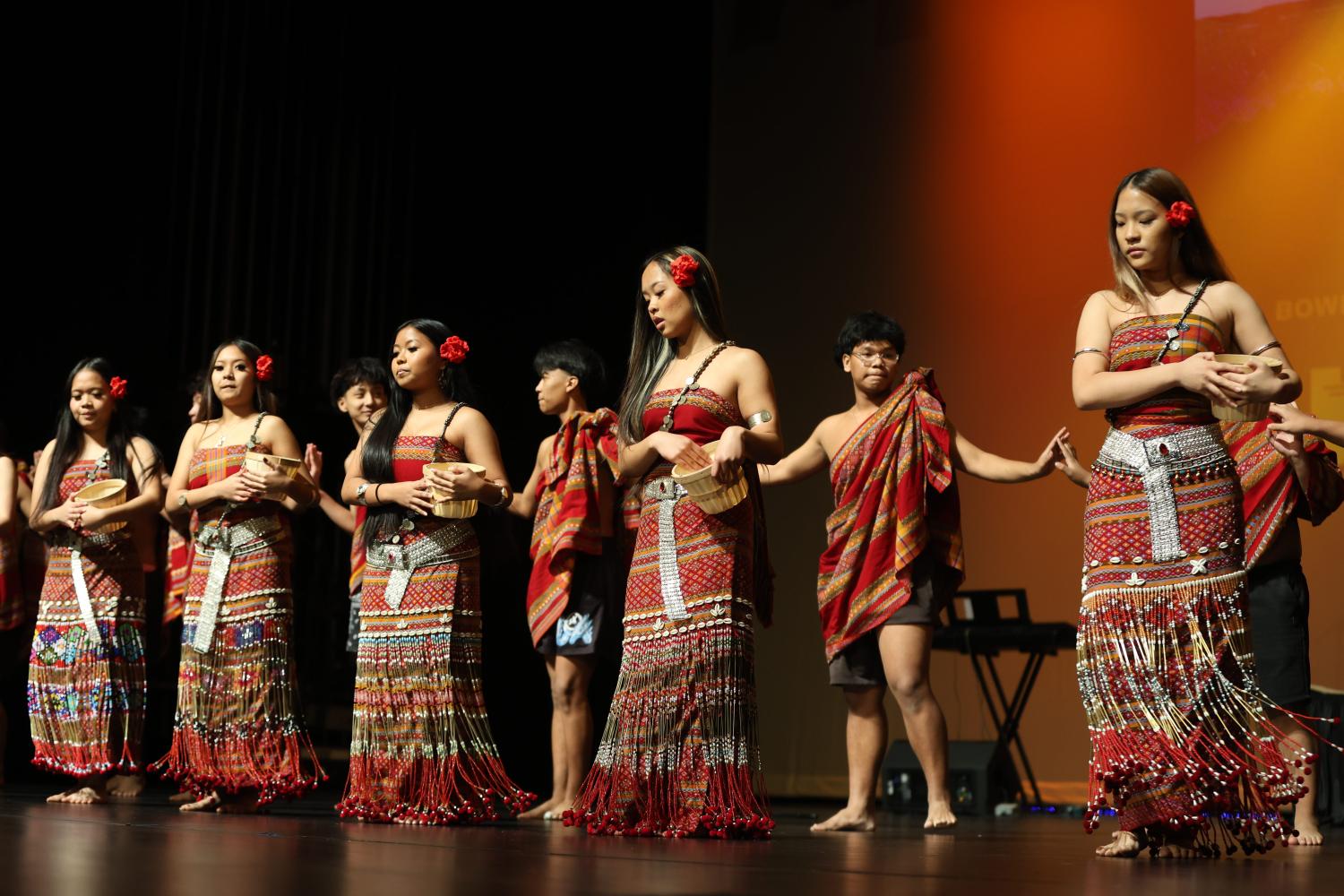
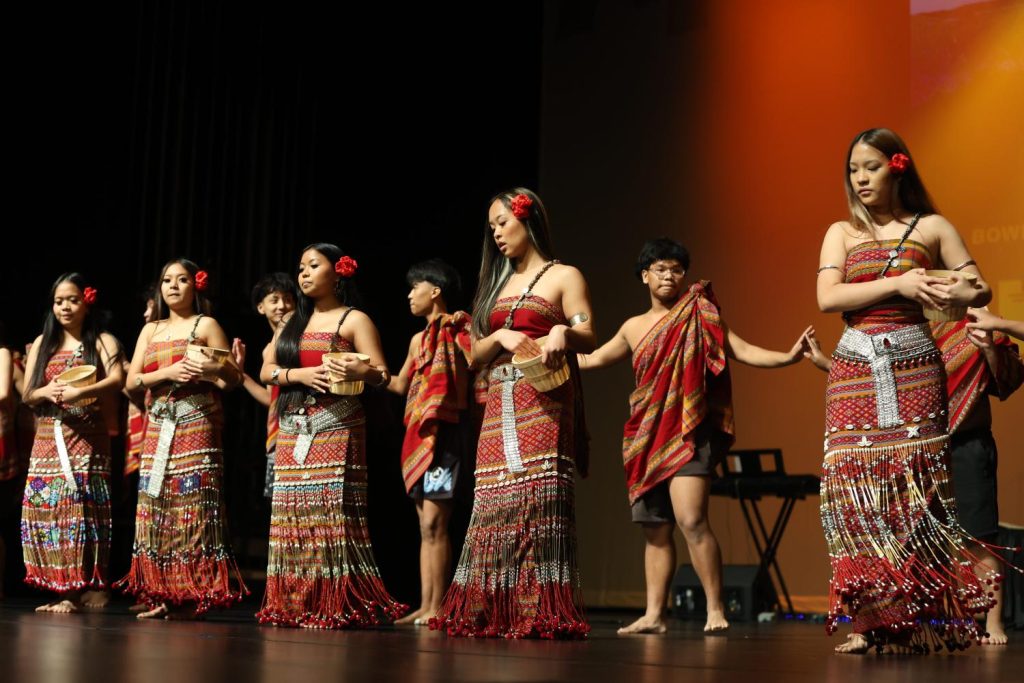
Youth Organization of Kentucky perform traditional Chin dances
at the 78th Chin National Day at Van Meter Hall on Saturday,
Feb. 21, 2026. According to the Myanmar Travel site, traditional
clothing for Chin women is ankle-length skirts called “htameini,” a
“longyi” tube skirt that is colorful and filled with patterns. (Photo
by Bradi Hawkins)
Siang said she doesn’t understand why Burmese children aren’t interested in learning their language, and believes people should express their culture without restraint.
“I don’t understand that, y’know?” Siang said. “Don’t be shy when sharing your language; there is no need.”
Even with the growing assimilation into American culture, Siang said her original culture is still important to her. Thompson said she thinks heritage is important, especially in a supportive environment such as the Burmese community.
“They take care of each other,” Thompson said. “It’s very special to me.”
Lian said he is very proud of who he is and is grateful to be a member of the Burmese community. He would like to see more people try to build genuine relationships with the Burmese people.
“I hope people take the time to learn about our stories; I want people to have a meal with us,” Lian said. “We are not cunning people, and in order to understand us, you have to connect with us.”
Siang said she values her culture and considers it a part of her.
“I love our culture,” Siang said. “I love our Burmese people.”