



WKU explores new tech frontier
Story by Abigail Vickers
Photos by Carlee Hite
Design by Breanna Burba
Editor’s Note: This article was originally released in Issue 19 of the WKU Talisman print magazine. Click here to read more articles from the Talisman’s semesterly print.
Universities can benefit from making students more comfortable on campuses, Lindsey James, the University ID Card Administrator at Eastern Kentucky University (EKU) said. By having more services catered to students mobile devices, security and convenience can increase.
James said that EKU implemented digital Colonel Cards for students about two years ago. This allows students to add their campus IDs to their Apple or Android mobile wallets for free.

As an EKU employee, James said she enjoys having a mobile ID and uses it all the time. She also said that from what she’s seen on EKUís campus, students seem to prefer it to a physical ID.
James said EKU students can still purchase a physical card for $25. She said there are exceptions for a free physical card for those without phones or who have older phones incompatible with the systems used by the university in partnership with Transact Campus.
“I wish I would have had this as a student,” James said. “I wish it would have been an option.”
WKU has moved toward digitizing its campus experience, from providing Artificial Intelligence (AI) resources online to introducing Virtual Reality (VR) in the classroom. Executive Vice President for Strategy, Operations and Finance Susan Howarth said via email that when it comes to the possibility of WKU implementing mobile IDs, the specific long-term and short-term costs would depend on the implementation approach.
EKU isn’t the only university with mobile campus IDs in the state or country. Institutions like the University of Alabama (UA) and the University of Kentucky (UKY) have already taken steps toward digitizing the campus experience for students, staff and administration.
UA’s Action Card, or “ACT Card” can be added to mobile wallets, according to the university’s website. This can be used for Bama Cash, Dining Dollars, meal plans, building access, athletic events, university recreation centers, campus events and more.
Howarth said that WKU anticipates an overall annual increase in expenses for the university with the implementation of mobile IDs, meaning tuition and fees could potentially be raised.
“The primary consideration is the recurring expenses associated with maintaining the technology,” Howarth said. “We continue to assess both the overall cost and the most affordable path forward for implementation, including the potential grants, strategic partnerships or state incentives that could help offset these costs.”
Additionally, Howarth said that staffing considerations would need to be evaluated since the transition could require reallocating roles and responsibilities across departments. Since mobile IDs are unlikely to be an option for all users on campus who have older phones or no phone at all, Howarth said they would still need to support both physical and mobile credentials at different scales.
Howarth said the overall efficiency gains and losses would “only become clear over time” as the university adjusts to and fully integrates the option of mobile IDs.
UKY implemented mobile WildCards in 2023, functioning similarly to UA’s ACT Card. Students, staff and faculty can use their mobile ID without having to unlock their device using Face ID, according to UKY’s website.
Originally, UKY signed a “Card Systems Master Agreement” on Sept. 1, 2005, with Diebold Inc., a contract CBORD acquired in an acquisition from Diebold on July 1, 2005, according to the Addendum to the agreement. CBORD is now the “leading global provider” of integrated technology solutions used on campuses across the country.
The Investment Summary between CBORD and UKYís WildCard Program Manager states that the quote for the first year initial investment totaled $9,750 for 3,000 counts of the “CBORD Campus ID Mobile Wallet-HID Credential.” The summary states that each 1000 count of credentials costs a base price of $3,250.
The summary states that the Initial Investment Total “does not include shipping costs, sales tax, travel or daily living expenses.” It states that prices for certain goods may also be subject to adjustment if there are any “potential changes in government-imposed tariffs, duties, or other regulatory charges (ëTariffs’).”
UKY signed an Online Services Addendum, or “OS Addendum” to the Card Systems Master Agreement that went into effect in January 2020, according to the OS Addendum. The OS Addendum states that the parties executed a GET Platform Addendum, or “GET Addendum” on April 11, 2017.
GET Services is a web application hosted by CBORD that allows the company’s card system users to access account information, place orders, purchase or change meal plans, access ID card credentials and redeem deals from either a mobile phone or a full web browser, according the GET Addendum.
The document states that the GET Service “Feature Sets” can be chosen by the customer, like GET Funds and GET Food for mobile credential users and administration.
The GET Addendum states that the GET Funds website for users provides services that allow users to make deposits to an account, see plan balances, transaction history and report on lost cards. As for administration, the GET Addendum states that the GET Funds website provides access to management of site content, configuration, reporting and user administration.
The GET Addendum also states that the GET Food website provides services that allow users to view menus, place orders for pickup and delivery and pay for orders using a card account maintained in the university’s CBORD system. Administrators can manage menus on their webpage, configure and view orders.
The OS Addendum states, as part of the “Additional Terms for Commerce Services,” that the customer must agree to acquire and install any needed certified hardware to make the Commerce Service operational.
If WKU were to partner with a third-party company like Transact Campus or CBORD, Information and Technology Services (ITS) Assistant Vice President Jeppie Sumpter said that WKU already has the Near Field Communication (NFC) technology and systems in place to eventually transition to mobile credentials on campus.
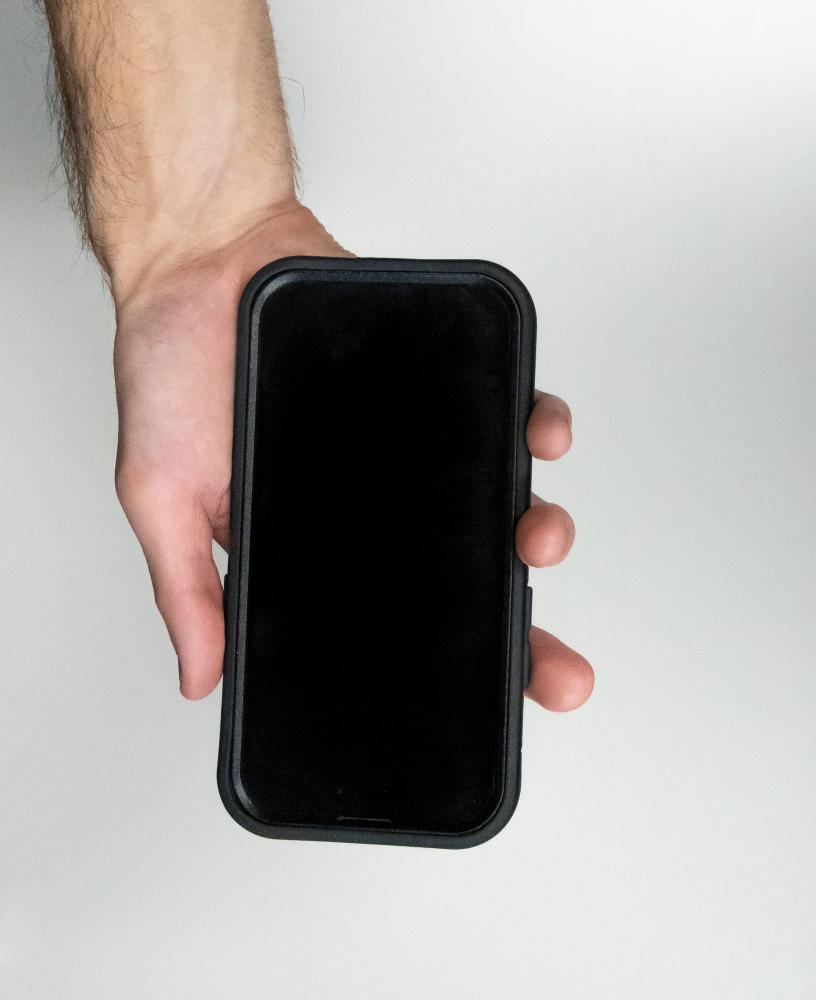
With WKU’s NFC technology, Sumpter said students can hold their phone up to a card reader and their mobile wallet should appear automatically.
However, without an agreement, mobile credentials canít be added to mobile wallets to access buildings or get food, Sumpter said. Students have to be put into the third-party system for their credentials to work.
Sumpter said there are pros and cons to mobile IDs.
For example, Sumpter said that while students can lose a card or a phone, they are probably going to care a lot more about that phone in other ways. He said the annual costs to keep the technology could still be a problem.
Sumpter said that these products have been in the industry for years, and some universities like EKU and UKY were early adopters of the technology.
Sumpter said a lot of those institutions went through hardships with the new technology. He said that over the past few years, products have gotten a lot smoother across Samsung and Apple technology, making it easier for WKU to smoothly implement the product when the university decides to.
Sumpter said that to put IDs in mobile wallets, WKU would have to sign an agreement with Apple and Android on top of the third-party agreement.
He said this agreement would include requirements surrounding the universityís infrastructure and what standards the university must meet for users to have access to their mobile credentials. Sumpter said the university has already done a lot of work to prepare for the possibility of signing an agreement regarding mobile credentials.
“I really see it largely as not a technical thing,” Sumpter said. “We’ve done a lot of prep work to be ready for it whenever that time comes.”
Internally in the department, Sumpter said that ITS has experimented with mobile credentials using apps with Bluetooth. While faculty members were able to use their phones to enter the ITS office, he said that this method wasnít very efficient.
While WKU is on its way to potentially getting mobile IDs, Sumpter said that AI already has a presence on campus.
Sumpter said a webpage was recently created on WKU’s website with AI resources, including a collection of articles, online courses, software programs and resources curated by WKU’s AI Community of Practice. According to the webpage, these resources aim to help educators ìleverage the benefitsî of generative AI in the classroom.
Public Relations (PR) Instructor Steve Momorella said he started utilizing VR in his PR classes about three years ago during a special topics course he taught on AI. The special topics course was broken up into three phases, but he said it ended up being more about VR and PR.
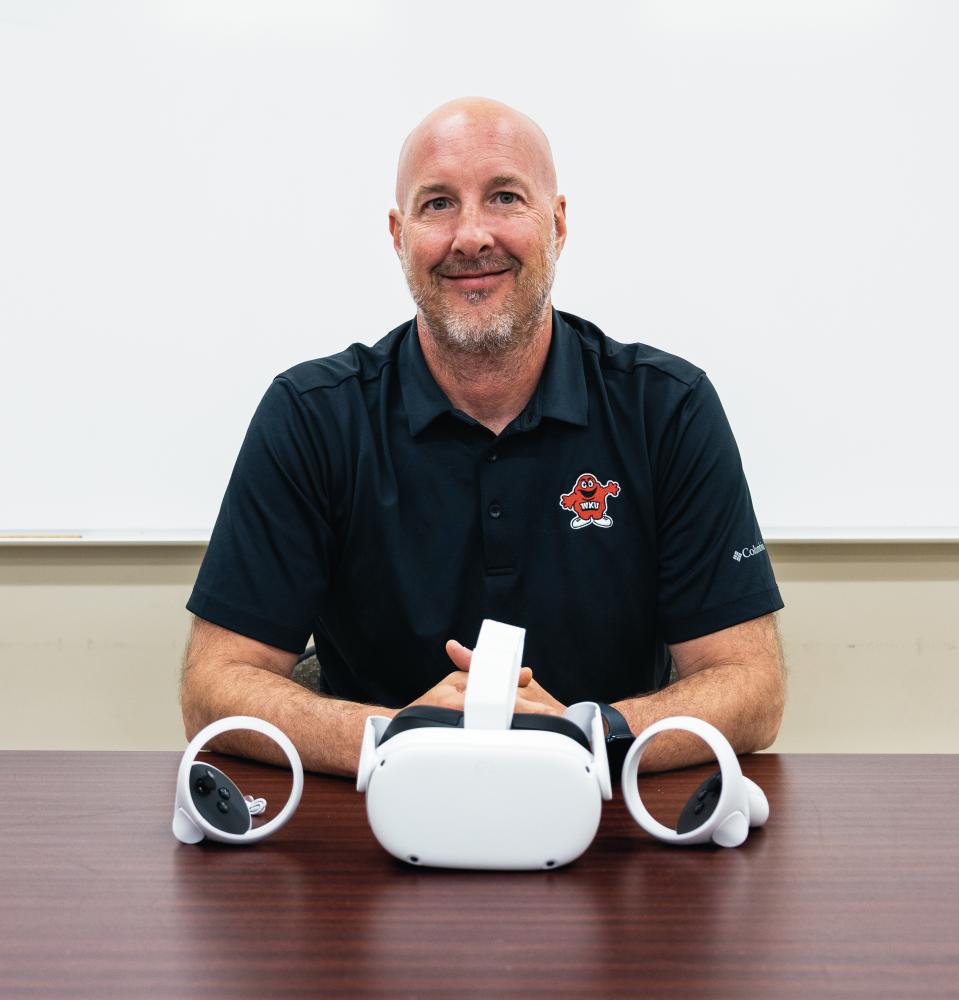
Momorella said AI is everywhere and everyone is adopting it, but not as many people are adopting or using VR.
VR, a branch of technology that uses AI, is already being utilized in classrooms on WKUís campus for specific majors, Momorella said.
Momorella said the PR Department has a few Oculus Meta Quest Version 2 VR headsets for students to check out for projects that he keeps in his office.
The first phase of the special topics course focused on getting students comfortable with the VR technology and how it applies in PR, Momorella said. After students took a tutorial course on the headset and felt ready, Momorella said things ìreally became funî when the class started looking at how VR can have practical uses in PR.
“Public relations is a lot about news, and uncovering news and working to raise awareness of issues and products,” Momorella said. “The first one we worked on was a research lab in Antarctica, and we actually worked with them on a project. Obviously, we couldn’t go there; we didn’t have the budget. So, it was awesome.”
Momorella said all the students used VR headsets to go to the U.S. research lab in Antarctica. The class got to see what was going on there in real time without leaving the classroom.
Other than Antarctica, Momorella said students also have visited the International Space Station in space using VR headsets and were able to interact with people. The class also did a campaign for wildfires in California, in which he said the students could use the headsets to fly over parts of the state that were being impacted by the fires.
After successfully utilizing VR in his first class, Momorella said he put the technology in all his other classes. He said all his lower-level and upper-level PR classes use AI or VR in the classroom at some point.
“Now I just think we need modules that are integrated into the regular classes so that everyone gets exposure to it,” Momorella said.
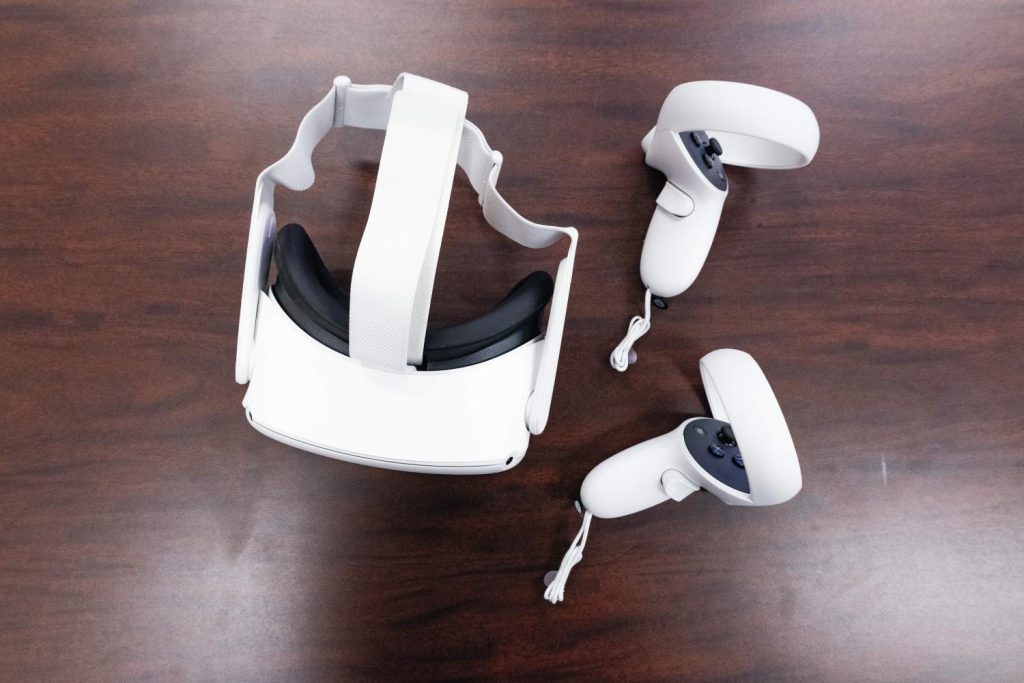
Momorella said VR is great for “immersive learning” and could be beneficial for a lot of majors.
Momorella said that he WKU PR Department would be willing to share headsets and work with other departments to get more students comfortable with AI and VR in their specific academic fields. For example, he said students in science departments like biology could benefit from using the headsets in their classes.
Momorella said his main use of VR is getting students comfortable with technology. He said his primary goal in using this immersive technology is to make WKU students more comfortable with it so that they can use that experience in their careers after graduation.
“I think thereís a lot of uses, but the first one for me is getting students comfortable with technology,” Momorella said. “Not being scared, not having worries it’s going to be banned, just being comfortable with it so that when they do get into the workforce and some new technology comes out, theyíre ready to attack it, use it and not be scared of it.”