

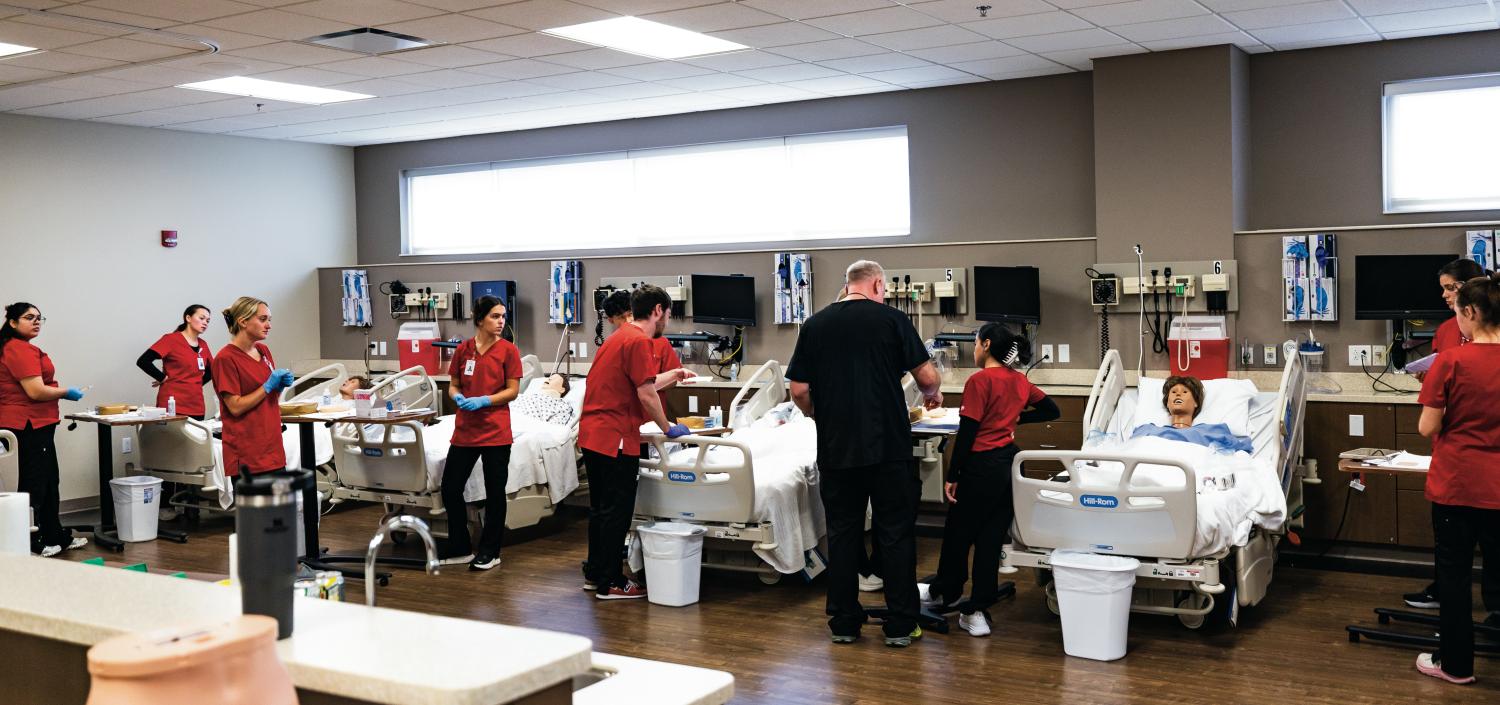

An inside look into the nursing program
Story by Hope Heffley
Photos by Nate Upchurch & Brodie Curtsinger
Design by Natalie Barber & Breanna Burba
Editor’s Note: This article was originally released in Issue 19 of the WKU Talisman print magazine. Click here to read more articles from the Talisman’s semesterly print.
The quiet murmur of study groups might define the daily lives of nursing students at WKU. However, sophomore Alexandra Chumbley from Bowling Green in the pre-nursing track said that beneath that calm surface, many students are already strained before even applying for the program.

“I honestly think that burnout is starting in school,” Chumbley said. “In Nursing 102, they told us that when weíre in the program, it’s supposed to be super stressful because people’s lives are gonna be in our hands, and as a 20-year-old, thatís a lot to take on.”
Chumbley, who has long struggled with test anxiety, said the nursing school expectations are completely different than her prior educational experience. She said sometimes the pressure from the program and professors can get in your head.
Growing up in Louisville, junior Makenna Osbourne said she was drawn to the idea of helping others. Osbourne said she saw both the workload and the devotion that being a nurse required from her mother, who worked as a registered nurse in the pediatric intensive care unit at Norton Children’s Hospital.
“That was my whole childhood, and I always was so interested in hearing her stories from work and about patients,” Osbourne said.
By the time she reached high school, Osbourne said biology and anatomy classes confirmed that nursing was her path. She said she finds learning about the human body and “the way it interacts with itself” fascinating. She said she is now finishing her Bachelor of Science in nursing at WKU.
Osbourne said despite her knowledge of the field, gained from watching her mother work, some things took her by surprise when entering the WKU nursing program.
“Something I didn’t really think about or expect is you literally have to think about every single aspect of the patientís life,” Osbourne said. “You have to always be thinking five steps ahead.”
According to the American Psychological Association, burnout is an occupation-related syndrome resulting from chronic workplace stress that has not been successfully managed.
Dr. Crystal Daugherty, an associate communication professor at WKU, has studied health communication for the majority of her career. She said burnout is considerably more prevalent among healthcare professionals, especially nurses.
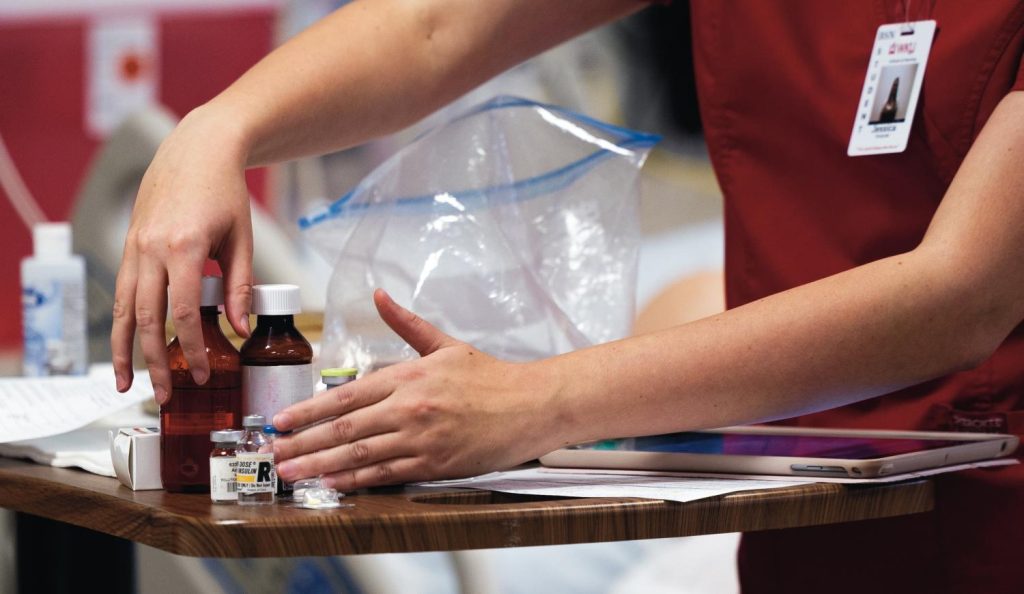
The national shortage has put pressure on both students and practicing nurses. Chumbley said many of her peers have already dropped the major.
“If they’re already at that point, what’s my point gonna be?” Chumbley said. “Should I be hitting this point now, before I devote so much of my time, before wasting three years of my college?”
Pamela Booker, an instructor at WKUís nursing program, said COVID-19 has exacerbated the tensions on everyone in the field.
“Nurses were exhausted,” Booker said, “changing clothes before going into their house, afraid to give it to their family.”
Booker said the pressure of COVID-19 highlighted another area called “moral injury” that many nurses continue to deal with post-pandemic.
“When you have that many patients die under your care, even if it wasn’t something you could prevent, the deep trauma of guilt impacts your ability to continue in the field,” Booker said. “Hospitals were experiencing this moral injury on such a large scale that it will take time to repair; most hospitals were dealing with five or six deaths a day during COVID.”
However, crises aren’t the only thing that can strain the workforce. Daugherty said burnout has long been considered “a dirty word, only discussed in back rooms.”
“There’s a stigma around asking for help,” Daugherty said. “You’ve gone through school, you’re saving lives and taking care of people’s health, so why can’t you take care of your own mental health? Thatís the way the stigma is often viewed.”
Osbourne said that students also feel that stigma.
“There’s not very much encouragement in the first semester,” Osbourne said. “It kind of feels like you’ll fail for absolutely anything.”
Still, she also said professors can’t let students move forward unless they’re safe and prepared, and that the balance can be hard to find.
“The difference in support between first and second semester is like night and day,” Osbourne said.
Osbourne is now a junior in her second semester of the program. She said her weeks are stacked with exams, six-hour lectures and seven-hour clinical shifts where she shadows nurses and cares for patients.
Osbourne said her day usually starts at eight in the morning and doesnít end until 11 at night. She starts with classes, going until three in the afternoon, and then makes her way to the library to study and prepare for classes until the late hours of the evening.

She also said nursing students are expected to read and study the material before class time.
“Class time is application, so you are expected to do and know everything else before class and then review and study everything after class,” Osbourne said.
On weekends, Osbourne said she studies.
“It’s hard to sit down for 10 hours on a free Saturday and have to commit, but that’s the requirement,” Osbourne said.
Clinical Laboratory Simulation Director, Eric Browning, describes this cycle of burnout as “trickling down” from the top hospital administrators.
Browning said the strain that nursing students feel is part of a much larger cycle, one that begins at the top of the healthcare hierarchy.
“It’s the patient workload, especially for your entry-level medical-surgical floor nurses, they’re overwhelmed,” Browning said. “A lot of that is due to the shortage, and a lot of it is the employerís expectation.”
Browning also said hospitals expect new graduates to arrive ready to handle tasks that only experience can truly teach. That demand, in turn, puts strain on faculty.
Browning said the university is doing the best it can to keep up with changes in technology to reach these expectations.
“It’s very difficult under the university’s current budget,” Browning said. “Working at the hospital part time, I see the changes. Things are constantly shifting at a breakneck pace.”
Generational shifts compound the problem. Booker said she’s noticed that younger students are burning out quicker and arenít willing to tolerate what older generations did. She said that students and younger nurses prioritize differently, confronting limitations of the field like quality of life for nurses, workload and appreciation on the job.
“Somewhere there has to be a middle ground, where we are dependable to work on but at the same time we are listened to and what we want matters,” Booker said.
Dr. Mary Bennett, former director of WKU’s nursing program, said the pressure on faculty is enormous.
“It takes a lot of effort to get students where we want them to be,” Bennett said. “It’s a lot of work on the part of the faculty members, takes a lot of time and faculty are getting burnt out.”
Bennett said the university is having to turn away qualified applicants because they donít have the faculty to take them on.
Osbourne said the effects of that strain are felt on all sides.
“Just being able to see the way that faculty interact with each other and seeing that thereís a shutdown of communication from one person to another, then that gets folded over into the students, which can be frustrating,” Osbourne said.
Browning said many in the field are overwhelmed when looking for a solution. With so many factors at play, it’s never going to be simple or easy.
“My other faculty may not agree with this, but I feel like we do students a little bit of a disservice by not giving them the real day in the life of a nurse over the continuum of the program,” Browning said. “I feel like thereís a little bit of fluff to it, and we do that to sell it because we want people to continue in the program.”
Booker said shifting the culture will be key.
“We need a culture where nurses can speak freely when theyíre overwhelmed, lean on each other and administration and not be punished for it,” Booker said.
Daugherty said one solution that could help with nursing shortages is stronger communication training and ongoing education.
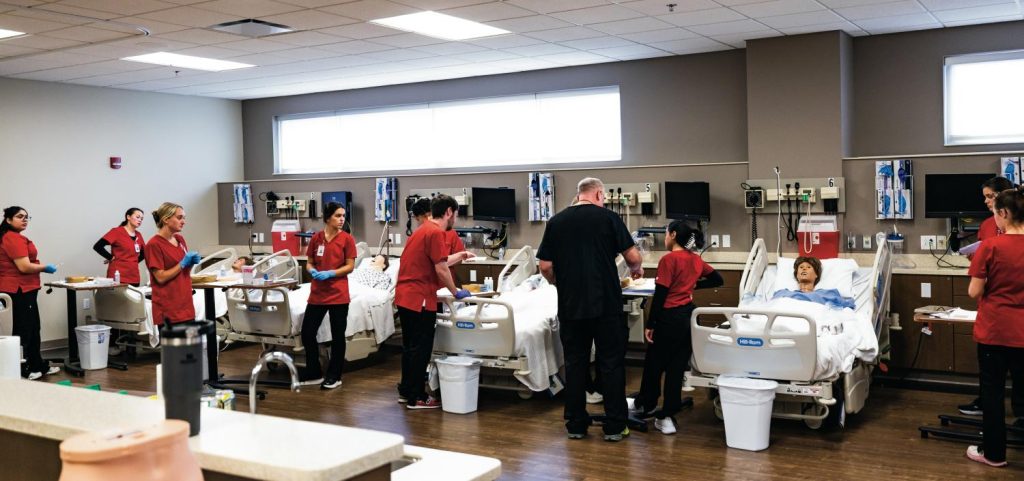
“Whether itís organizational, interpersonal or intercultural communication, we have to figure out a way to talk about these issues,” Daugherty said. “We have to improve the organizational flow between all of this.”
Chumbley said most people feel like they canít talk about their struggles.
“If we had an outlet where we could say, ‘I need help,’ and not feel ashamed, I think that would help a lot,” Chumbley said.
Booker said a concern like this must be addressed from the top down.
“The whole administration, all the leaders have to be on the same page,” Booker said, “because if they’re not, then they’re not going to change that environment.”