

Addressing mental health on the Hill
Story by Josee Gibson
Photo by Brodie Curtsinger
Design by Candace Alvey
Editor’s Note: This article was originally released in Issue 19 of the WKU Talisman print magazine. Click here to read more articles from the Talisman’s semesterly print.
In the 2025 spring semester, 50.6% of college students reported moderate stress levels, and 25.4% of students reported high stress levels, according to the National College Health Assessment.
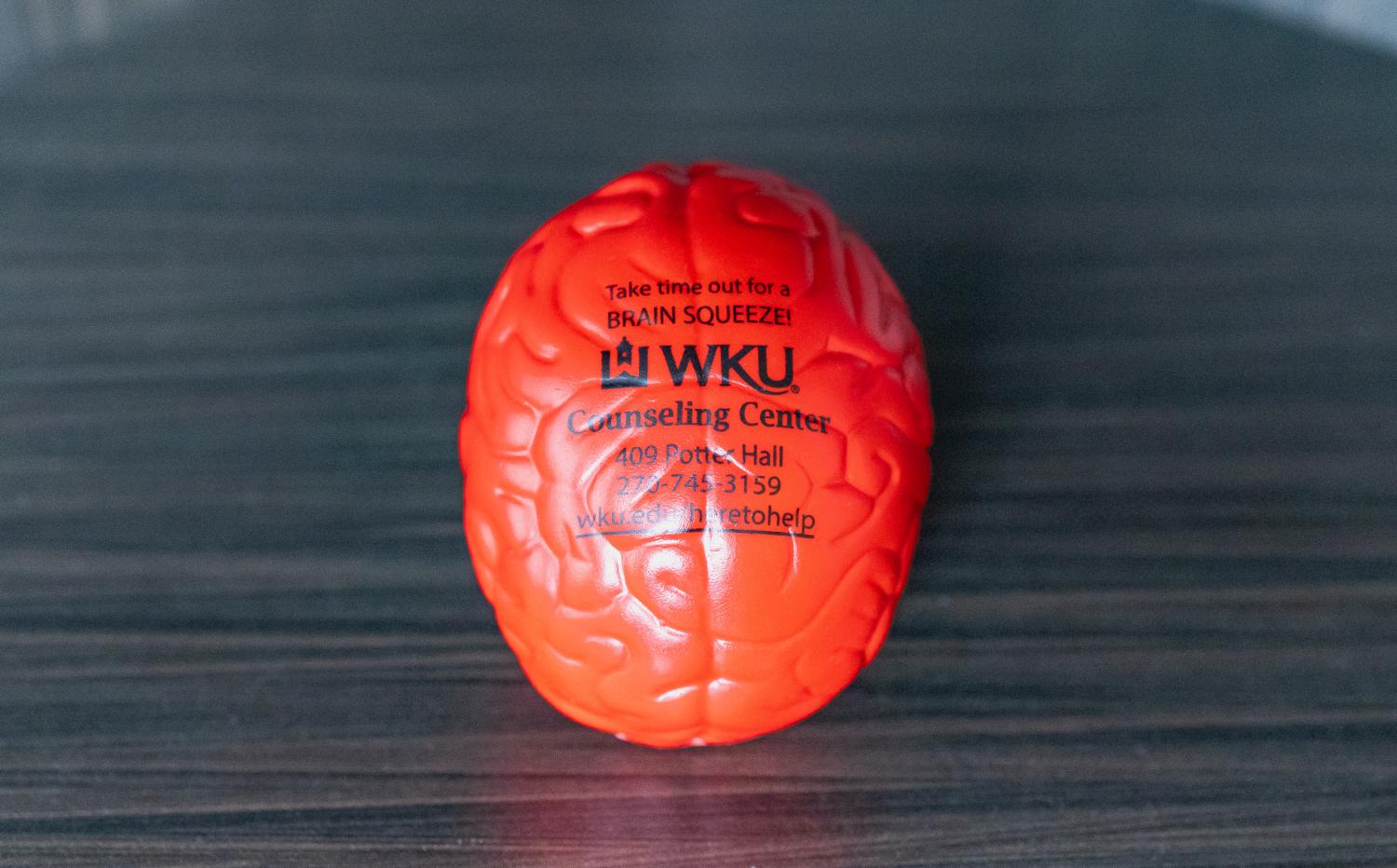
Mariya Fye is a licensed clinical social worker at the WKU Counseling Center who is originally from Volgograd, Russia. She moved to the United States during high school. She said she has been a counselor for over 26 years and has been with the WKU Counseling Center for over six years.

Fye said everyone is impacted by things that cause stress, even if a student does not have a diagnosable issue. She also said that some of these stressors can include academics, relationships, financial issues and social media.
Junior Lainey Lindsey from Louisville said that some of her stressors include balancing school and work, alongside maintaining her social life, extracurriculars and personal relationships.
“A student should visit when they notice that they have a significant change in their coping ability, certainly if they feel overwhelmed,” Fye said. “Our counseling center motto is ‘College should be challenging, not overwhelming.'”
The WKU Counseling Center aspires to be a trusted and proactive resource for emotional wellness and personal growth, empowering all WKU students to thrive throughout their college journey and beyond, according to the vision statement on their website. Fye said that anybody who reaches out gets at least one session.
Fye said mental health issues carry a lot of stigma, especially in a college environment. She said that students might tend to worry about facing judgment if they admit they need help balancing everything.
However, college itself is not the reason students face mental health issues, Fye said. She said being a young adult is a period of adjustment and change, and it can sometimes cause stressors and underlying issues to come forward.
Fye said that because freshmen and seniors are both in transitional periods, they might have more stressors to work through. For freshmen, Fye said it is adjusting to being away from home and making new friends on top of experiencing a new approach to academics. Seniors are about to lose the lifestyle they adjusted to during college, she said, and they have to face challenges like finding a job and figuring out where to live.
“Sometimes students don’t realize that what they are struggling with can be helped by counseling,” Fye said. “We see such a range of difficulties from fairly mild to real diagnosable mental health concerns.”
She said that some things they see in students are major depressive disorder, generalized anxiety disorder, specific phobia and psychotic symptoms.
In the spring 2025 semester, 26.4% of college students experienced a depressive disorder, and 35.5% experienced an anxiety disorder, according to the NCHA.
Fye said a big concern for many students who visit the counseling center is that they are taking up valuable time from someone else. She said they feel that their recent breakup or stress over a test is not as important as someone who struggles with something like major depressive disorder.
“Comparing two students’ struggles is like comparing apples and oranges,” Fye said, “A struggle is a struggle, regardless of its nature.”
Fye said counseling is beneficial, but itís not the only thing that can be done to prevent stress. Easy things like getting enough sleep, drinking enough water and eating consistent meals can really improve well-being.
“It’s really important that students don’t let go of interests and hobbies that they have,” Fye said. “It’s also important that we spend time with people who we care about and who care about us.”
Lindsey said that taking time for herself is the main thing that helps her manage stress. She said some specific things she does to manage stress are journaling, listening to music and taking walks. Lindsey also said that she visited the WKU Counseling Center.
“If you are in dire need, I would suggest going to the counseling center,” Lindsey said. “They helped with a lot of specific issues that I had.”
The WKU Counseling Center is not the only place on campus where students can go to receive counseling. The Talley Family Counseling Center operates within the College of Education and Behavioral Sciences. Its counselors are graduate student interns training to become clinical therapists.
Oceanna Dykes, a graduate student from Owensboro pursuing her counseling license, works with the Talley Family Counseling Center. She said that on top of academics and financial worries, a lot of stressors she sees stem from self-esteem issues.
“A lot of my clients speak about social media. One thing we see a lot is students worrying about the female gaze versus the male gaze,” Dykes said.
The male gaze is a term describing the way men view women, often in a way that sexualizes or objectifies them, according to the Oxford Reference. The female gaze contrasts this idea, describing the complex way women view other women and experience their own lives.
Dykes said because of social media, especially, many students spend time worrying about how they are perceived by the opposite gender and how they present themselves to their peers, both female and male.
Dykes said they see patients for anxiety and depression disorders, disordered eating, family and couples counseling and play therapy for children. The youngest age they see is 6 years old, and she said they see a mix of college students and people from the Bowling Green community.
She said that because the interns are still completing licensure, Bethany Johnson, a licensed professional clinical counselor, oversees them.
Additionally, Dr. Steven Wininger, a psychology professor who is currently studying performance anxiety, offered a different perspective on student stressors. He said stressors and unfiltered negative emotions can motivate students.
“I want to caution people to not get caught up on reducing, but learning to utilize their anxiety and learn to regulate it to healthy levels,” Wininger said.
Wininger said the main stressors he sees as a professor are tests and assessments, public speaking and speaking in class in general. He said one thing that concerns him is the amount of technology used in classrooms. He said he combats this by having a no-technology policy in all of his classes.
“For some students, it is so hard for them to put their phone away or even take off their watch for 55 or 80 minutes, and they freak out about it,” Wininger said. “You can see them getting antsy about it; it makes me sad.”
Wininger said that social media can distract students and cause them to worry. If you’re worrying about what is going on outside class because of your phone, you’re not going to learn anything, which leads to more stress,” Wininger said.
“To me, the key is figuring out as an individual where are your zones? Where are your zones for productive anxiety, and then figuring out strategies to help regulate those levels,” Wininger said.
Wininger said he recommends going to the counseling center if you struggle with finding these zones. He said they can help you understand your personal stress levels and learn strategies to cope with being overwhelmed.
Ultimately, Fye said it is important to note that everyone experiences college differently, and a person does not need a diagnosis to benefit from counseling.