


Story by Brennan Hoskins
Photos by Brennan Campbell
Editor’s Note: The opinions expressed below in this article are those of the writer and are not meant to represent Talisman as a publication.
According to National Geographic, it was an early summer morning in 1969 when police officers harassed and brutalized hundreds of patrons at the Stonewall Inn, a gay bar crouched in Manhattan. Before long, one patron threw a brick at their attackers, and another swiftly followed.
The Stonewall Rebellion, according to National Geographic, raged on for multiple days, galvanizing the Gay Liberation Movement and continuing to inspire modern LGBTQ+ rights organizations today.
30 years later, according to the Lexington Herald-Leader, Louisville and Lexington signed ordinances that prohibited businesses from discriminating based on a person’s sexual orientation or gender identity.
According to the Fairness Campaign, an organization advocating for LGBTQ+ rights across Kentucky, these bills were dubbed, “Fairness Ordinances.” Since 1999, the campaign reports to have passed similar laws in 24 cities and counties.
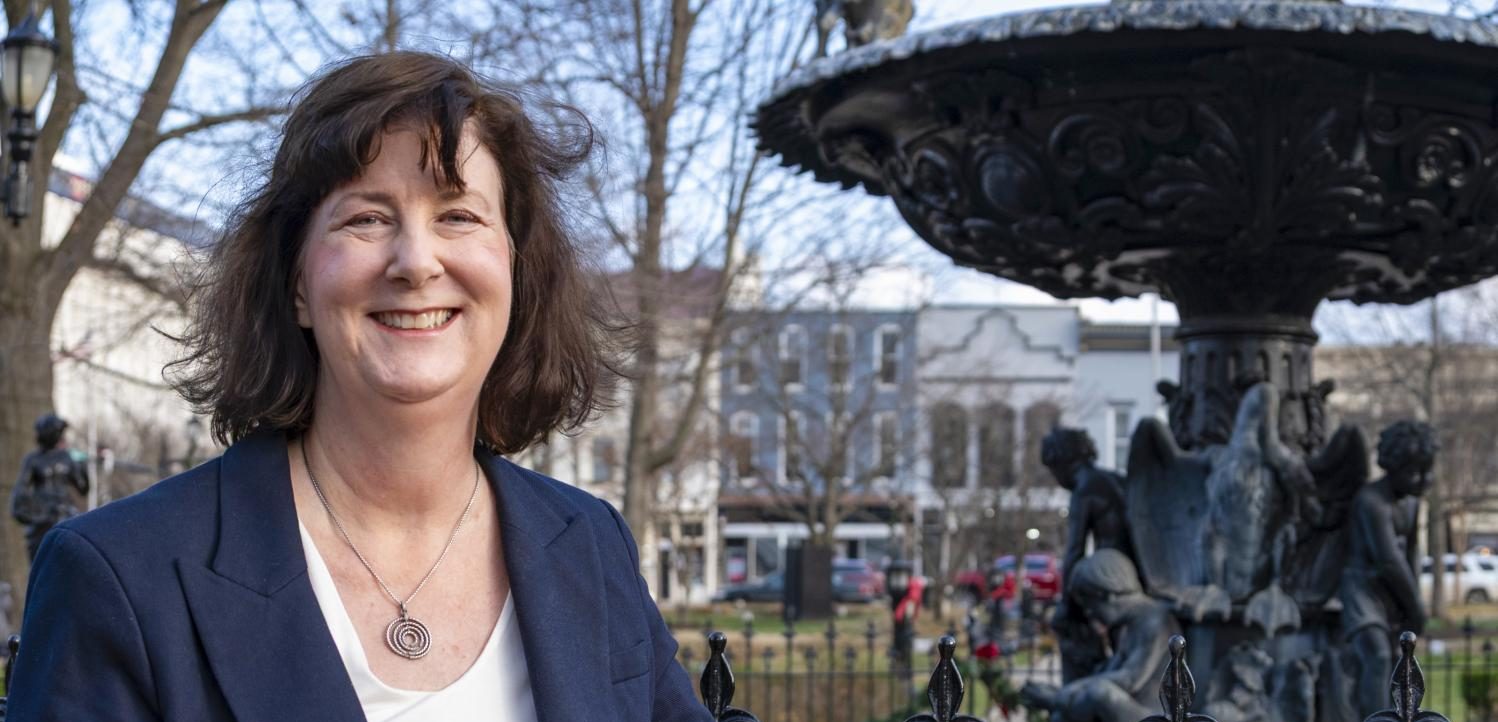
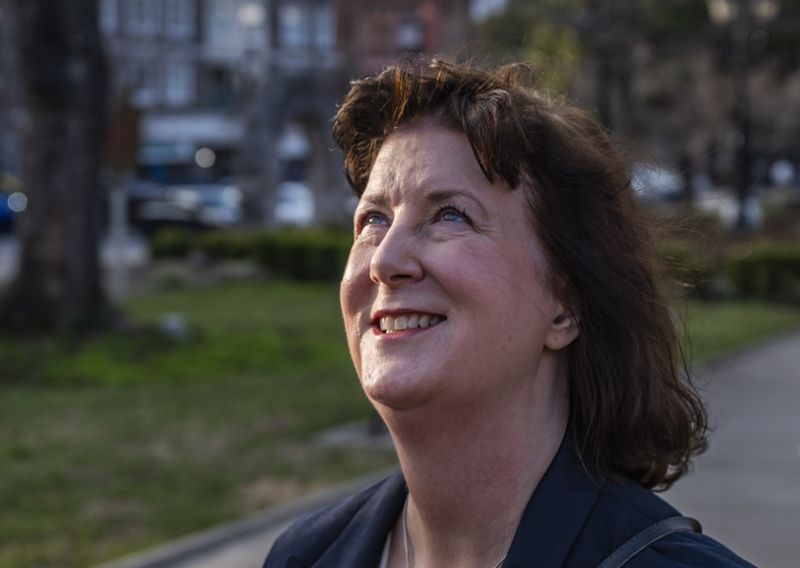
According to the Fairness Campaign, Bowling Green is not among those communities. Patricia Minter, professor of history at WKU, former state representative and a currently leading member of Bowling Green Fairness, said that is not for lack of trying.
An uphill war
“When we found out Lexington and Louisville passed these ordinances, some of us said, ‘We need to do that here,’” Minter said. “The Human Rights Commission recommended the Bowling Green City Commission introduce and pass a Fairness Ordinance.”
Minter said the commission ignored that recommendation, which would have made Bowling Green the third city in Kentucky to pass the ordinance. She said several communities acquired these protections in the following years, including Henderson, which acquired them twice.
“We still don’t have one, but they’ve passed it, repealed it and brought it back,” Minter said. “It’s appalling.”
Minter said Bowling Green Fairness focused on other matters for a time. One of these matters includes campaigning against a statewide same-sex marriage ban proposed in 2004.
“It passed overwhelmingly,” Minter said. “In Kentucky, 75% voted to take the right to marry away from other people, which still blows my mind.”
Minter said that for years, the movement worked to support individuals and connect them with resources. In the meantime, they arranged private meetings with members of the city commission.
“But our purpose has always been to pass the Fairness Ordinance,” Minter said. “We finally started to build when Commissioner Slim Nash reached out to us.”
Allies in progress
Pages 155-157 of David Carter’s “Stonewall: The Riots That Sparked the Gay Revolution” detail the arrest of Dave Van Ronk, a heterosexual folk singer who joined in the uprising. According to the book, although his decision was a product of general anti-authoritarianism rather than specific support, he is seen by many as an important ally to a community that had few.
Brian “Slim” Nash, owner of Fountain Square Towing who served on the city commission from 2005-2012, then 2017-2020, said he was initially hesitant to champion the Fairness Ordinance.
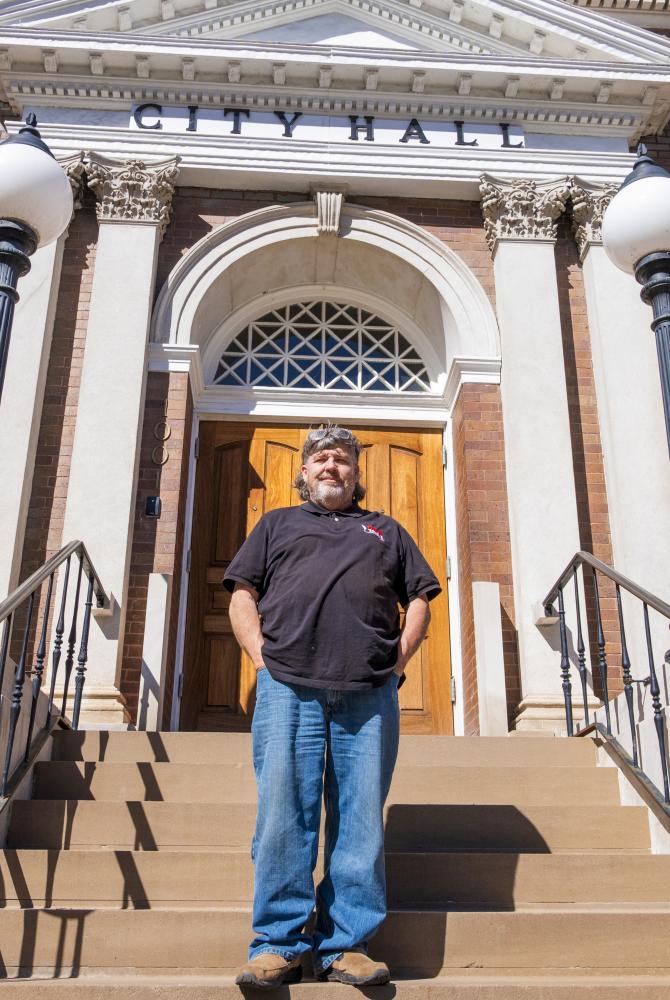
“I want to believe that we live in the best city in Kentucky, if not the best city in the United States of America,” Nash said. “So there was this initial reluctance to think people were really being denied.”
Nash said he used to have difficulty accepting that there could be LGBTQ+ discrimination in Bowling Green, especially from a practical perspective.
“I would think, if you were a landlord, your number one rule would be, ‘Can you pay the rent?” Nash said. ”Not whether the person who’s paying the rent is gay. As a businessman, that’s just foreign to me.”
Nash said he began using Facebook to reach out and speak privately to people in Bowling Green on both sides of the issue. He said one closeted gay man in his sixties told an especially affecting story.
“Here’s a 67 year old man afraid that if he just says, ‘Hey, I like other guys,’ that his family’s going to abandon him,” Nash said. “I can’t imagine living with that kind of fear.”
Nash said hearing stories like this convinced him of discrimination’s prominence in Bowling Green, and he began working toward passing the ordinance in 2017.
“At that time, any member of the commission could put an item on the agenda, and it didn’t need a second in order to be discussed,” Nash said. “So I put it on, and we had some limited discussion, and then I put it on again and the commissioners voted it down, four-to-one.”
Nash said the Bowling Green City Commission, made up of four commissioners and the mayor, soon agreed to table any proposed item that was not seconded for discussion by another member. He said a commissioner approached him privately in February of 2017, and agreed to second the motion, but backed out at the last minute.
“I’ve never said their name, and I never will,” Nash said. “They welched on me that night and just said, ‘I can’t do it.’”
Nash said supporters of the ordinance had already arrived in droves to the chamber meeting.
“I have lived here since 1988, and I’ve never seen an issue in Bowling Green that has had so many people packing into the city commission,” Nash said. “I mean, they were setting up televisions in other rooms so people could watch.”
According to Kentucky Fairness Campaign Director Chris Hartman, in an interview for the Louisville Eccentric Observer, hundreds of people began chanting, “Shame! Shame! Shame!” at the commission when the motion died for lack of a second.
Nash said he “forced” the commission into a working meeting, where a decision can not be made, but the public can be heard. He said the people who came to the previous meeting returned to share their stories, including one woman’s journey to accept her gay son, and the backlash she received from her church.
“She lost her support system in supporting her son,” Nash said. “If that ain’t discrimination, I don’t know what is.”
Nash said multiple LGBTQ+ citizens spoke of being denied housing on the basis of their identities, but that the other commissioners were unfazed.
“I don’t know how I could have listened to that and not been moved in some way,” Nash said. “I don’t believe they were even paying attention.”
Nash said that Bruce Wilkerson, Bowling Green’s mayor at the time, did not believe the speakers.
“I’m like, ‘What motivation do they have to lie?’” Nash said. “He literally told me the Bible tells him so.”
Nash said he asked afterward whether there was any new interest in the ordinance, and was met with silence.
Those in opposition
Commissioner Sue Parrigin and former commissioner Rick Williams declined to discuss the topic, while other potential subjects did not respond.
Mayor Todd Alcott made his position clear multiple times in the last campaign season. In minute 53 of a candidate forum hosted by the Bowling Green Daily News in October 16, 2024, Alcott said he mainly opposes the Fairness Ordinance on constitutional grounds, and that a civil suit in Lexington supported this claim.
“They were called Hands On Original, and they were a t-shirt company in Lexington, that passed the Fairness Ordinance,” Alcott said. “And they got sued, because they broke constitutional law.”
Alcott said the city had to pay $500,000 to the company after losing the case.
Though his spoken account was nearly incomprehensible, I believe Alcott meant that the city of Lexington passed a Fairness Ordinance and sued the company over an infraction, but lost due to the ordinance being somehow unconstitutional. Still, this version of the lawsuit holds discrepancies with the Kentucky Supreme Court’s official statement by former Chief Justice Laurance VanMeter.
According to VanMeter in the Opinion of the Court, the company, actually named Hands On Originals, refused to supply t-shirts for a pride festival hosted by the non-profit group Lexington Pride Center, formerly known as the Gay and Lesbian Services Organization, based on the company’s conservative religious beliefs.
This conflict, which started in 2012, according to VanMeter, led the Lexington Pride Center to file a complaint with the Lexington-Fayette Urban County Human Rights Commission, claiming that the organization was discriminated against by being denied service.
The Human Rights Commission, according to VanMeter, charged Hands On Originals with violating the Fairness Ordinance. The company was sentenced to an enjoinment and diversity training, but later appealed to the Fayette Circuit Court and reversed the decision.
According to VanMeter, the case was dismissed in 2019, though not because of unconstitutionality. Rather, it was because the Pride Center did not have the statutory standing to claim they were discriminated against, because the Fairness Ordinance is only written to protect individuals, rather than organizations.
This is an odd case to use when building an argument against the constitutionality of the Fairness Ordinance, as the Supreme Court’s majority opinion consistently reaffirms the validity of local anti-discrimination laws.
Even stranger, Alcott said Lexington was forced to pay $500,000 to Hands On Originals. Not only were they the defendants, and thus not poised to receive compensation, but there seems to be no public record of the plaintiffs requesting any money for sustained damages.
Alcott attempted to use the case of “Lexington-Fayette Urban County Human Rights Commission v. Hands On Originals” as a precedent-setting indictment of the Fairness Ordinance, but failed to accurately represent its background, proceedings and ultimate decision by the highest court involved. He even called its central company by the wrong name.
Alcott gave a misleading account of a nearly irrelevant lawsuit in a public debate on an issue that affects enough people in Bowling Green to overfill the Commission Chamber. This is not ideal in a leader and public servant.
According to an article written by Tonja Tuttle, co-founder of Warren County Conservatives, from Oct. 29, 2024, the Fairness Ordinance would give the Bowling Green Human Rights Commission extra judicial powers, such as the ability to impose fines, hold hearings and even petition the Circuit Court to issue subpoenas.
I was surprised, upon reading this, as the addition of new powers had never come up in my research on the ordinance. This might have caused me to reconsider my stance, had it been true.
Ordinance No. BG2003-53, signed in October of 2003, gives an exhaustive list of powers granted to the Human Rights Commission. According to American Legal’s Publishing Code Library, these include such things as the ability to impose fines, hold hearings and petition the Circuit Court to issue subpoenas.
According to Ordinance No. BG2019-12, the most recent version of the bill proposed in Bowling Green, the Fairness Ordinance would simply add, “gender identity and sexual orientation” to the list of characteristics that cannot be legally discriminated against, which presently includes race, color, religion, national origin, sex, age, familial status and disability.
No extension of the Human Rights Commission’s powers is stated in the text of the bill. From my understanding, the Fairness Ordinance only expands the number of marginalized people whom it protects.
According to Tuttle’s article, broader anti-discriminatory protections have already been implemented on a state and national scale. This information is commonly cited by opponents of the ordinance, typically in order to paint the legislation as redundant.
The U.S. Supreme Court, according to the Justia U.S. Supreme Court Center, delivered a rare example of federal protection for LGBTQ+ individuals in 2020 with Bostock v. Clayton County. The court concluded that Title VII of the Civil Rights Act of 1964, which bans employment discrimination, applied to sexual orientation and gender identity, as discrimination against those necessitated discrimination based on sex.
While this decision was undoubtedly a step in the right direction, it does not protect against discrimination in housing or public accommodation and remains precariously situated as a Supreme Court ruling rather than a law. This leaves it open to being overturned similarly to Roe v. Wade.
Local protections like the Fairness Ordinance not only enforce these decisions more directly, but continue to act as an aegis in the event that federal and state mandates are removed.
Pride and the future
Minter said the commission’s obstinance left Bowling Green Fairness in a dejected state, which lingered until their meeting in March.
“We decided that we needed to do something to reclaim our power, and to show them what a large community of people we are talking about,” Minter said. “That was where we came up with the idea to do a Bowling Green Pride Festival.”
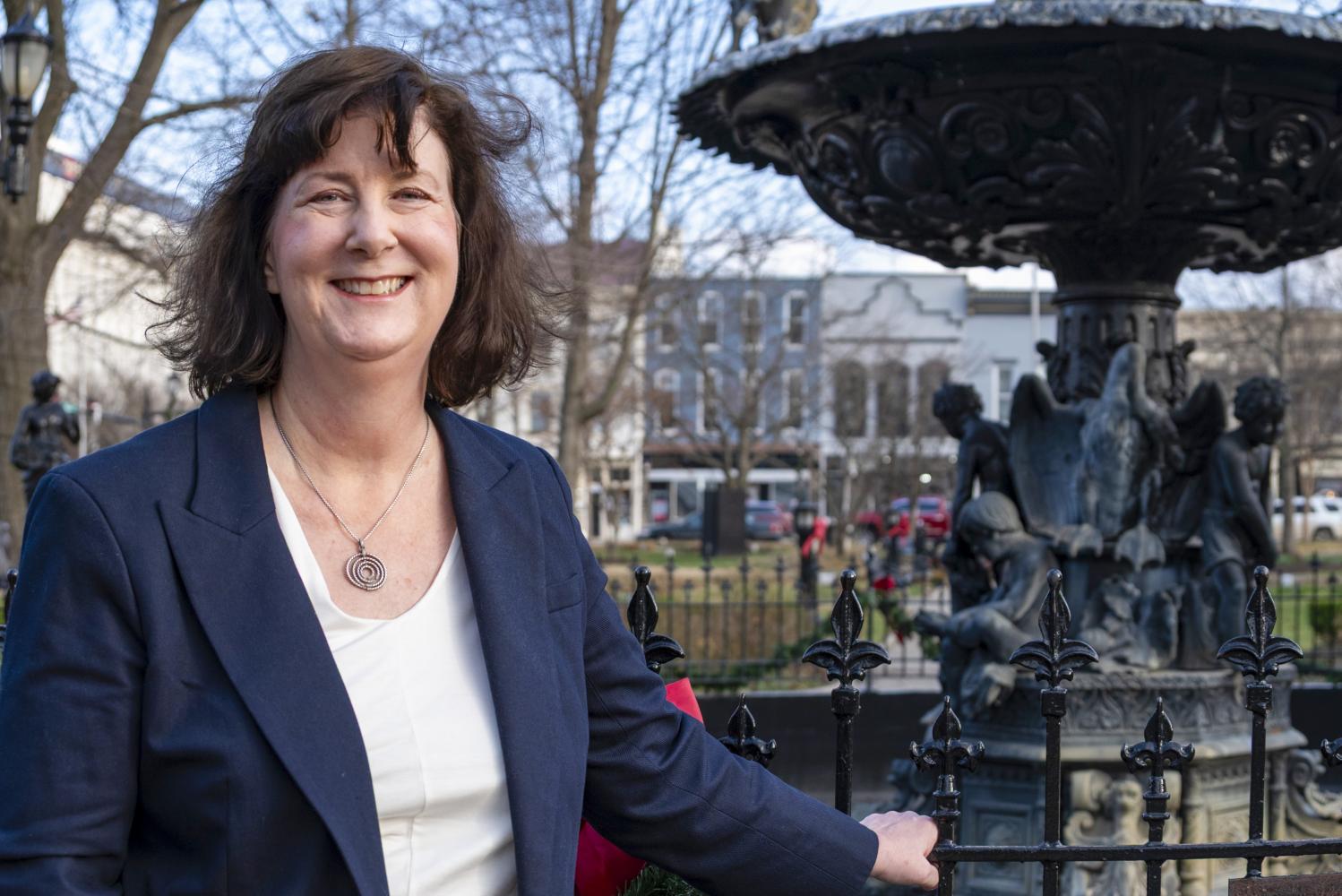
Minter said the planning process lasted for nine months, with the movement courting local businesses and performers for the celebration in October.
“We were really just hoping all of our friends would come,” Minter said. “I thought 250 people would come, and it was gonna be pathetic, but over 3,000 were there.”
Minter said that since 2017, the Bowling Green Pride Festival has grown significantly, with over 5,000 attendees in 2025 and the 10th celebration on the horizon.
“When I go to restaurants, people say, ‘What’s the date for Pride this year?’ because they want to start working on their things,” Minter said. “We don’t take corporate money; local businesses support this, and that’s how we keep it going.”
Minter said Bowling Green Fairness has worked to vote pro-Fairness candidates into the city commission, with Commissioner Dana Beasley-Brown providing a second to discuss the issue again in 2019.
“We knew we were not gonna be able to pass it,” Minter said. “But we at least wanted to try it again, and we had another three hours of people coming in sharing their truth.”
Minter said that while many people in Bowling Green hold genuine hostility toward the LGBTQ+ community, one of the ordinances biggest obstacles are politicians who are afraid to speak in its favor.
“There are elected officials right now in Bowling Green who secretly believe that we should have a Fairness Ordinance,” Minter said. “If we could just get one of the cowards to side with us and get some spine for a day, we really could pass this.”
Lucinda Anderson, a retired Director of Special Events and current leader Bowling Green Fairness advocate, said she thinks an open discussion could solve the issue.
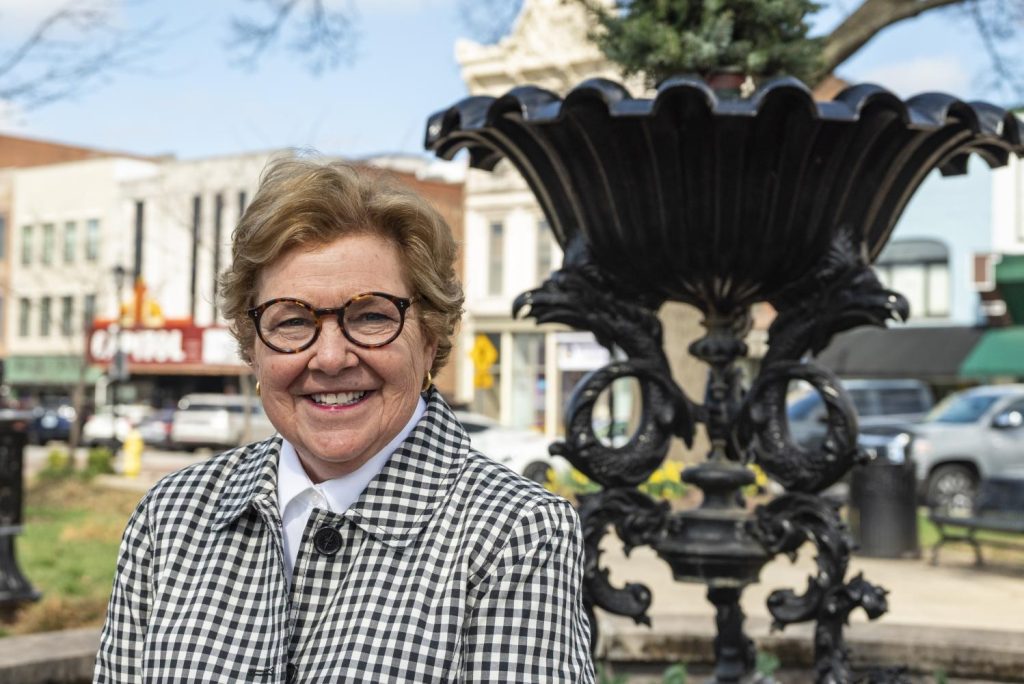
“I feel like if we brought in the Director of Fairness, some of our lobbyists, with some mayors from a lot of other places, we could talk about what seem to be the reservations, and move forward,” Anderson said. “I think there is a way to hear the concerns and the enhancements this could bring to Bowling Green.”
Anderson said she has seen promising young graduates leave Bowling Green due to the lack of a Fairness Ordinance.
“There are some rockstar individuals who have left,” Anderson said. “Dozens of people have left because they know Bowling Green does not recognize the importance of a Fairness Ordinance.”
Anderson said that in 1951, her father, James David Francis, was the county judge. She said at the time, Bowling Green’s only hospital did not allow physicians of color to treat their patients directly.
“He took that board of all-white physicians and said, ‘We can’t do this; this is against the law, and we’re bringing in federal money,’” Anderson said. “It took a lot of discussion, but they finally agreed, and they did see their patients; so I’m not giving up on Fairness.”
According to Bowling Green Fairness, the group meets every month, for those interested in joining the cause, More information is available on their Facebook.
The brick reexamined
A brick is a versatile device. As discussed, it can be an effective projectile, but in most situations, it is better suited to use in construction.
The story of the LGBTQ+ community is one of building, be that of connections, coalitions, momentum or even a frenzy. Unfortunately, it can also mean building tolerance for a community that seems to have none for you.
Bowling Green should be the greatest place in Kentucky, a mix of small town living and big city culture, but it is not, and it cannot be, so long as it refuses to protect so many of its citizens. In this respect, we have fallen far behind.
However, a city is not defined by its laws. It is defined by its people.
No matter what bigotry, dishonesty or cowardice one may see in its government, Bowling Green is also home to a group of kind and courageous people fighting for justice over the course of nearly three decades, because they know that no step is wasted if you are still moving forward. They see greatness in Bowling Green’s future and build toward it every day.
When striking against the vicious machinery of systemic oppression, we would do well to take it one brick at a time.