


Story by Hope Heffley
Photos by Ella Johnston
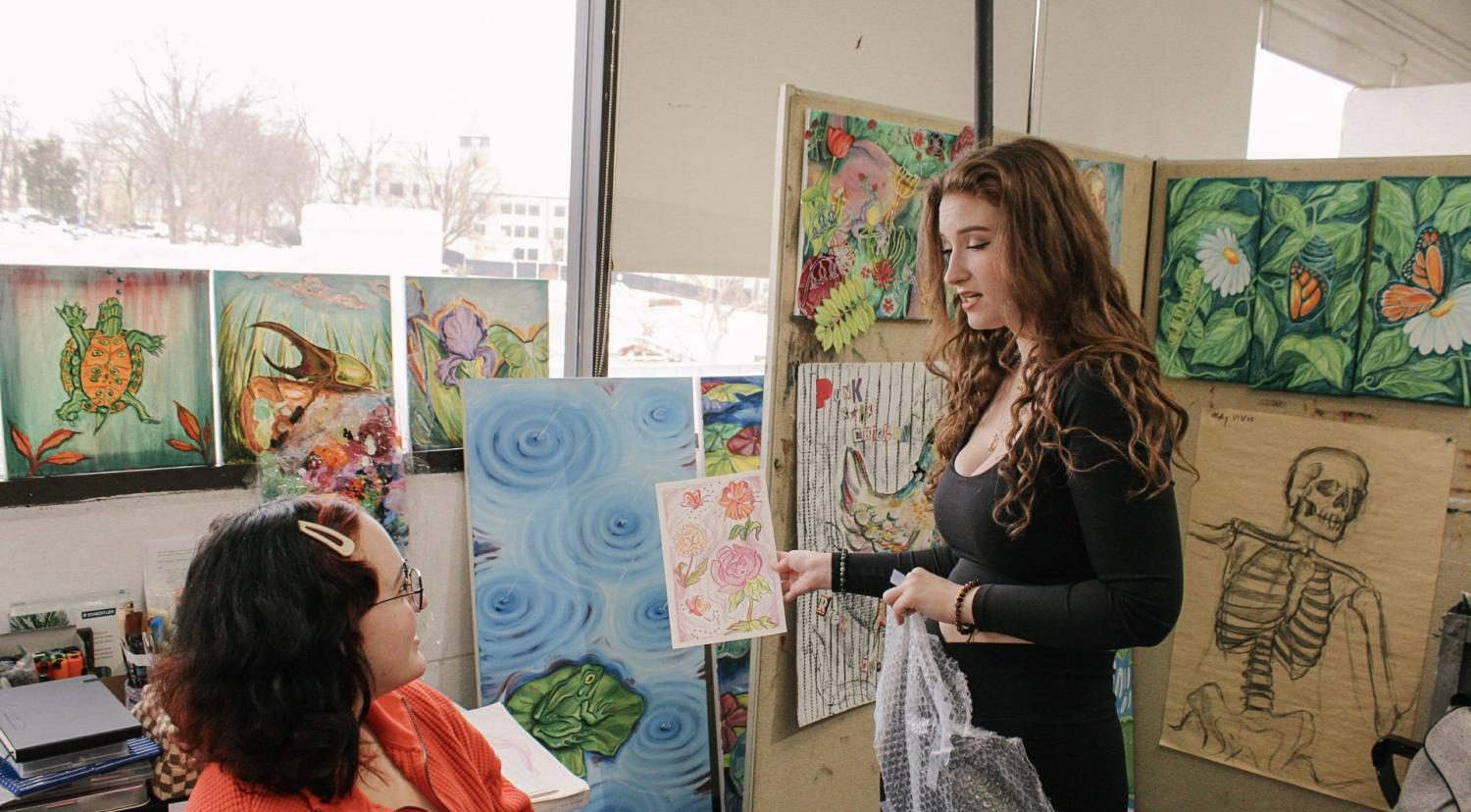
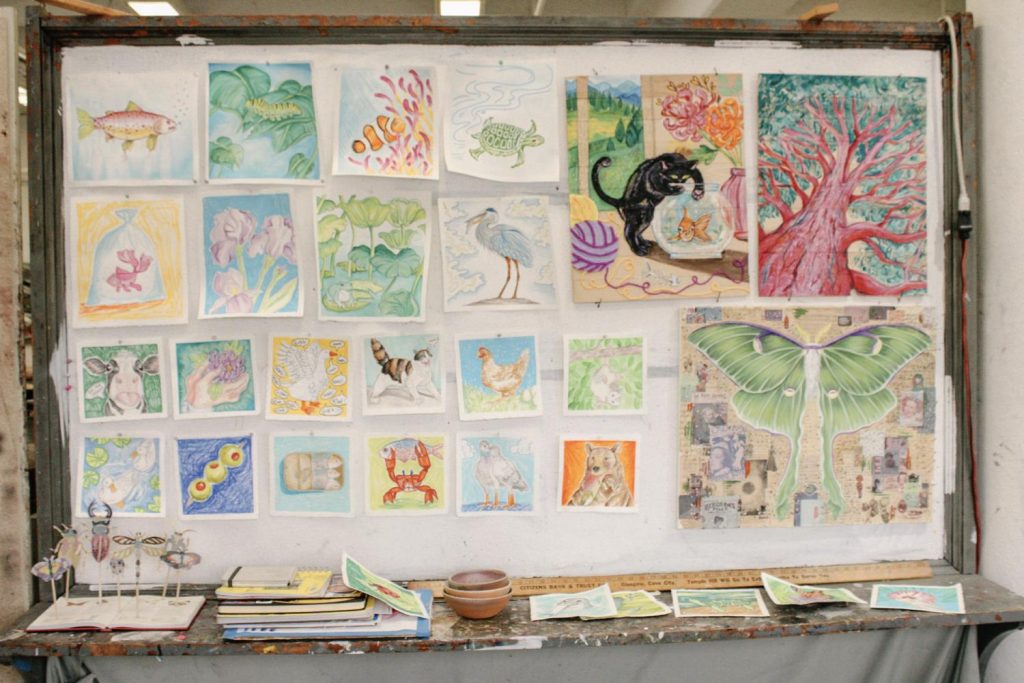
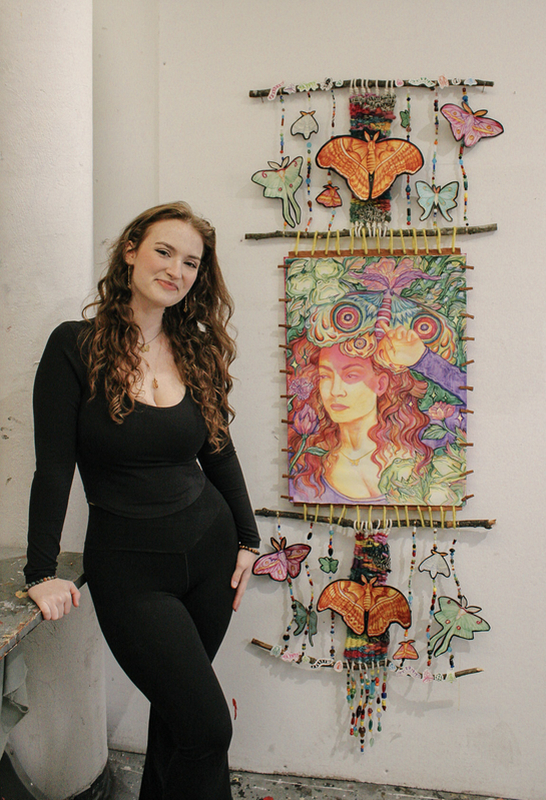
In one of her favorite pieces, Pinned Luna Moth: Study in Entomology, senior artist Molly Phelps said she used a blend of oil paint, illustration and three-dimensional elements to bring the delicate details of a “misunderstood” creature to life.
Phelps said she is a painting and ceramics major and that she has always been fascinated by moths for their “understated beauty.”
She said one of her earliest collegiate inspirations, Van Gogh, and his piece Great Peacock Moth, helped to inspire her work.
“Moths are often overshadowed by butterflies,” Phelps said. “Seeing Van Gogh give such depth and dignity to a species many overlook made me feel an immediate connection.”
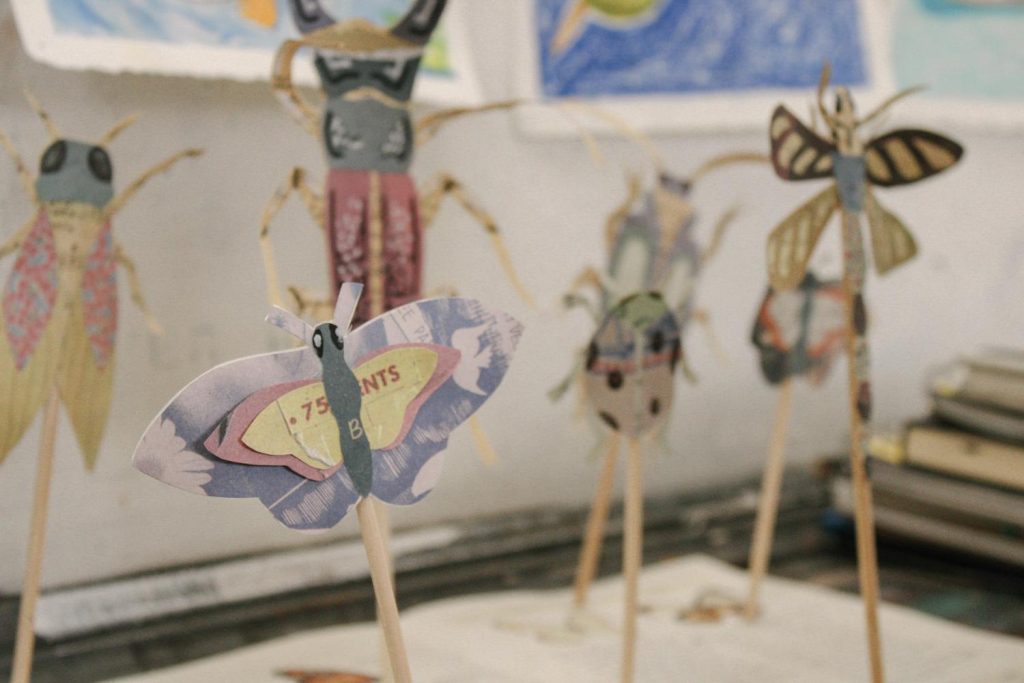
Most nights Phelps said she is finished by nine, but with an upcoming show, such as the Kentucky Museum’s “Abound Credit Union Celebration of the Arts” showcase, she said she’ll catch a goodnight and good morning from professors and maintenance staff.
Yvonne Petkus, painting professor at WKU, said she has been Phelp’s professor since her first art class on the Hill. Petkus said the evolution of creativity and work ethic she has seen from Phelps over the past three years has impressed her.
“She’ll be here till the wee hours to do the things that have to get done,” Petkus said. “There is a quiet intensity that comes through her work, with a deceivingly weighted sense of beauty.”
In contrast to the deep, dark tones used by most of her peers, Phelps said she consistently uses vibrant colors throughout her pieces.
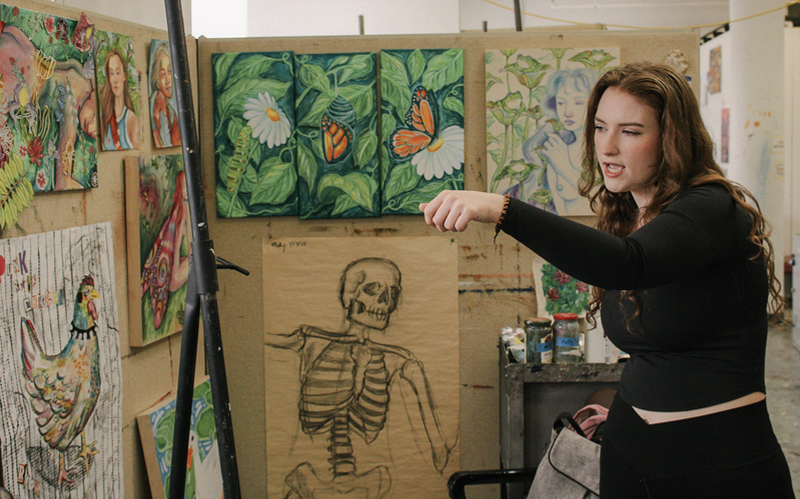
“My work — across painting, ceramics, and mixed media — grows from a desire to create images that feel alive,” Phelps said. “As I shift away from realism, I look for strangeness, motion and emotional immediacy inspired by the natural world.”
Growing up, Phelps said her favorite movie and book was ‘Alice in Wonderland.’ She said she tries to incorporate the essence of it into her own art.
“I like to add humor to my work; I love making people smile, and I love color,” Phelps said. “Some people don’t ever smile or laugh and at least I can give them a little moment.”
Growing up in Bullitt County, Kentucky, Phelps said she was the first person in her high school to pass the AP studio art exam.
“I think it says something about me and how I did have this motivation and love for art,” Phelps said.
Phelps said that while this passion started early, she hadn’t ever thought about it as a career. She said being in the public school system limited her resources and encouragement for the arts.
She said she never had mentors guiding her to truly consider what she wanted her path to be or what she wanted to do with her life.
“For me, that was another reason that I had never seriously thought about it,” Phelps said. “Public schools in general, they just don’t care about art. People don’t care about art.”
Phelps said it wasn’t just the weight of the future that fell on her shoulders, it was the battle of fighting a diagnosis. This is triggered by what Phelps said is one of the most unavoidable things in the world, stress.
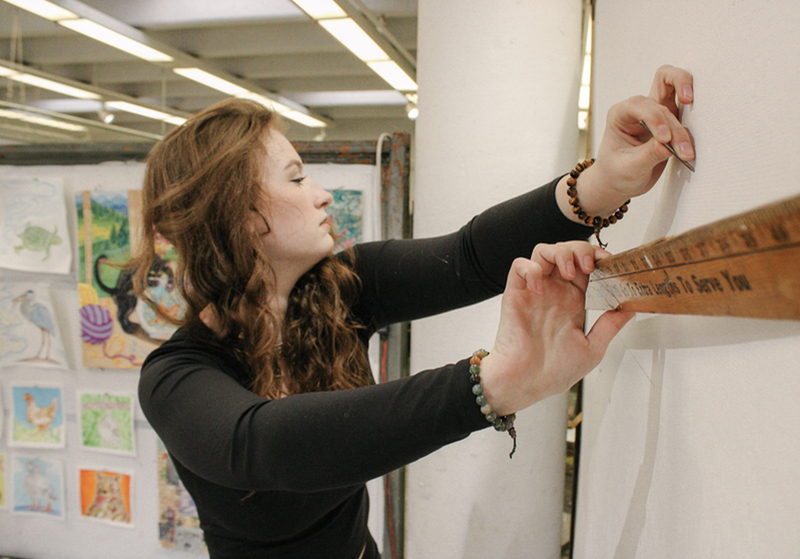
Phelps said she had her first seizure at three years old, then experienced radio silence from her body until the age of 11, when she started experiencing acute confusional migraines.
“It was like God’s worst pain,” Phelps said. “It would start with loss of vision, and after like an hour passed, I wouldn’t be able to speak or talk. I wouldn’t know where I was or what was going on.”
Phelps said that these migraines became the beginning sign that something was wrong. She said the migraines continued frequently until she was 15 years old.
At 14 years old, Phelps said the seizures began to reappear.
“It was quite a journey to a diagnosis, and it’s all kind of a blur,” Phelps said.
Now, Phelps said she knows that she experiences absence and grand mal seizures that are triggered by stress. She said both types cause brain damage, and grand mal seizures are intense and incredibly dangerous. While absence seizures carry a less fatal risk, Phelps said the mental toll is “steep”.
“The best way to describe them is that you start to kind of get delusions, like the world is melting,” Phelps said. “You question whether you’re real. You just want to cry, but you can’t do it. You can’t cry.”
After graduating high school, when Phelps first stepped onto WKU’s campus, she said she was intending to become a certified dental technician. Ready and waiting to keep her 4.0 academic streak, Phelps said she felt the pressure closing in.
“I was just being pushed, pushed by my family, but also pushing myself to prove something,” Phelps said. “I didn’t want to disappoint.”
The week before her freshman year courses were set to begin, Phelps said she had six absence seizures in one week. She said the days before class started were a downward spiral.
“As much as I have always loved the arts, I felt so pressured to not be an artist,” Phelps said.
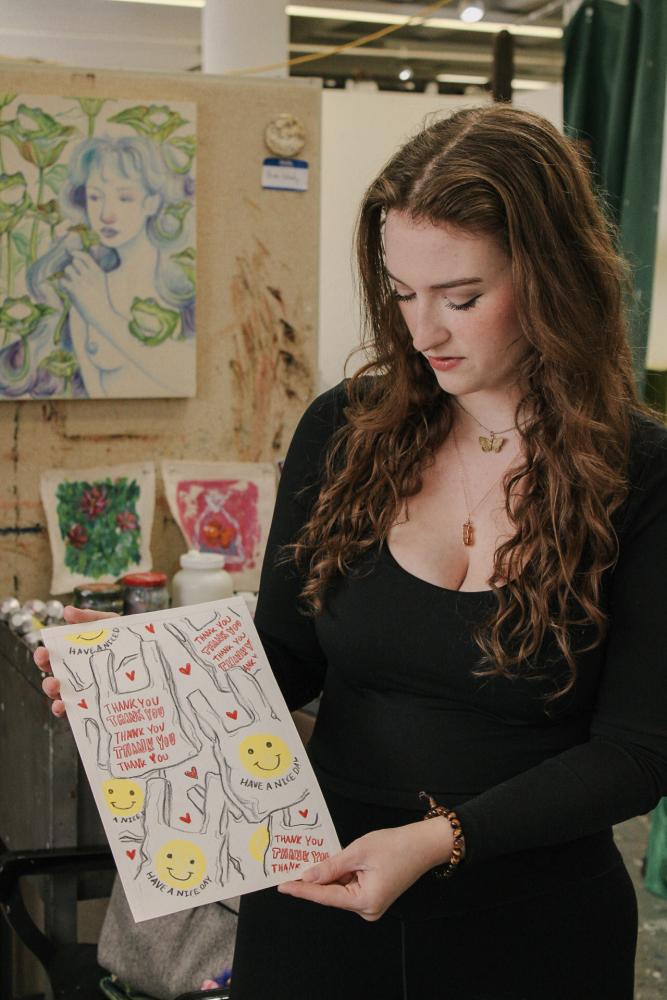
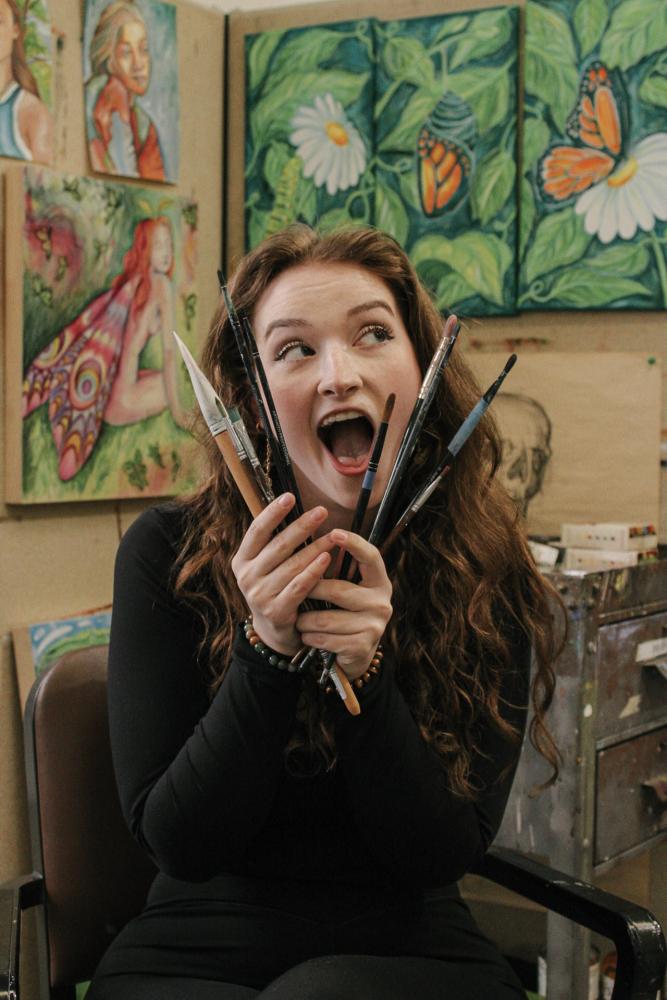
Prepping to take on intimidating biology and math classes, Phelps said that when she opened Blackboard, she was bombarded by a million thoughts and feelings.
She said she was overwhelmed by the confusion of a new system and laptop, the weight of leaving home and the fear that the path she had set to take was not one of her own desires.
Among these thoughts, Phelps said that the thought of art continued to come back to her. She said she followed that draw towards the art and came to a single conclusion.
“The only thing that I could think of was art,” Phelps said, “it’s the only thing I can do.”
“I am so done being stressed out and upset seeing adults throughout my life that rot away,” Phelps said. “Talking about how they wish they didn’t choose their jobs, that they wish they were an artist or had lived their life and committed differently.”
It was then that she decided that she would change her major and pursue the one thing that had never failed her: painting.
To Petkus, Phelps is an incredibly driven artist who “doesn’t let anything get in her way.”
Mary Dye, a senior studio painting major from Louisville, said she has been taking classes with Phelps since she started in the art program.
“Molly is very unique in her practice and her process,” Dye said. “I can’t imagine whipping out as many pieces as she does with the amount of detail that she puts in.”
Petkus said the learning environment is dynamic and intense at times, but simultaneously has a caring and supportive foundation. She said that the advice Phelps gives and receives so willingly helps to create this unique environment in which they exist.
“We are such a community,” Petkus said, “Molly is a core part of that; she has really developed a voice for herself within the group.”
Junior painting and ceramics student Ashlyn Smith from Chicago said that Phelps and their community have influenced her from the start.
“Molly is so fun and outgoing, “Smith said. “She’s one of the craziest people I’ve ever met in such a good way. But she also can be very serious and is such a great emotional friend to have.”
While Smith describes their painting styles as quite different, she said the support they provide each other is unwavering.
Smith said that not only is their community unique in the sense of closeness, but also because the majority of them are women. In a pathway that is still male-dominated at times, Smith said that more women gravitate towards their mediums of painting and ceramics at the university level.
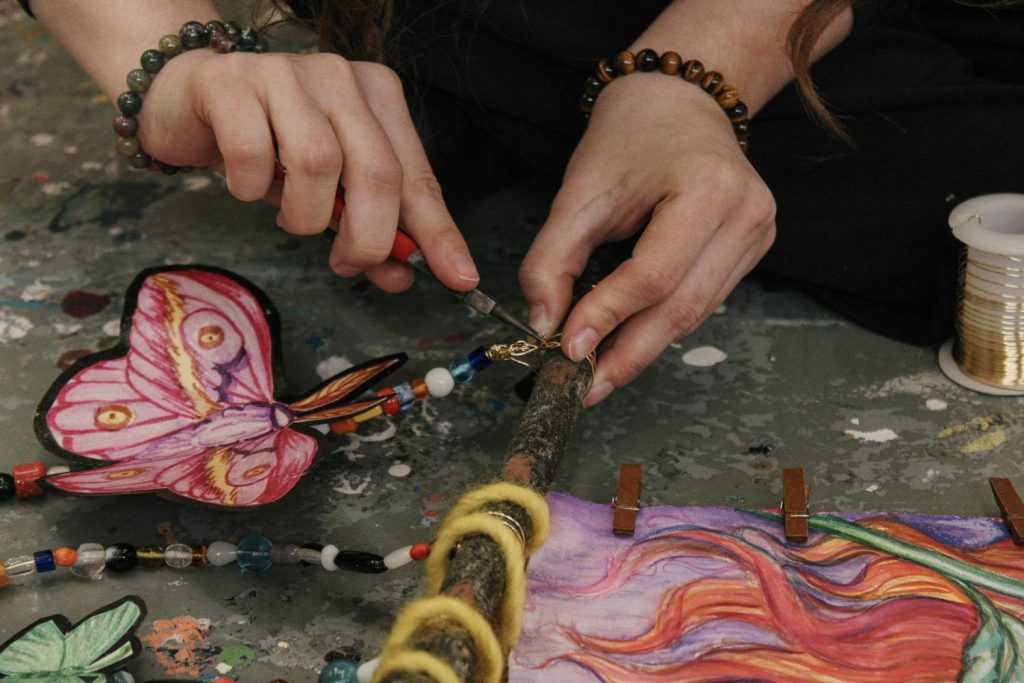
“Being able to have that strong foundation that is more female-focused is a strong start for all of us,” Smith said. “It gives us a lot of confidence to stand with our work and critique our own and others’ work in really meaningful ways.”
Phelps said that switching majors and pursuing this passion has influenced her epilepsy in ways she hadn’t even considered possible.
“When I’m drawing and playing my music, I’m so happy,” Phelps said. “I’ve never had a single seizure.”
However, just because Phelps has found a path that allows her to take on the challenges of her diagnosis headfirst, she said it doesn’t mean she’s fully free of the obstacles in her path.
Phelps said that she has had four grand mal seizures in the last few years, all of which have been stress-induced. She said this doesn’t stand in the way of her determination and confidence.
Phelps said stress is unavoidable for the majority of people, especially a college senior. However, Dye said that Phelps has a certainty in her capability that is set in stone.
“She’ll come in, get a good rant out about it, but then she just locks in,” Dye said. “Like it’s affecting her, but she knows it can’t affect her enough to where she can’t get her work done.”
From Dye’s perspective, Phelps is constantly pushing the limitations of art and her diagnosis. Despite these admirable characteristics, she said that Phelp’s identity is so much more than the challenges she faces.
Smith said that when she first learned of Phelps’ diagnosis, Smith had invited her to go to a Chappell Roan concert. She said that before the concert, Phelps walked her through the precautionary details of what to do if a seizure were to occur, assuring Smith that the likelihood was low but always a possibility.
Smith said this opened her eyes, that the bright and bubbly side of Phelps was accompanied by a deep care and responsibility for those around her.
For Smith, she said this experience didn’t change her perspective of Phelps so much as enrich it. She said It opened up another layer to the girl she already knew, someone whose energy and empathy have always gone hand in hand.
“To me, Molly has always just been Molly, and this was just another facet of her being, just like the fact she likes frogs,” Smith said.
Not only has Phelps found her place in the community of her department, Petkus said that Phelps has had the opportunity to gain an understanding of her belonging within the history of art.
Phelps said that many of the subjects in her pieces occupy an in-between state. She said these creatures she paints are depicted in a flow, whether that be in active motion or a natural transformation. Phelps said her subjects and pieces are recognizable, yet open to interpretation.
“These forms become vehicles for rhythm, humor and abstraction,” Phelps said. “My focus is on color relationships, surface texture, and the sense that something is about to shift or come to life.”
Though Phelps said her work isn’t “deeply emotional,” the consumers of her art see it differently.
“With artwork, it’s never really just about emotion or no emotion, it’s about what underpins the work,” Petkus said. “So a very positive outlook can have depth to it because of the choices that are made and what forms it.”
Petkus said that the work ethic and distinctive parts of Phelps’ creative process have always been there, but that they have blossomed because she has learned to trust herself. She said she has learned to trust that art is her language, and that she owes it to herself to honor that.
“Her work means a lot to her and that makes it mean a lot to anyone who looks at it,” Petkus said.