


Story by Abigail Vickers
Photos by Dominic Di Palermo
Photo Illustration by Sydney Higdon
The Residence Hall Director (RHD) is an “integral member” of the Housing and Residence Life (HRL) team at WKU. According to the “Residence Hall Director” position description on WKU’s website, RHDs are innovative, full-time, live-in, professional staff members responsible for the administrative and managerial functions of one or more residence halls.
According to the position description on WKU’s website, RHDs report directly to an area coordinator and receive a wide range of benefits in their position. Besides salary, the website said RHDs are compensated with furnished apartments to live in with their partners or pets, various insurances, a retirement plan, a partial tuition waiver, a designated parking space, a furnished office space and various other benefits.
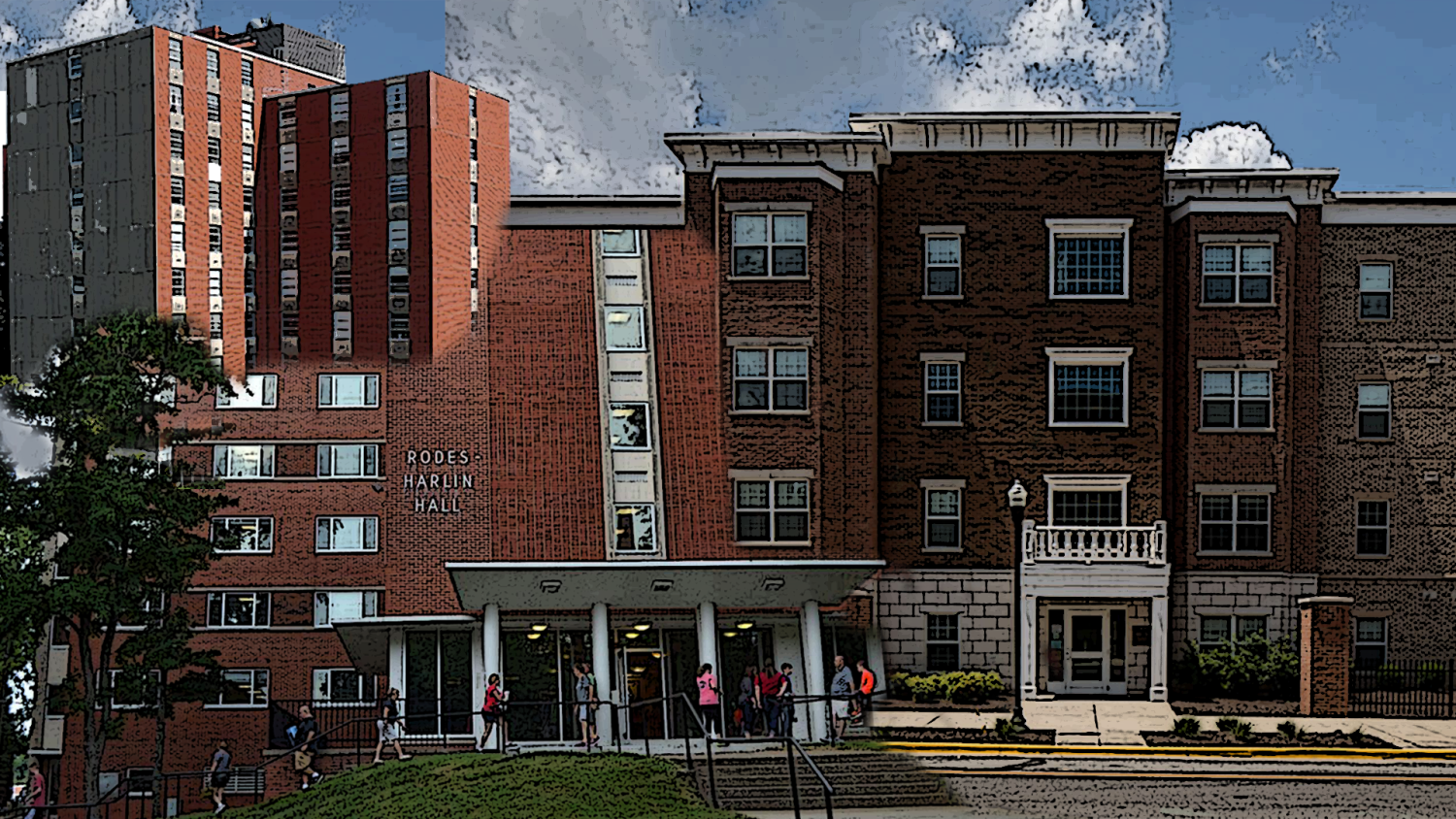
Three RHDs working in Minton, Rodes-Harlin and Center Hall answered questions from Talisman about their daily duties, challenges and skills required throughout a typical workday.
Aaron “AJ” McGillivray: Minton
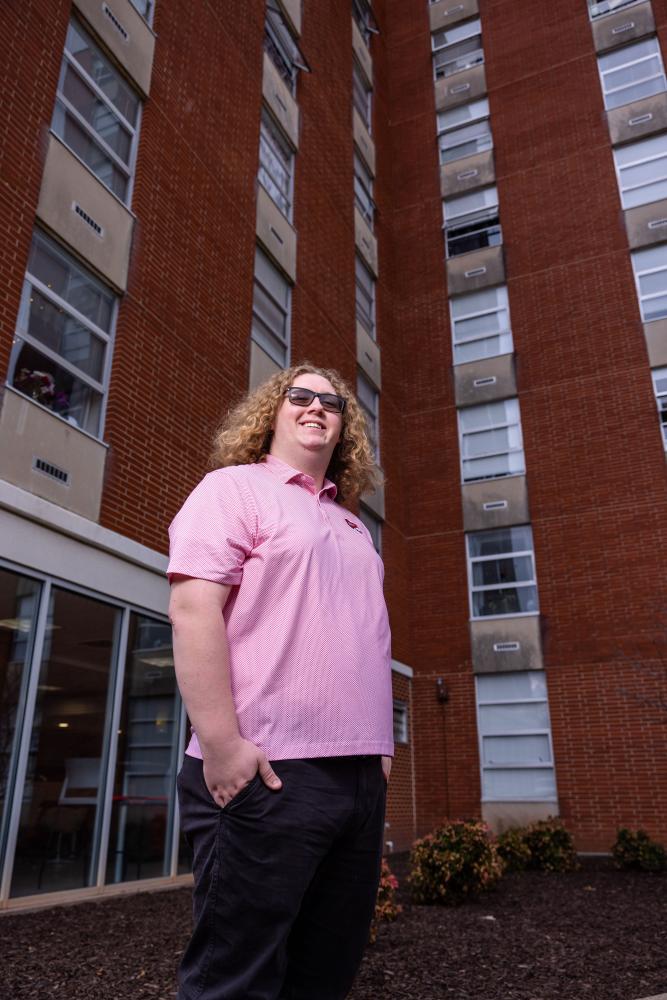
Games, foods, prizes and other festivities covered the Valley for Valleypalooza in Spring 2025, Minton RHD Aaron “AJ” McGillivray said via email. McGillivray said one of his most memorable moments as a RHD at WKU was being able to organize Valleypalooza in 2025 with a great staff from other residence halls.
McGillivray said he collaborated with area coordinator Natalie Smith and other RHDs to help host the event. He said the event was hosted by the Valley residence halls, including Rodes-Harlin, Gilbert and McCormack Halls, along with the Kentucky Street Apartments.
“It gave me the opportunity to collaborate with other professional staff as well as watch residents across campus come together and enjoy their time,” McGillivray said.
McGillivray said this is his second year working as a RHD at WKU. He graduated in 2024 with a bachelor’s degree in history from WKU, and now he is working on getting a master’s degree in student affairs from WKU.
Alongside his work with HRL, McGillivray said he’s also a music director for First United Methodist Church in Franklin, Kentucky. McGillivray said he was a Resident Assistant (RA) for three years, gaining experience and mentorship from his previous hall director.
When McGillivray was a senior at WKU, he said he had his heart set on becoming a high school history teacher. He said after considering his options, though, it only felt right to go back to working in HRL.
“It seemed obvious to me that being a hall director was the next step toward my future,” McGillivray said.
McGillivray said he is also a first-generation college student who understands the hardships and difficulties undergraduate students often face. He said he has dedicated himself to “serving the younger generation of college students as they make their way through their own college experiences,” using knowledge from his own experiences as guidance.
McGillivray said his day as an RHD consists of meetings, visibility within the building, staff support for residential conduct and interactions, along with desk management. He said time and task management can sometimes be challenging in his role.
Prioritizing and balancing tasks can be challenging, so McGillivray said he blocks time for designated tasks during the week to complete all his work.
“The Residence Hall Director requires ample patience and perspective in providing grace,” McGillivray said. “This leads for more knowledge and opportunities of growth as I continue my professional journey.”
McGillivray said he attempts to use his own experiences, traits and skills with time management as guidance for other students and residents around him. He said he must shift priorities and tasks as challenges arise, which can also be difficult.
“Although this can be difficult at times, I always try to remember the positive and learn to grow my adaptability skills as I can,” McGillivray said.
McGillivray said this position allows him to be in “this state of constant learning.” He said that the biggest benefit of being an RHD at WKU is being able to also be a student alongside the residents around him. Additionally, he said the RHD role also offers more flexibility than other positions in higher education.
Charles Sanders: Rodes-Harlin
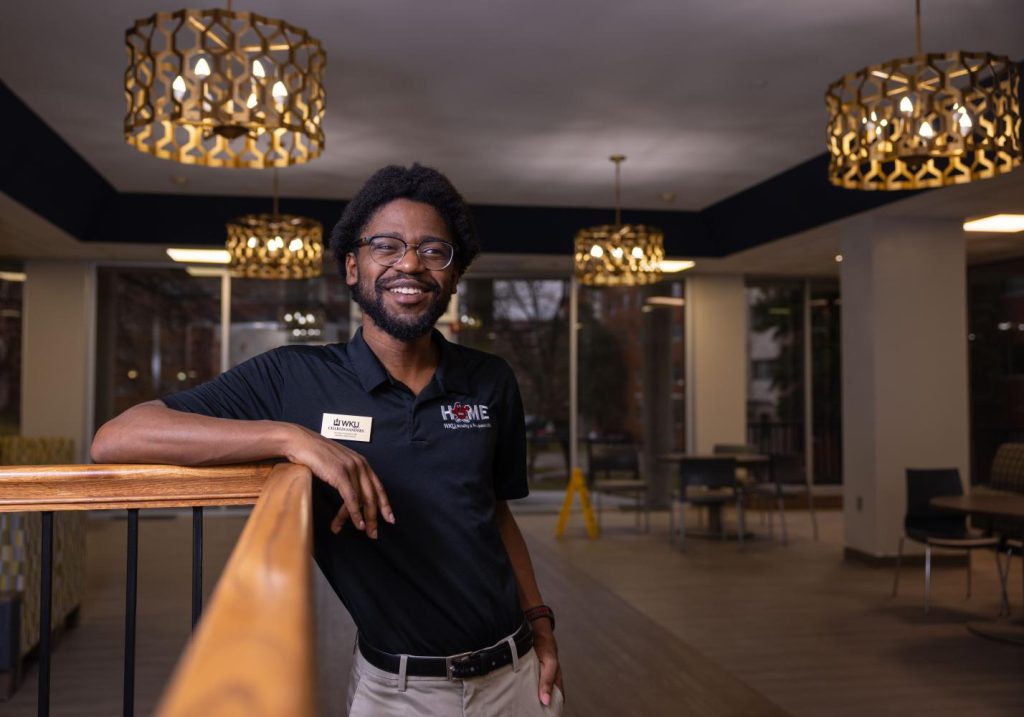
WKU HRL employees dressed as their favorite movie or TV show characters during the department’s themed 2025 Winter Student Staff Training, Rodes-Harlin RHD Charles Sanders said via email. Sanders said he “defied gravity” and fully embraced the opportunity to dress as Elphaba from the movie “Wicked: Part I,” based on the Broadway musical.
Sanders said he committed to his character “wholeheartedly” with a witch’s hat, a black cape, a fully coordinated outfit, a braided hairstyle and green body paint covering his face and all other visible body areas. During karaoke at the training, Sanders said he even performed a rendition of “Defying Gravity,” sung by Cynthia Erivo in the movie.
Sanders said this was one of his most memorable moments as an RHD at WKU because it created an “immediate point of connection” with the other HRL employees, and it helped establish his presence in a memorable way. He said experiences like this reflect what he values most about working in Student Affairs.
“We have the unique opportunity to bring creativity, humor and authenticity into our work in ways that foster engagement and community,” Sanders said. “Leaning into moments of fun and silliness can transform routine trainings into impactful experiences.”
Sanders said creating this kind of energy, while still maintaining professionalism and purpose, has become one of his strengths as a student affairs professional.
Sanders said he has worked “professionally” for HRL at different universities for about four and a half years, working as a RHD for almost three of those years. He said he has worked almost two years as a RHD at WKU.
Early in his career in student affairs, Sanders said his “comfort zone” was primarily working with first-year students. He said he had the opportunity to work closely with upper-class students when he began to work for HRL at WKU, which has helped him develop a deep appreciation for supporting those students.
“Having the opportunity to connect with students at different stages of their collegiate journey has been incredibly fulfilling and has truly been the best of both worlds,” Sanders said.
Sanders said he initially intended to become an orthodontist when he was in undergraduate school. However, he said his mentor guided him to a career in student affairs after he dropped his major.
While he hadn’t heard of the career field before, once his mentor explained it, Sanders said his “entire world made sense” and a “weight was lifted” from his shoulders. He said he’s been on the path of student affairs ever since.
Sanders said he graduated in 2021 with a bachelor’s degree in psychology from the University at Buffalo in Buffalo, New York. He said he received a master’s degree in college student personnel at Ohio University in Athens, Ohio.
Sanders said he decided to work in HRL because he has “always had a passion for the in-hall experience.” He was never an RA or any other kind of HRL staff member in college, but he said he found his path to HRL through student leadership opportunities.
“As a grad student, I decided to stick with Housing,” Sanders said. “And it honestly feels like I caught the ‘HRL bug’ as I call it, and I’ll probably work in Housing for the rest of my career.”
Sanders said “no two days” as a residence hall director are alike. He said his day includes supporting and meeting with RAs, walking the building and ensuring everything runs properly, building relationships with residents and lending a hand with programs, amongst other things.
Sanders said he puts a lot of energy into supporting his staff and residents. While he can’t always remember all the names of his 300 residents, he said that he can “confidently” recognize a significant portion of his residents by face. He said he has many meaningful, substantive conversations with those residents.
Sanders said he genuinely enjoys connecting and learning about his residents’ lives, academic pursuits, personal interests and goals. He said the unique composition of the residential community in Rodes-Harlin had been particularly rewarding to work with this year.
Sanders said the biggest challenges in his position are mainly internal issues, rather than external issues with the department itself. Since being an RHD is a very “human-centered” role, Sanders said it can be emotionally taxing at times.
“Sometimes I can carry all that emotional labor and bring it home with me,” Sanders said. “So, it’s important that I stay on top of my self-care and make sure my own cup is full before I serve my community.”
Sanders said RHDs learn so much because of all of the “different hats” they have to wear, but what he has primarily learned how to do is teach students foundational skills that they’ll carry throughout their entire college careers. He said he has been able to work closely with his student staff, giving tips and tricks on the importance of advocacy and how to make an impactful and lasting change for themselves and others.
Reece Pratt: Center
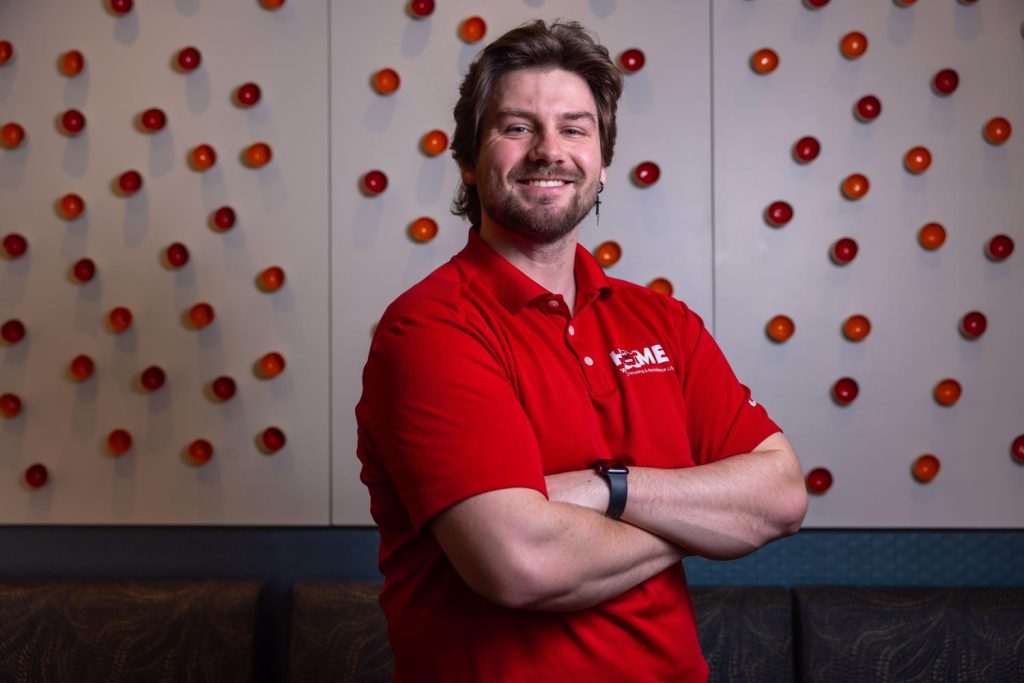
An encounter that initially “felt like a staring contest” would turn out to be one of the most memorable moments working for HRL, Center RHD Reece Pratt said.
Pratt said he scheduled one-on-one meetings with his staff at the beginning of the year, but one RA initially was particularly quiet. Pratt said meetings continued with short responses for a while, but he focused on building trust without forcing conversation or connection.
Over time, Pratt said this RA became more comfortable, talked more during meetings, engaged around the building and their confidence grew. Eventually, the RA started giving campus tours and became one of the “most engaging student leaders on staff,” Pratt said.
“Seeing that growth from hesitation to confidence was incredibly rewarding,” Pratt said.
Pratt said he graduated in 2022 with a bachelor’s degree in sports administration from Tennessee Tech University in Cookville, Tennessee. He said he received his master’s degree in higher education administration in 2025 from the University of Tennessee, Knoxville in Knoxville, Tennessee.
Pratt is now a full-time RHD, and he said he oversees both Center and the Kentucky Street Apartments. He said he has been a RHD for three and a half years to help students grow and navigate challenges, build independence and learn from both success and setbacks. Intentionally splitting his time between the two residence hall communities, Pratt said he tries to give the same level of support to both the underclass and upperclass students.
“Being part of that process and helping students develop confidence, responsibility, and a sense of belonging is what makes this work meaningful to me,” Pratt said.
Pratt said one of the main challenges that comes as a housing director is balancing responsiveness to immediate concerns while still completing previously scheduled tasks and responsibilities. He said the support system in HRL makes it more manageable.
Another big part of being a RHD is staying connected and up to date with campus partnerships, Pratt said. He said he collaborates with the Kelly Autism Program and WKU Athletics to help better support the students in those programs.
“Working together allows us to create a more holistic support system for students in my communities,” Pratt said.
Pratt said working as an RHD helped him develop the ability to approach situations from a learning perspective. He said this role allows him to interact with many unique individuals, and he views challenges and mistakes as opportunities for growth. This mindset, he said, has helped him become more patient, adaptable and intentional in his decision-making.