


Story by JaKayla Brown
Photos by Julia Buntyn
Several students on the Hill share a love for ink. Some students’ tattoos have intricate meanings, while others were for fun. Talisman sat down with three students to learn more about the stories behind their tattoos.
Riley Brooks
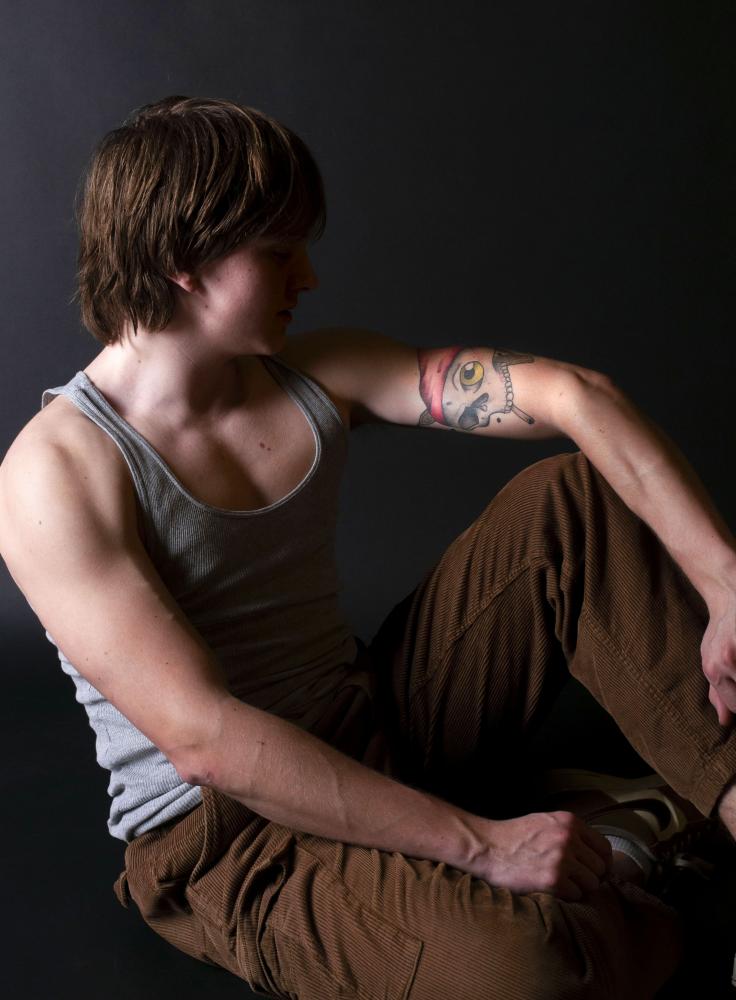
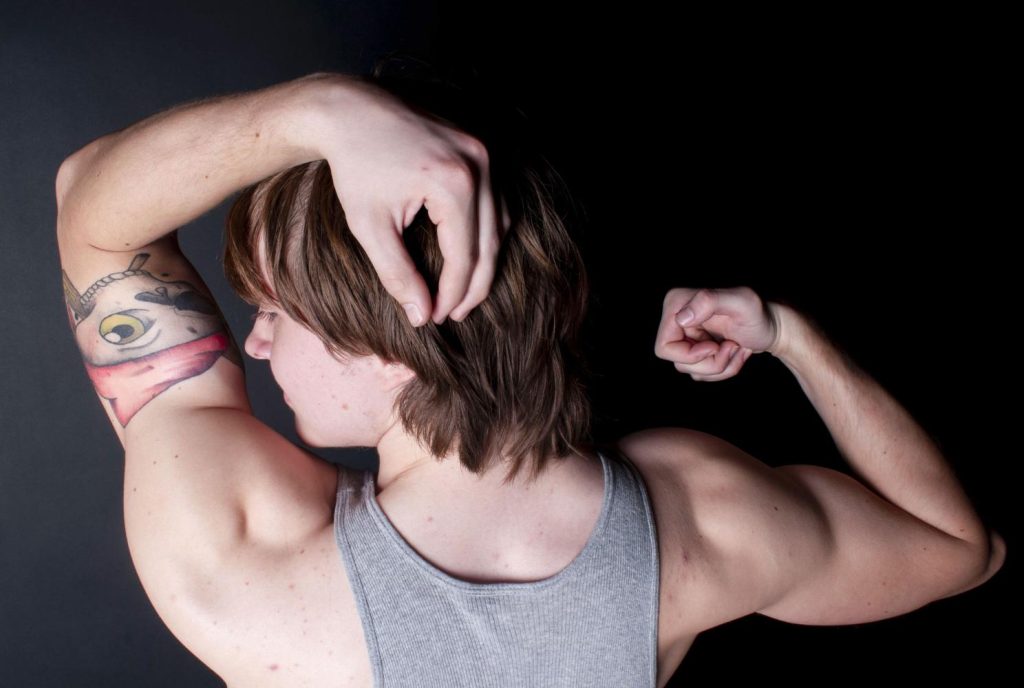
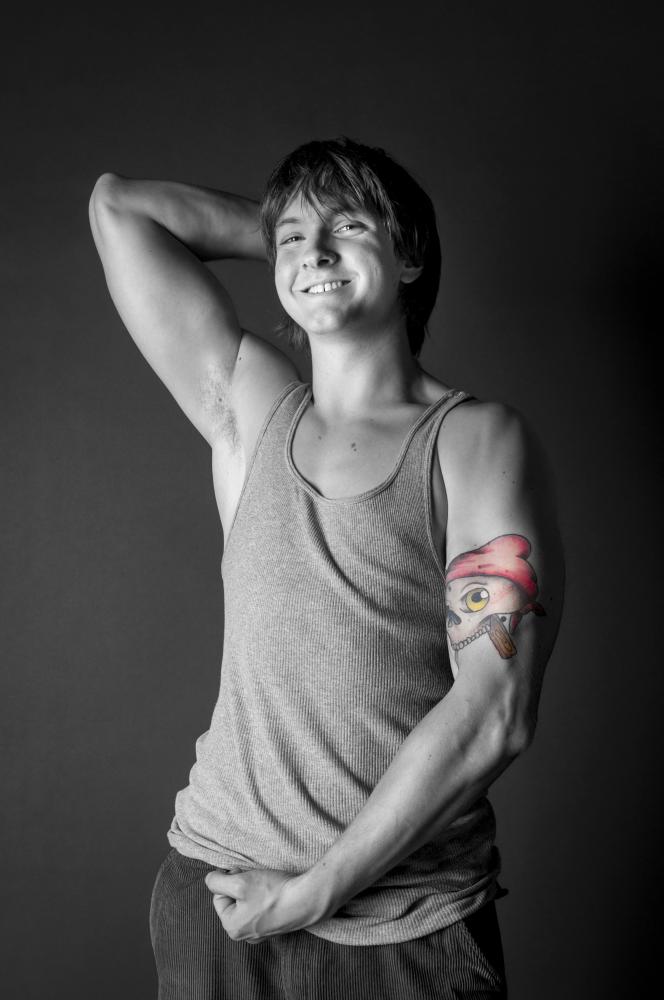
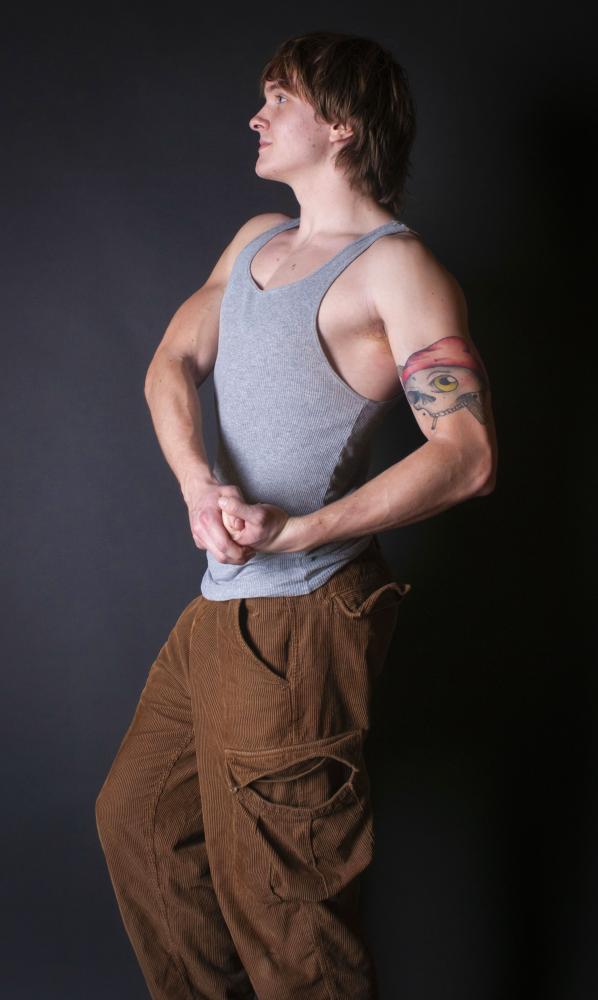

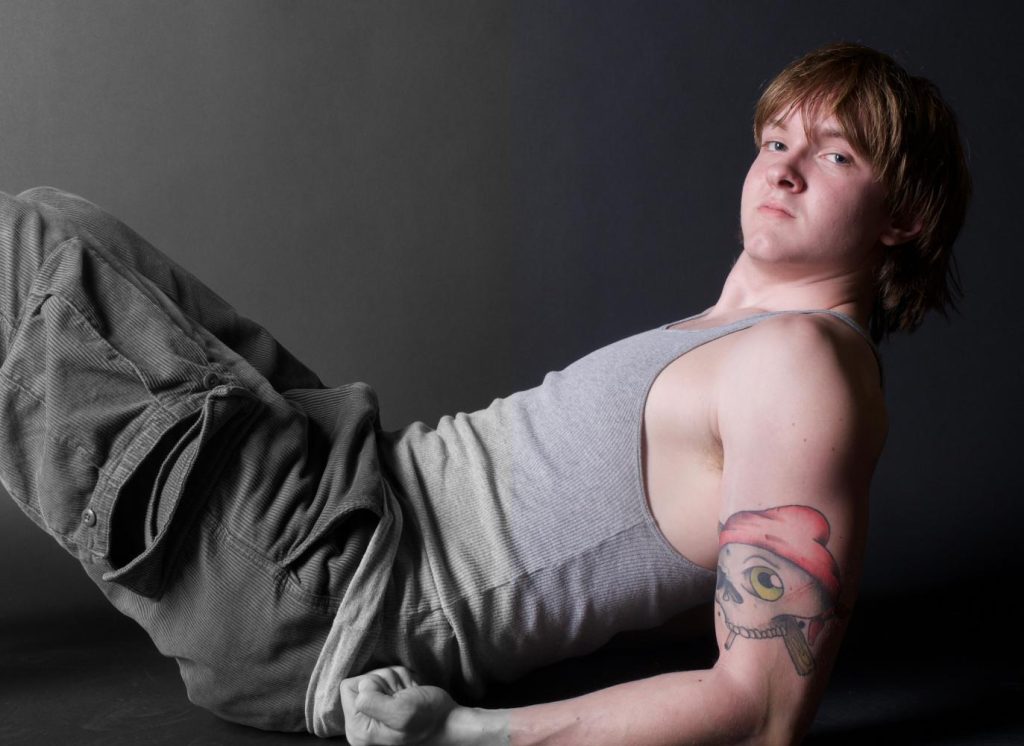
Riley Brooks, a junior communication studies major, said he got his tattoo recreated as close to his father’s as possible. Brooks said his father passed away when he was 16 years old, and Brooks said he knew that he wanted to get this tattoo as soon as he turned 18 to have a piece of his father with him forever. “It keeps the memory of my dad close to me,” Brooks said.
Junior Riley Brooks said the tattoo on his arm is more than just artwork; it is a memory of his father and a reminder of his roots.
Brooks said he grew up in Louisville before moving to Bowling Green for college. Like many students adjusting to life on their own, he said he spends his free time lifting weights, playing video games and watching movies. He said the pirate skull tattoo on his arm carries a story that reaches far beyond everyday routines.
Brooks said he got the tattoo when he was 18, just before starting his freshman year of college. The design, a skull wearing a red bandana, was inspired by a tattoo his father once had, Brooks said.
“My dad passed when I was 16,” Brooks said. “So I got this kind of redone as a remembrance piece.”
Brooks said the original design was custom, which made the recreation harder, and he could not find it anywhere online. Instead, he said he relied on old social media photos of his father to guide the artist who would sketch a new version.
“I looked it up on the internet and couldn’t find it anywhere,” Brooks said. “So I had to go off old Instagram photos that he had.”
Brooks said the final design is not identical to the original, and that difference is something Brooks appreciates.
“It’s not a one-to-one recreation,” Brooks said. “But it’s kind of nice that it’s a little different.”
Brooks said the tattoo was done at a shop in Bowling Green during a single session that lasted about four hours. While the experience was manageable overall, Brooks said certain parts of the process were definitely painful.
“On the outside of the arm, it really wasn’t that bad,” Brooks said. “But once you got to the inside of the arm, that hurt a lot more.”
Brooks said the shading was the toughest part, and the lighter parts were not as bad.
Like many first-time tattoo clients, Brooks said he quickly learned that the healing process can be just as memorable as the tattoo itself. After a few days, the skin began to peel and itch, something he said he had not fully expected.
“It started peeling a lot around the lines and the teeth,” Brooks said. “That was weird because once you get a tattoo, you want to protect it.”
Brooks said the process is partially mental, but you just have to remember that everything is a part of the healing process.
Brooks said his aftercare routine was simple. Brooks said he kept the tattoo covered for the first few days, then washed it regularly with unscented antibacterial soap and kept the area moisturized. Within a couple of weeks, the tattoo had healed.
Even now, Brooks said he still receives positive reactions from people who notice the tattoo. Many are curious about the design at first.
“People usually don’t know what it is right away,” Brooks said. “Then I tell them it’s a pirate skull.”
Once he explains the meaning behind it, Brooks said the reaction often changes.
“When I tell them it’s from my dad they think it’s really sweet,” Brooks said.
Brooks said the tattoo ended up costing more than he originally expected. The piece itself was around $300 to $350, and Brooks said he also wanted to tip his artist generously.
“I ended up paying around four to 450,” Brooks said. “When I say that now, I’m like, wow, I spent $400.”
Brooks said that despite the price, he does not regret the decision.
“This means a lot to me,” Brooks said. “I’m happy with how it came out.”
Brooks said for students considering their first tattoo, he has simple advice, which is to take time to think about it. He said many people get excited about new ideas without considering how permanent a tattoo can be.
Brooks cautions against impulsive decisions on design. He said he also recommends placing a first tattoo somewhere that can be covered if necessary.
“Your first tattoo probably shouldn’t be on your hand,” Brooks said. “It should be somewhere you can cover up.”
The design itself includes small touches of color, including the bright red bandana and a green eye. While some people prefer black ink tattoos, Brooks said he believes the color adds personality.
“It just makes it pop more,” Brooks said.
Over time, Brooks said the colors may fade slightly, but tattoos can always be touched up if needed. He said the small changes over time are simply part of the tattoo’s life.
Brooks said he believes tattoos represent something deeper. While older generations sometimes associate tattoos with rebellion or unprofessionalism, Brooks said sees them as a form of personal expression.
“I think tattoos, more than anything, are a form of self-expression,” Brooks said.
In 10 years, Brooks said he believes the meaning behind the tattoo will only grow stronger.
“My dad was in his mid to late 30s when he passed,” Brooks said. “So I’ll be closer to his age with this tattoo.”
Brooks said as he grows older, he expects the tattoo will become a reflection of his own journey as an adult.
“I think it’s always going to be a reminder of where I came from,” Brooks said. “The man I came from versus the man I’m trying to become.”
Brooks said if someone were to write a story about Brooks based only on his tattoo, Brooks said they might imagine something dramatic.
“They’d probably say I was a pirate,” Brooks said.
However, Brooks said, beneath the humor lies a deeper meaning behind the design.
“A skull is the most human thing about us,” Brooks said. “There’s no class, no race, no gender. A skull is a skull.”
Underneath everything, he said, people are simply human beings who live lives, love others and leave memories behind. And Brooks said on a college campus filled with stories waiting to be told, he carries one of his most important memories with him every day, etched permanently in ink.
Rush Robinson
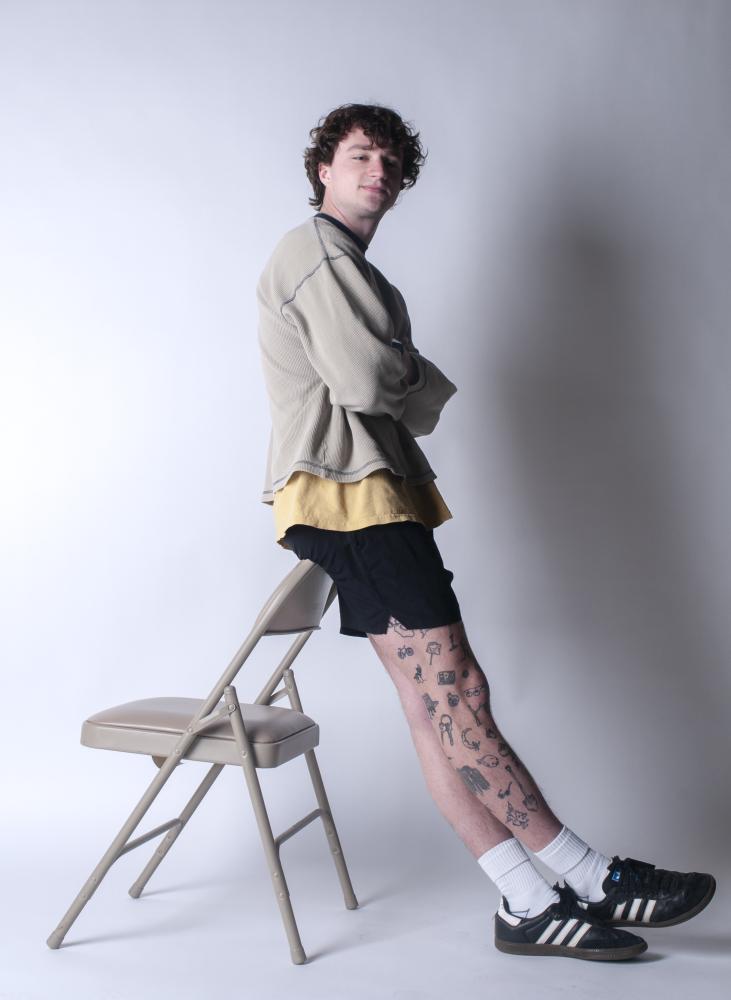
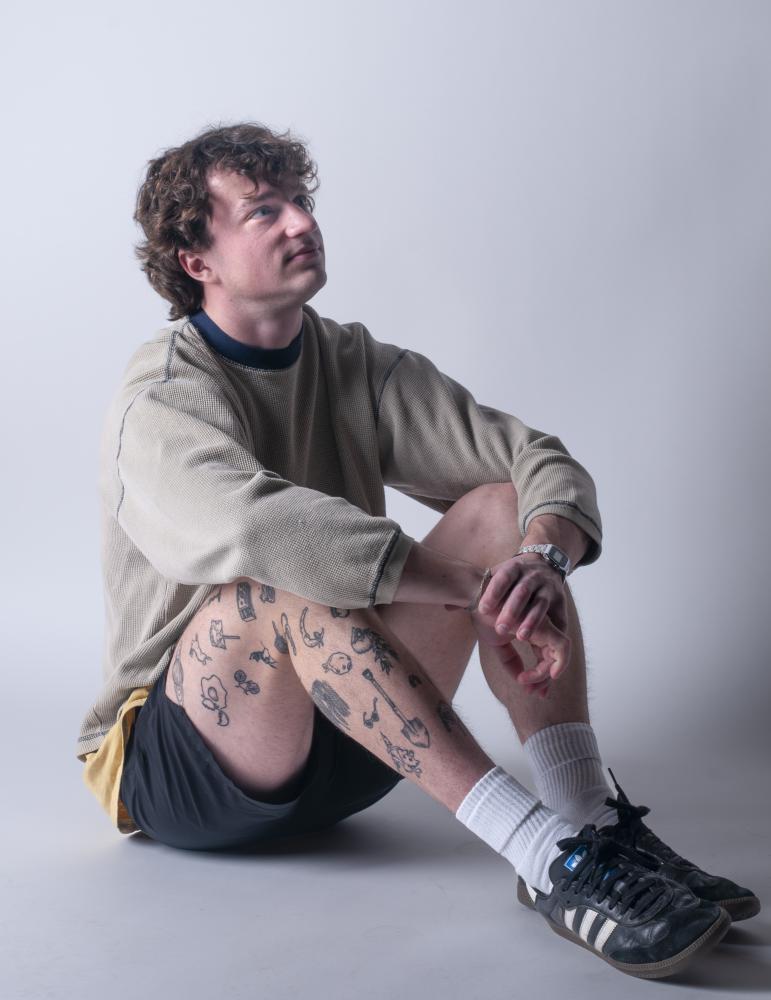
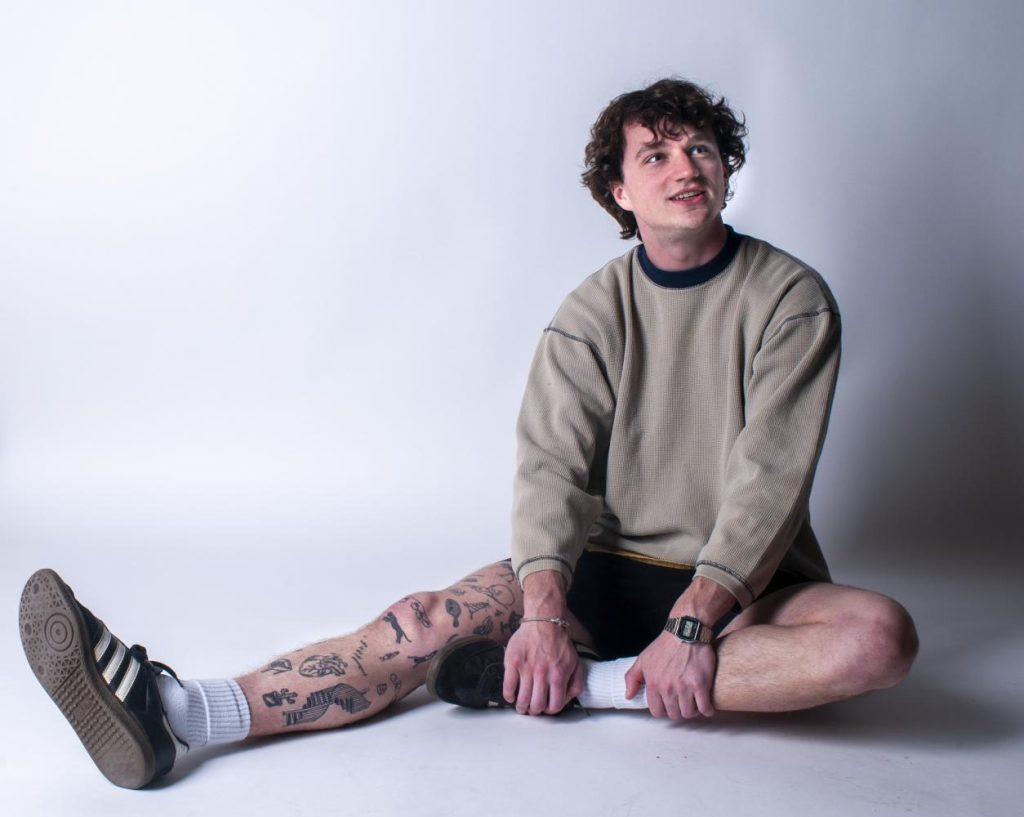
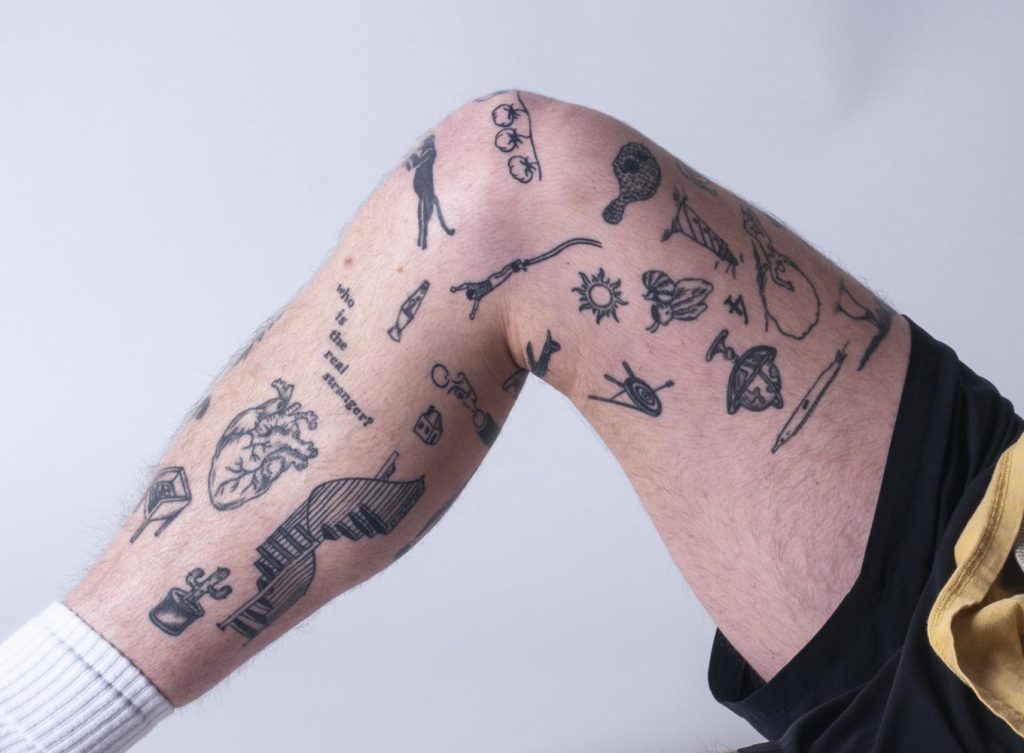
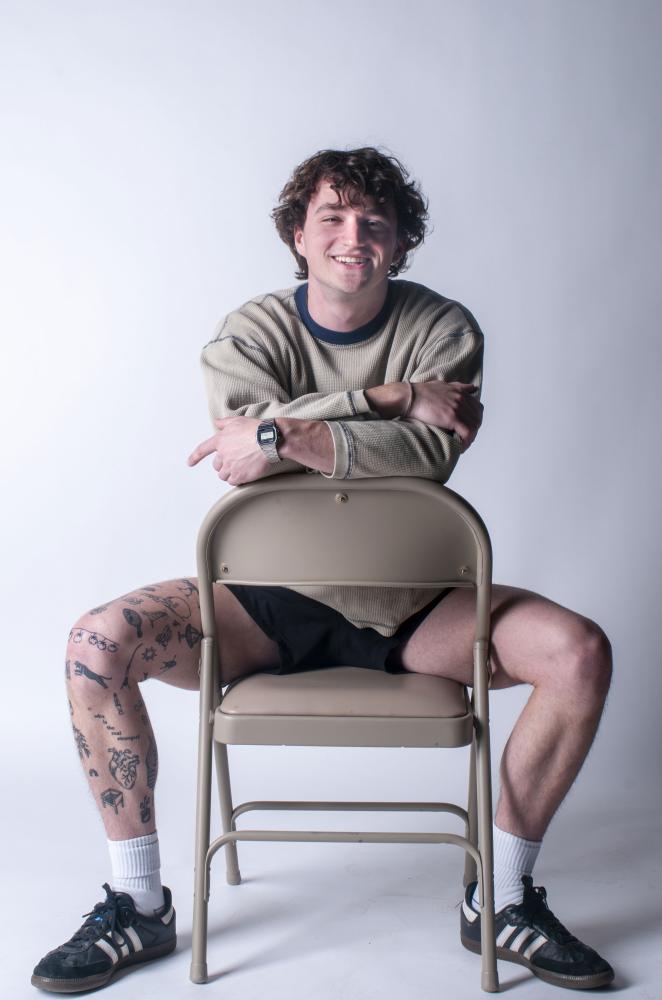
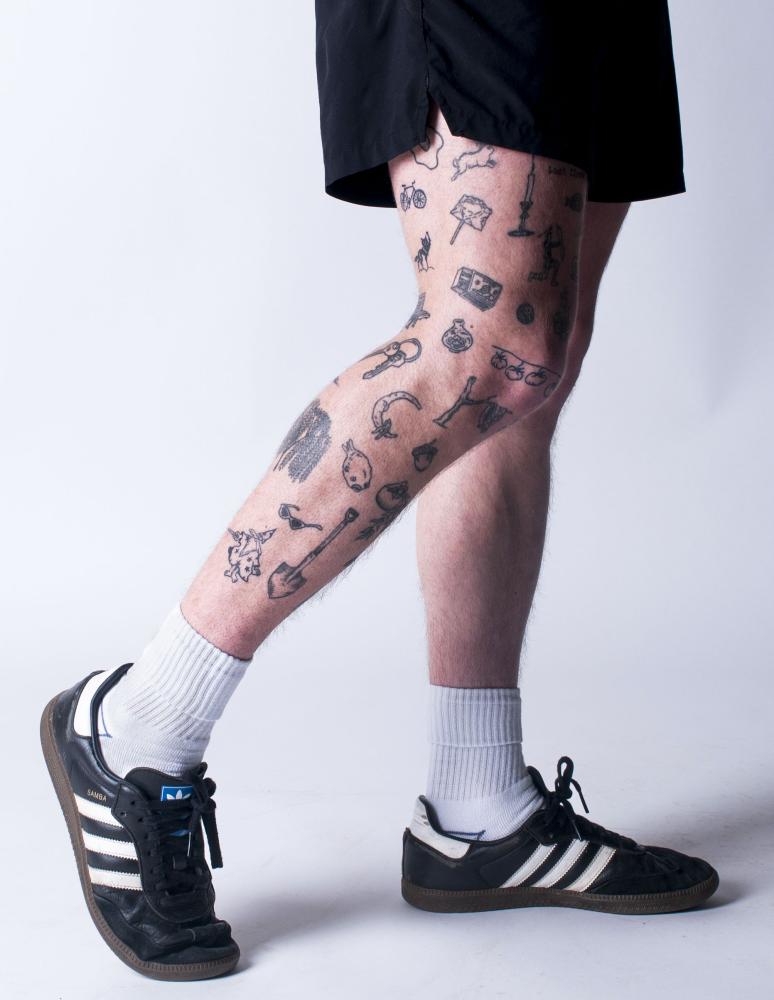
Senior Rush Robinson, a triple major in psychology, philosophy and sociology and President of the Student Government Association, said he uses his tattoos as a form of self-expression, and said he got his first tattoo at 17 years old.
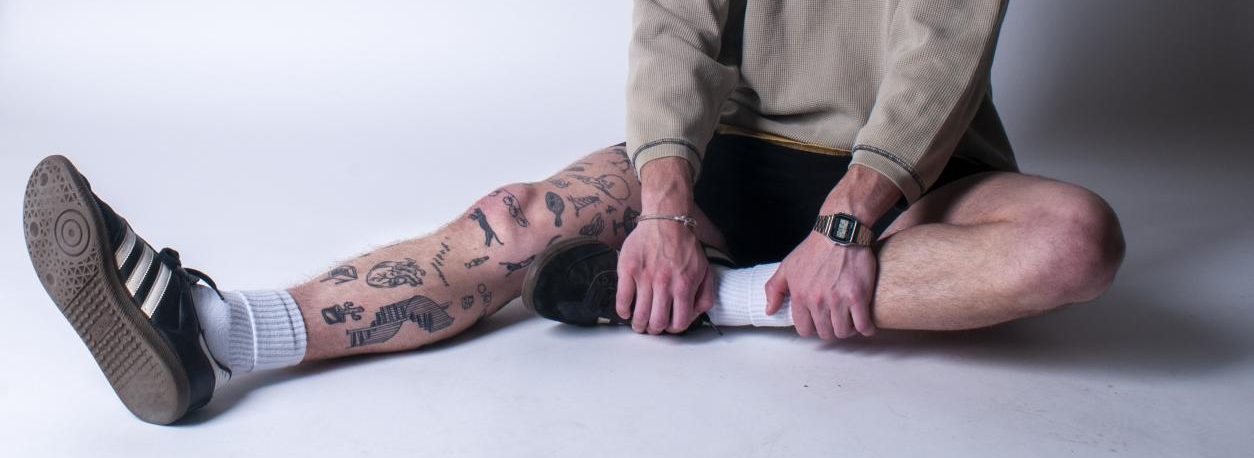
For senior Rush Robinson, he said the collection of ink covering his right leg tells a story about curiosity, humor, and growing up.
Robinson, from Benton, Kentucky, said he is known on campus for his leadership roles. He said some of these roles is being a Spirit Master. He studies psychology, philosophy and sociology and serves through WKU’s Student Government Association while preparing for graduate school.
Robinson said many people do not immediately notice the nearly 15 tattoos that cover his right leg.
Robinson said he got his first tattoos shortly after turning 18 near the end of high school. The moment came after watching his father get a tattoo of his favorite soccer team.
“My dad got the crest for Liverpool on his arm,” Robinson said. “He was kind of a nerd about it for a little bit. He was like, ‘Yeah, you can see my ink.’”
Robinson said that moment stuck with him. For years, Robinson said he imagined eventually getting tattoos of his own.
Robinson said he always thought the placement of his leg would be cool, but his mother always had one rule.
“Her thing was always that I needed to be able to cover them up,” Robinson said. “She was like, you don’t know what your job is going to be.”
Robinson said he followed that advice. Every tattoo he has sits on his right leg, where it can easily be hidden beneath a pair of pants.
Robinson said his first session produced two tattoos: a blank tic-tac-toe board and a small stick figure walking a Tyrannosaurus rex on a leash.
“I like interactive tattoos,” Robinson said. “I thought it would be fun for my kids someday to play tic-tac-toe on my leg.”
Robinson said the T. rex tattoo was simply something he found amusing.
“It’s just a stick man walking a T. rex,” Robinson said. “I just thought it was funny.”
Robinson said Since that first session, his tattoos have grown into a patchwork of tiny designs, many of them playful or nostalgic. Some references, he said, are from movies he loves, like a wolf inspired by the final scene of “Fantastic Mr. Fox” or a light cycle from “Tron.”
Robinson said one of his current favorites is a tiny lava lamp.
“I had a lava lamp in my bedroom as a kid,” Robinson said. “I used to stare at it before I fell asleep.”
Robinson said not every tattoo carries a deep meaning, and he is comfortable with that.
“I’d say about half of them don’t really have a meaning,” Robinson said. “They’re just things I thought looked cool.”
Robinson said the tattoos are not completely random. He said he intentionally organized many of them into small collections across his leg. There are clusters of chairs, celestial objects and other repeated images hidden throughout the artwork.
“I kind of want it to be like a game,” Robinson said. “Like telling my kids, ‘Find all the fish,’ or ‘Find all the chairs.’”
Robinson said the result is less like a single large tattoo and more like a collage.
He said most of his tattoos have been done by the same artist in Bowling Green. After his first experience with a traditional tattoo artist, he said he eventually found a local artist named Mara Thayer, who has now completed almost his entire leg.
“I think I have just south of 50 tattoos,” Robinson said. “She’s done all of them except the first two.”
The relationship between artist and client is something Robinson said people should take seriously.
“If you’re not comfortable with the artist, you should walk out,” Robinson said. “You need to feel comfortable saying, ‘Hey, I want that a little higher,’ or ‘I want that a little bigger.’”
Robinson said over time, he developed a strong level of trust with his artist. What started as careful planning eventually turned into what he said was a more relaxed collaboration.
“At first I’d say, ‘Can we make that smaller?’” Robinson said. “Now I’m like, fill it up.”
Robinson said the experience of getting tattooed has also become routine for him. Because many of his tattoos are small, Robinson said he often gets several during a single appointment.
“I’ll collect designs for a few months,” Robinson said. “Then when I have about 10 or 15, I’ll go get them all done.”
Robinson said, even after dozens of tattoos, the process still comes with some pain. The area around the knee, he said, has proved to be the most uncomfortable.
“There’s one right on the tendon in my knee,” Robinson said. “That hurt so much.”
Robinson said, unlike some clients who prefer to distract themselves with music, he usually spends his sessions talking with his artist.
“I’m just curious about everything,” Robinson said. “I ask questions the whole time.”
Sometimes, he said, he even brings friends along to watch the process.
“I love taking people who’ve never seen a tattoo happen before,” he said.
Despite having so many tattoos, Robinson said they rarely affect how people see him on campus. Robinson said that because they are located on his leg, many people do not even realize he has them.
“I had a dozen people last week say they didn’t know I had tattoos,” Robinson said.
Robinson said that this can be surprising for someone in a leadership position.
“I’d guess most of them don’t even know I have tattoos,” Robinson said.
He said that when people notice them, Robinson is usually met with curiosity rather than criticism.
“They’re more interested than anything,” Robinson said.
Robinson said he believes this shift reflects a larger cultural change. Tattoos once carried a strong social stigma, but he said that perception has softened over time.
“In the past, it was like if you had tattoos, you were a hippie or something,” Robinson said. “Now they’ve worked their way into the middle class and upper class.”
Robinson said his tattoos are simply another form of self-expression.
“They’re a way to express yourself,” Robinson said.
Looking ahead, Robinson said he does not regret the collection he has built so far. In fact, he said he hopes the tattoos will age alongside him.
“I want them to mature with me,” Robinson said.
Someday, he said, he expects to look back at the collection with a sense of humor.
“I hope when I’m 70 I look at them and think, ‘What an idiot I was,’” Robinson said.
However, Robinson said that is part of the point. The tattoos represent different moments in his life, pieces of media he loved, and childhood memories. Together, Robinson said they form a visual timeline.
“I respect tattoos,” Robinson said. “Even the goofy ones.”
While the images themselves may be small or silly, Robinson said the experience behind them has been meaningful.
Presley Compton
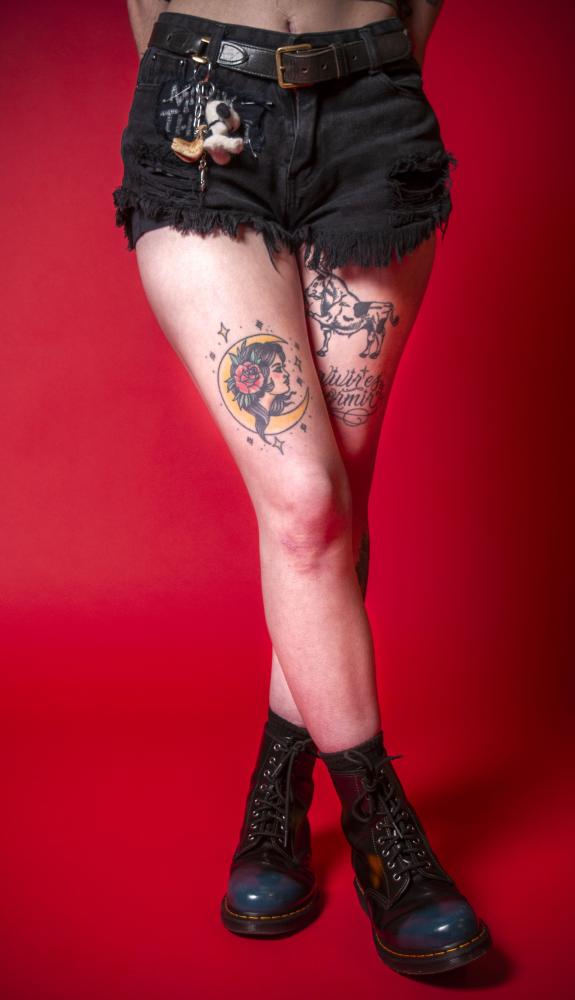

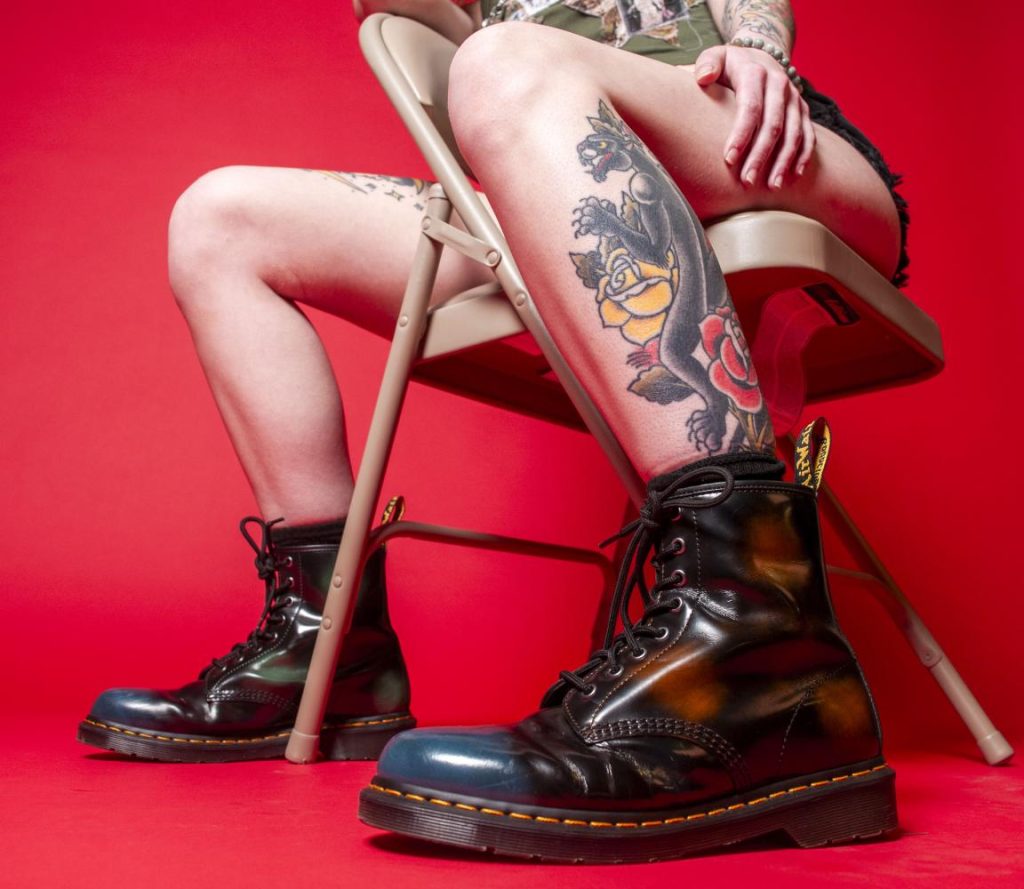


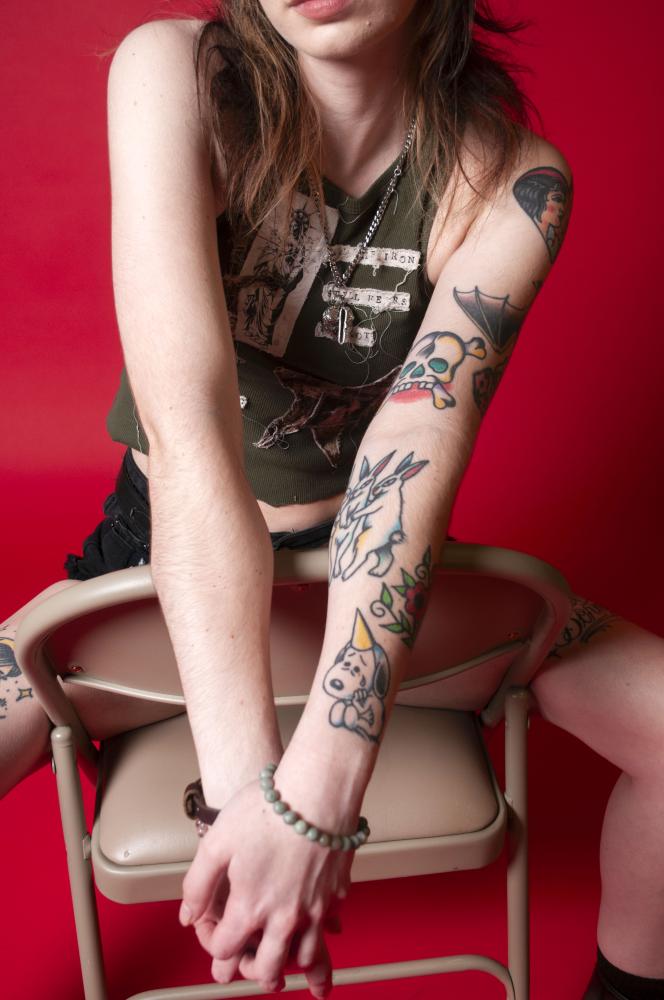
Junior Presley Compton, studying studio art with a concentration in printmaking, said art is important. She said she got her first tattoo at age 16.
Presley Compton said she is a junior pursuing a Bachelor’s in Fine Arts in studio art with a concentration in printmaking. Compton said tattoos are not just a personal expression. They are family, craft and a future already in motion.
Compton said on a campus where tattoos often peek out from beneath sleeves and jackets, Compton’s stand out. Bold lines. Heavy shading. A growing collection that reflects both artistic instinct and lived experience.
Compton said long before college, art was already central to her life. Her father, a tattoo artist of more than two decades, shaped that path early on. Today, she said they work side by side at his shop, Skull and Eagle Tattoo, just minutes from campus.
“He’s been tattooing for, I think, this is his 23rd year,” Compton said. “And I’m working with him now there, and it’s just me and him right now.”
Compton said that the relationship did more than introduce her to tattoos. She said it also made them accessible.
Compton said she got her first tattoo at 16, shortly after her birthday, a milestone made possible by Kentucky law and her father’s consent. The piece, a woman with the moon, sits on her thigh.
“That was the only one where I was like, ‘Oh, this is a really important day,’” Compton said. “Just because it was the first one.”
What started as a single meaningful moment quickly evolved into something more fluid. Now, at just 13 tattoos and counting, Compton’s collection reflects spontaneity as much as intention.
“A lot of the time I get tattooed sporadically and on a whim,” Compton said.
Unlike those who spend months planning a single design, Compton said her process is rooted in immersion. She said working in a shop means constant exposure to flash designs, sketches and other artists’ work.
“I look at flash all day long at work,” Compton said. “A lot of the time, I am just picking like flash off of the wall at a shop.”
Compton said her style leans heavily into American traditional, a form known for bold lines and lasting clarity.
“We both [her and her father] specialize mostly in American traditional,” Compton said.
Compton said that choice is not accidental. It reflects a deeper understanding of how tattoos age, something she said many first-timers overlook.
“Tattoos do fade, and they change, and they stretch out over time,” Compton said. “So like certain designs won’t heal as well as what they think.”
Compton said even within a collection built on spontaneity, certain pieces rise to the surface. She said people most often notice the bunnies on her forearm or the large panther that took multiple sessions to complete.
“I think it’s [the bunny tattoo] everyone’s favorite,” Compton said. “And it’s one of my favorites as well.”
Compton said her personal favorites, though, are a mix of whimsy and nostalgia.
“I feel like my favorites are usually the ones that don’t have inherent meaning,” Compton said.
Compton said not all of her tattoos are purely aesthetic. She said some carry deeper emotional or cultural significance, particularly those tied to music.
Compton said one piece references Elliott Smith, whose influence shaped her decision to get a small Ferdinand design.

“I’ve always been a super big Elliott Smith fan,” Compton said.
Compton said her journey into tattooing itself has been equally personal. She said learning the craft under her father’s guidance came with its own challenges.
“It’s been kind of hard, honestly,” Compton said. “It was really hard for us to separate work from home.”
Compton said over time, though, that dynamic shifted into something collaborative.
“We work pretty well together now,” Compton said. “And just learn and appreciate it together.”
Compton said the physical experience of getting tattooed has also shaped her perspective as both artist and client. Despite her familiarity with the process, Compton said she is quick to admit it is not always easy.
She said that she was such a “baby” with pain, and some sessions proved more intense than others. Her panther tattoo, a large piece completed over multiple appointments, pushed her limits.
“I had to break that up into three sessions because it was super, super painful,” Compton said. “After that first session, I got the tattoo flu.”
According to Stretchit Body Jewelry Co., the tattoo flu is a physical reaction caused by the body’s stress response, and is something she now warns others about, especially those considering larger pieces.
Still, Compton said pain is part of the process. She said she would describe it not as something to romanticize but something to respect.
“I actually really hate it,” Compton said. “I just like art.”
Compton said that distinction speaks to a broader misconception she encounters regularly. She said people often assume heavily tattooed individuals enjoy the sensation of getting tattooed.
“I hope that people realize that I’m getting this because I just really love art,” Compton said.
Compton said on campus, reactions to her tattoos range from curiosity to admiration. She said while she sometimes notices lingering stares, most interactions are positive.
“If people stop me, they’ll say they like them,” Compton said.
Compton said those moments also allow her to share her story and her work, often connecting back to her father or the artists who have influenced her.
Compton said beyond her personal experience, she is outspoken about the evolving perception of tattoos in professional spaces.
“I think anyone that has tattoos can be literally anything they want to be,” Compton said.
Compton said through her work, she has seen clients from every background, from retail workers to first responders.
“I’ve got clients that are like doctors or nurses, EMTs, police officers,” Compton said. “I don’t think that anyone should limit another person’s capabilities based on whether they have a tattoo or not.”
Compton said that perspective is grounded in both lived experience and industry knowledge. She said she emphasizes the importance of understanding tattoo culture, especially for those new to it.
“Look into who you’re getting tattooed by,” Compton said. “Make sure it’s somebody that does the stuff that you want.”
Compton said in a city like Bowling Green, where tattoo shops have grown in number, that advice becomes even more relevant.
“There’s somebody here for everything that you would want,” Compton said. “Just make sure it’s the right person.”
Compton said that, as for her own future, she sees tattoos not as a phase but as a lifelong evolution.
“I feel like they’re definitely a big part of me,” Compton said.
Compton said that in 10 years, her collection will likely expand alongside her career, marking not just moments in time but growth within her craft.
“It’ll be like some of the first things that I ever got and some of the first people I ever met through tattooing,” Compton said.
Compton said that at its core, her story is not about rebellion or aesthetics alone. It is about continuity. She said it is about a shared craft between parent and child and a commitment to art in its most permanent form.
“I think it’s very special for me to be able to wear my dad’s art every day,” Compton said.
Compton said on the Hill, where tattoos often tell quiet stories beneath the surface, hers are anything but silent. She said they speak to where she comes from, what she values, and where she is going next.