

The quiet work of WKU’s Floral Department
Story by Annie Hutchins
Photos by Jadin Smith & Natalie Barber
Design by Emilia Lis
Editor’s Note: This article was originally released in Issue 19 of the WKU Talisman print magazine. Click here to read more articles from the Talisman’s semesterly print.
On the southwest edge of WKU’s campus, surrounded by hydrangeas and greenery, stands the Floral Design Training Center. The floral club, also known as the Student American Institute of Floral Design, holds its meetings there.
Floral design classes are held in the same building, led by Roger Dennis, a clinical assistant professor of horticulture, director of the floral design and training center and advisor for the SAIFD.
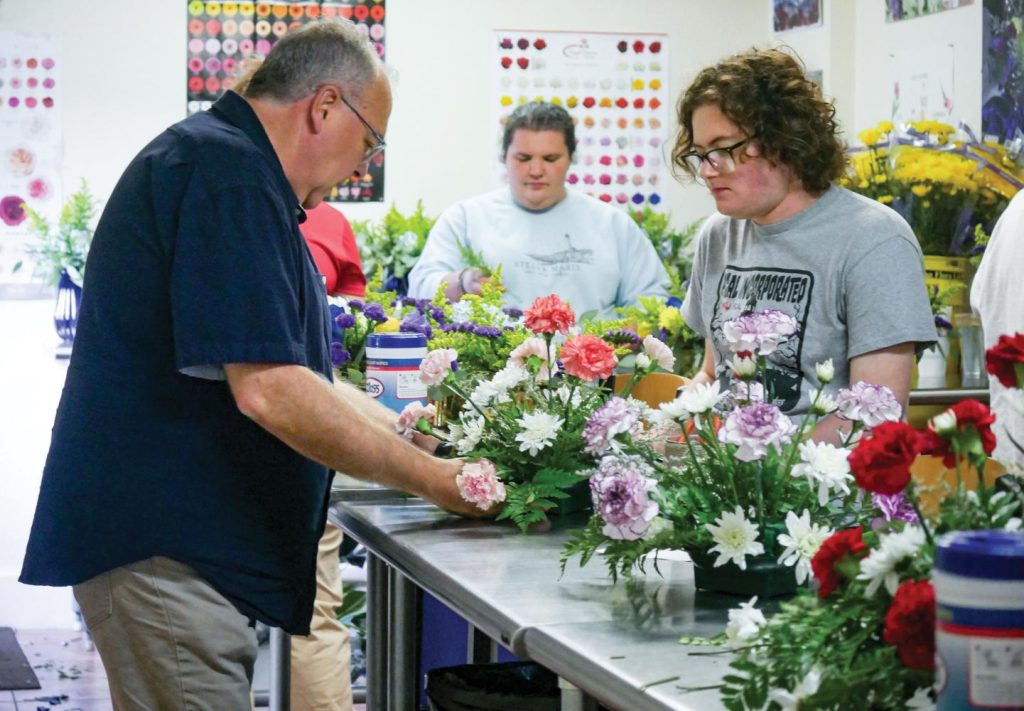
Junior Mattalyn Johnson from Alvaton, Kentucky, majoring in agriculture and historian of the SAIFD, said that the department does a lot of behind-the-scenes work tending to campus.
“If you’re at an event and you see an arrangement, we did those arrangements,” Johnson said, “and if you see anything thatís blooming on campus in the landscaping, we grew that as well.”
Dennis said the landscaping planted on campus is not grown in the FDTC. The greenery is grown in one of WKU’s three greenhouses, which are located three and a half miles away from campus.
Senior Joe Taylor from Scottsville, Kentucky, vice president of the SAIFD, specified the roles that the different horticulture classes play in providing WKU its landscaping.
“Crop production grows the flowers that are planted in the spring all across campus, while the operational maintenance class plants the fall flowers,” Taylor said.
Dennis said it is his students’ responsibility to tend to any plants grown in the greenhouse.
“It becomes their responsibility to make sure theyí’e taken care of,” Dennis said. “The students have a schedule where they go water once or twice each semester, depending on class size.”
Senior Ariel Wolfe from Borden, Indiana, president of the SAIFD, said that while both have advantages, there are many differences between the floral classes and the SAIFD.
“In the classes, you’ll learn the basics of floral design through American Institute of Floral Designers standards,” Wolfe said. “Through the SAIFD, you’ll actually design the flowers for any sort of on-campus event.”
Some of these on-campus events include centerpieces, wreaths, bouquets, boutonnieres and corsages, Wolfe said.
“If we send flowers to a funeral of a distinguished alumni or faculty member that passed away, we make a Big Red out of carnations,” Wolfe said. “So that’s something kind of different; we pretty much do it all.”
Taylor said that he’s always proud to see how prevalent the department’s impact on campus is.
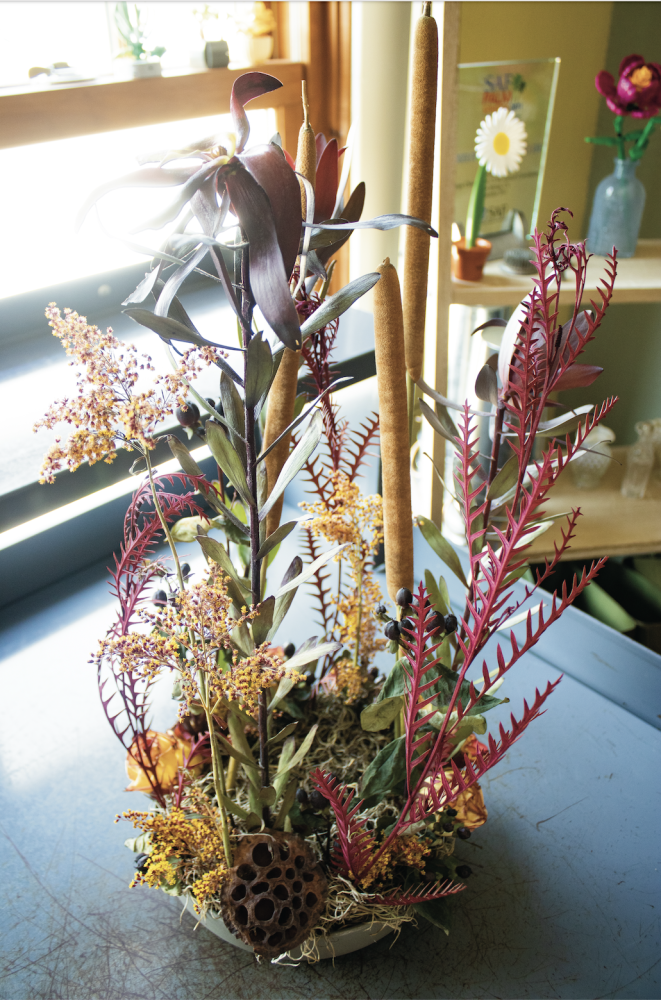
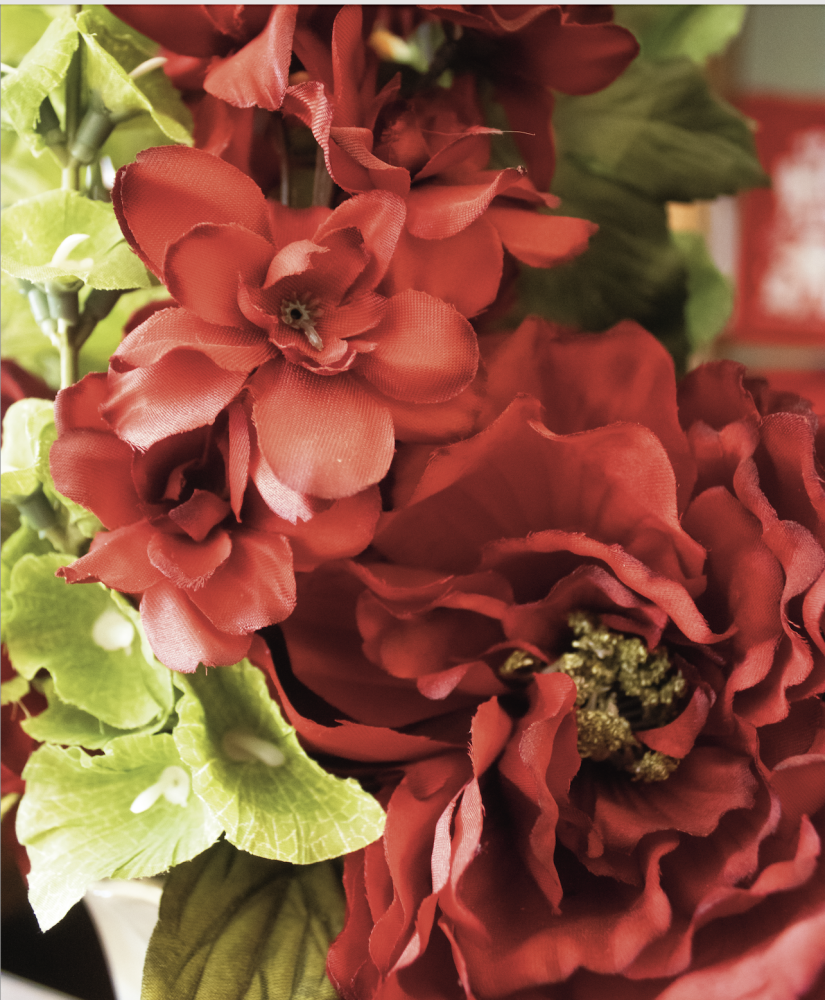
“There are several thousand plants that come to campus every semester,” Taylor said. “They’re everywhere, you just gotta look for them.”
Dennis said the SAIFD focuses on arrangements using only cut flowers, so if a student would like a more extensive understanding of floral design and horticulture, he said they should participate in the classes as well.
“That’s when you actually work with the flowers,” Dennis said. “You get to learn about the principles and elements of design and the different types of flowers that are available.”
Sophomore Madelynn Gripp from Louisville, majoring in agriculture and a member of the SAIFD, said she has many reasons why she enjoys being in the program and being able to share her designs with others.
“It’s a very welcoming environment,” Gripp said. “At events, people will go like ‘Look at that’ and I always get a boost, like, ‘Yeah, I did that.'”
Johnson said the program is a great way to learn, but another perk is the opportunity to add some creativity.
“This is the chance you have to design and think creatively and come up with something cool and unique,” Johnson said. “It’s just a really good community.”
Gripp said she enjoys the program because it sheds so much positivity on those who are not directly involved.
“I like making people happy,” Gripp said. “If anyone ever looked at a flower and said, ‘That makes me mad,’ then I wouldn’t know what to do. I don’t think I’ve ever met a person, besides someone with allergies, who dislikes flowers.”
Johnson said she has many examples of people who have had a great experience noticing the floral arrangements she made at events.
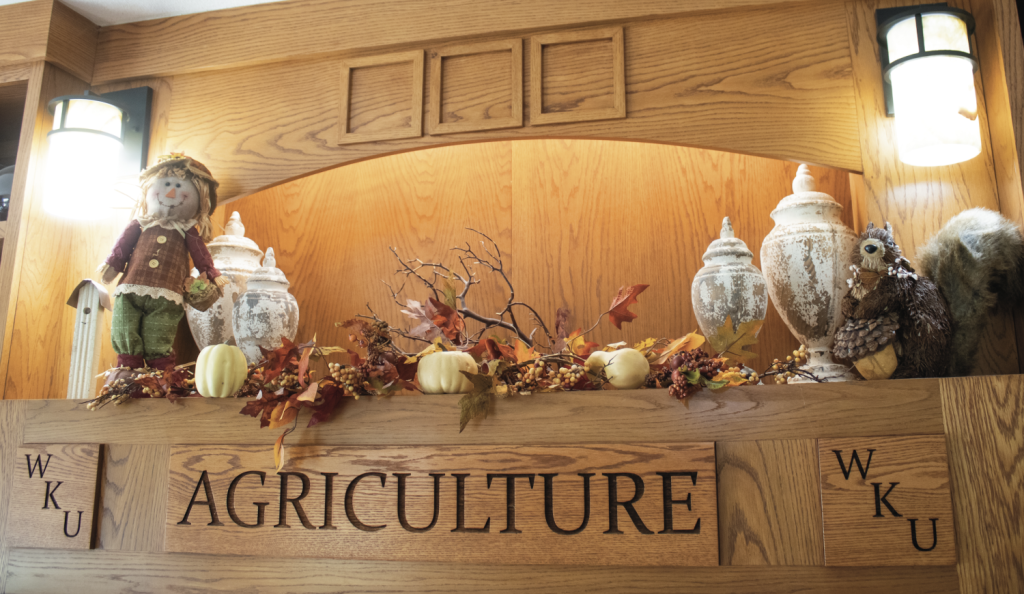
“I have friends that have walked around events where Iíve made the arrangements and complimented my work,” Johnson said. “It’s a really cool opportunity.”
Gripp said she aspires to be a florist, so she feels like the program is perfect for her.
“I want to do something artistic that can have a positive influence on people’s lives regardless of where you might come from or what your beliefs are,” Gripp said. “WKU makes that possible.”
Wolfe said that once students decide to take one floral design class, they often choose to take the rest as well.
“They end up taking all of them and joining the program because they love it so much,” Wolfe said. “We get a lot of compliments.”
Johnson said that even though there are many events to provide for, as well as things to learn in the classes, the members still find time to have plenty of fun in the building they’re in.
“We put on music and we laugh,” Johnson said. “We have a good time.”
Johnson also said that there are many ways that students can get involved in the department, whether they want to only help design the flowers through the club or join the classes to earn the floral design certificate.
“It’s open to anyone on campus, doesn’t matter what your major is,” Johnson said.
Wolfe said that many students who arenít majoring in agriculture still have fun participating.
“We get people from all majors that come and love arranging the flowers,” Wolfe said.
Despite the program’s inclusion with different majors, Taylor said that many students still remain unaware of its existence.
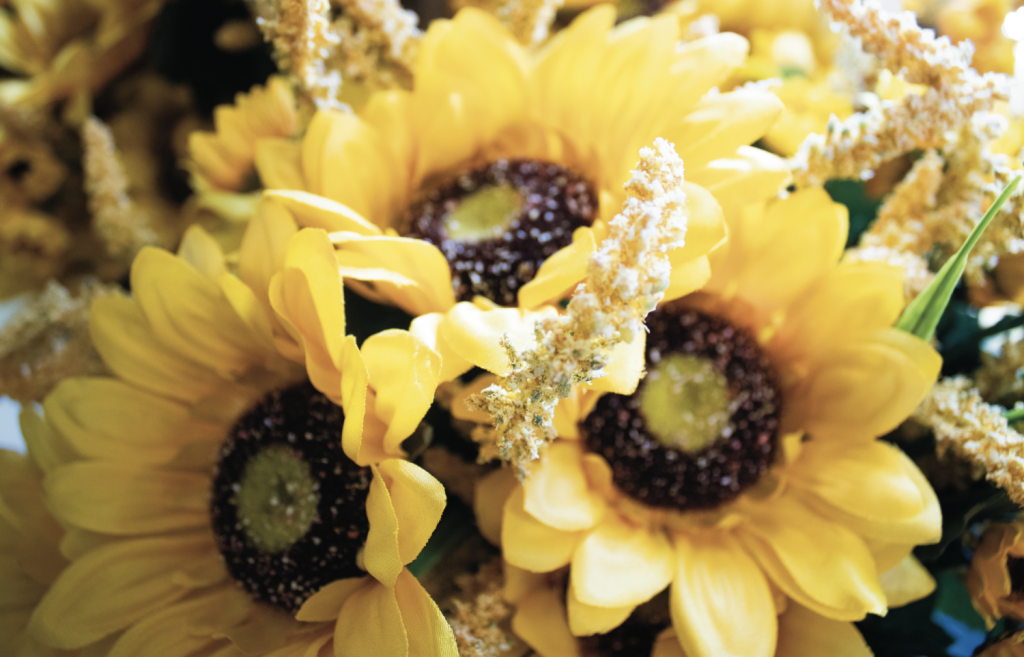
“I don’t think that thereís a large knowledge base of the program campus-wide,” Taylor said. “I’d one hundred percent like more students to join.”
Johnson said this unawareness is partially due to Dennis’s impressive instruction.
“Because we have that great guidance of Mr. Dennis, a lot of our designs don’t look like a student has made them,” Johnson said. “Unless someone told you, I don’t think you’d know.”
Gripp said that the low profile of the program is partially caused by the lack of conversation among the student body.
“I just donít think a lot of people mention it,” Gripp said. “I would like for more students to join.”
Johnson said that she still appreciates the opportunities that the department presents, even if it often goes unnoticed.
“Most of the time, nobody knows what’s going on or who’s behind the flowers, but I think it’s cool that the students in the program have that opportunity,” Johnson said. “It’s a good thing to feel that youíre doing something that other people see.”