


Redefining disability through exercise
Story by Faith Yonts
Photos by Gabriel Milby
Design by Emilia Lis
Editor’s Note: This article was originally released in Issue 19 of the WKU Talisman print magazine. Click here to read more articles from the Talisman’s semesterly print.
“Staying active is the one thing you can control,” senior Sydney Rettig said. “Even if itís just a little movement in a day, it can decrease your symptoms.”
Rettig said she believes that her foundation of exercise before becoming disabled helps her navigate the symptoms she faces each day. She said her disability is mainly invisible, like a lot of other students. Anyone you see could have a disability.

Rettig said she has experienced bias against her invisible disabilities firsthand. Rettig has neurocardiogenic syncope, chronic low magnesium and electrolytes, as well as sensory and auditory processing disorders.
According to the Mayo Clinic, neurocardiogenic syncope can be defined as “a sudden drop in heart rate and blood pressure leading to fainting.”
Rettig said she is prone to symptoms like dizziness, lightheadedness and having convulsions that range from small to debilitating. She said her convulsions make it look like she is seizing, but in reality, her magnesium, electrolytes, heart rate and blood pressure levels are all so low that she is fading in and out of consciousness.
Rettig said it is important for her to stay active with this chronic illness. In the past, she swam competitively for 12 years, did cross country and track for six years and musical theatre and show choir growing up. In college, she said she stays active by lifting, swimming and getting 10,000 steps a day walking to and from class. Rettig said that people often have trouble connecting what looks like a young, healthy person to chronic illnesses.
“People always say to me, ‘You’re so active! Thereís no way you can have these chronic conditions.’ But it can happen at any age,” Rettig said.
Rettig said she works at the Preston Center, where she sees all kinds of students exercising.
“People with disabilities are the most consistent gym goers I ever see, because we have to work so much harder than a typical person,” Rettig said. “I think there’s more of a drive to achieve our goals.”
Rettig said that to her, the word disability represents acceptance, love and compassion. They share a collective strength from fighting back against the stereotypes, she said.
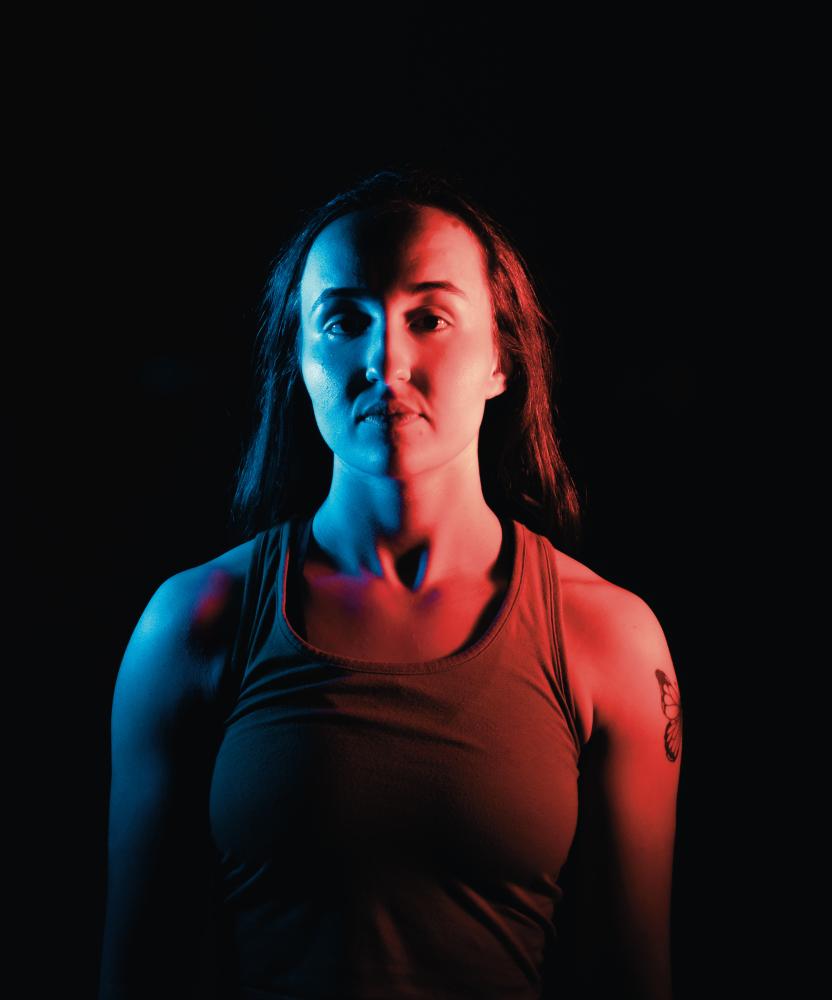
Rettig said she advocates for herself in the classroom because she doesn’t always have symptoms visible to her professors.
Rettig said she has an auditory processing disorder, so all the noises she hears tend to mush together. She said it takes her longer than other students to process the same information. This makes lecturing and note-taking more difficult, she said.
Each individual with chronic conditions has different needs and limitations. Peggy Crowe, as Director of the Student Accessibility Resource Center, helps provide students with disabilities the tools they need to thrive in the classroom.
“Imagine if every classroom was accessible, and that was the norm,” Crowe said. “Would it be a surprise then if a student needed an accommodation, one you might not even know about?”
Peggy Crowe helps many students receive accommodations as the SARC Director. Crowe said she has been working as SARC Director since 2020, and she meets with students to discuss what accommodations would be beneficial for them. She then prepares faculty notification letters that a student can send out to their professors as needed.
Crowe said that when a student with a less noticeable disability is requesting accommodations, their professors might ask more questions, implying that they are unsure if these accommodations are really necessary.
Crowe said that she serves more students with invisible disabilities, such as ADHD, learning disabilities or mental health conditions. Both groups face real challenges, and she said that oftentimes, the invisible disabilities are the hardest for others to understand and recognize.
Ray Mendoza is a junior who receives accommodations from SARC for the “bumps and bruises” he acquired over the 20 years he served in the military. Mendoza is 44 years old and earning his degree in UX design with diagnoses of generalized musculoskeletal and nerve damage.
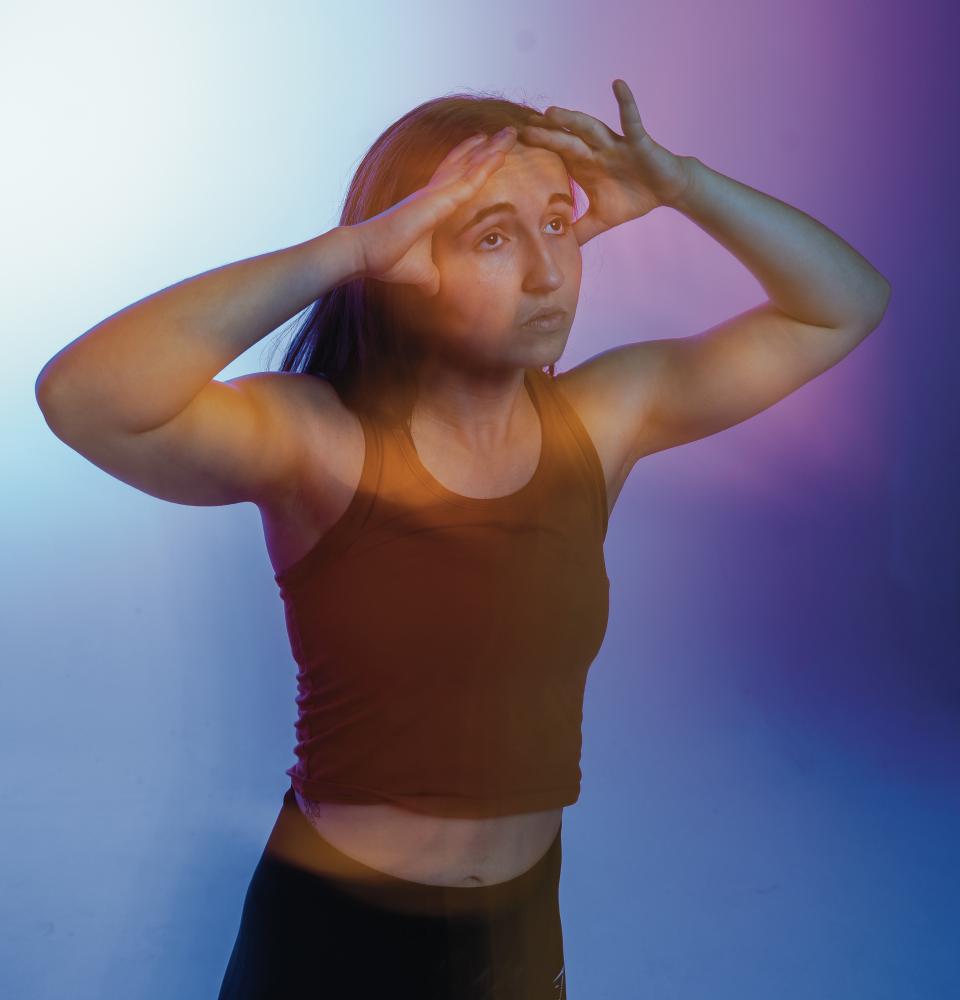
When he first arrived on the Hill, Mendoza said he was in pain, but he had always told himself to “suck it up.” Having served in the military combat arms for 20 years, he thought he had been through worse. He said he struggled to get to class and feel physically comfortable while attending. His mind was wandering towards the pain he was experiencing, and it was taking a toll on his studies.
Mendoza said he has a sit-to-stand desk, a desk riser and an ergonomic chair, a chair that is designed to promote good posture. When Mendoza needs to sit, the ergonomic chair is designed to make this more comfortable. When he needs to stand, he said he can move his desk riser up so he can view his computer at eye level. The accommodations Mendoza receives, he said, allow him to transition from sitting to standing as one or the other becomes too painful.
Despite receiving accommodations, Mendoza does not personally identify with the word disabled. He said that he struggles to identify with this word because of generational differences in what the word means.
“I have challenges I have to work with through every day,” Mendoza said. “With my condition, mobility is very important to me. I can’t sit too long, or I’ll be in pain. I can’t stand too long, or I’ll be in pain. If I don’t move enough, I’ll pay for it later.”
Mendoza said he parks in tier-two accessible parking near Downing Student Union and walks to and from his classes every day. This mix of walking, sitting and standing has proven effective for reducing his pain levels. Mendoza said that not moving at all would have the same effect as moving too much, so finding the right balance of movement is essential for pain reduction.
Junior Kaleigh Davis said she has fibromyalgia, a chronic widespread pain disorder, and Hemophilia A, a rare blood disorder where blood does not clot properly. She said these conditions impact her daily quality of life.

“I can’t go on a run anymore because I feel like it,” Davis said. “I can’t do colorguard. I can’t do any physical activity I enjoy, and if I do, I’m bedridden with pain for two days after.”
Davis said she was five when she was diagnosed with Hemophilia A. She said that without sufficient factor eight protein, individuals with the disease bleed more excessively and have difficulty stopping bleeding. Davis said her blood disorder led to her recent diagnosis of fibromyalgia.
After describing her severe pain to her hematologist, Davis said X-rays of her knees and elbows revealed that she had small pools of blood leaking into her joints, each about the size of a nickel. Her doctor said that these small leaks shouldnít be capable of causing so much pain.
Following several tests and appointments, Davis said she was diagnosed with fibromyalgia, which she said is easily misunderstood.
“I’ve been told everybody hurts, you just have to get up and fight through it,” Davis said. “But this is different from scraping your knee or pulling a muscle.”
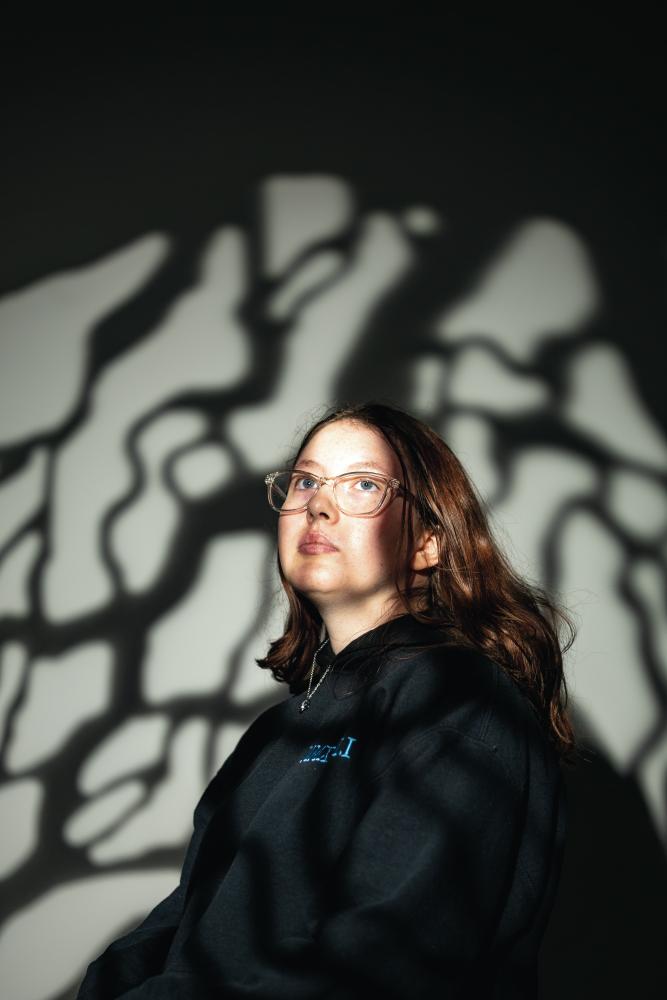
Davis said fibromyalgia has changed her life drastically. She said she was originally a biology pre-med major, but this proved to be too taxing for her body. Her major is now public health, which she said is more interesting to her and more accommodating for her pain since most of the courses are offered online. Davis said she does not receive accommodations from SARC because online courses allow her to work when she is feeling her best.
She said that light exercise helps reduce her pain levels. She said that gentle walking and lifting small weights have helped her fibromyalgia more than any of the medications she has tried. Each chronic illness is different, but a small amount of movement can greatly reduce symptoms and improve quality of life, according to the National Library of Medicine.
Crowe said that her students often carry a “deficit mindset” when it comes to the word disability. Crowe said she is drawn to helping students overcome barriers. She said the best part of helping students is seeing them realize that with the right support, they can truly thrive at WKU.
For sophomore Kasey Cook, exercise has changed his condition entirely. Cook said his condition consists of muscle spasms and pain as a result of a serious car accident he had in 2023. He said spasms started about eight months after his initial wreck.
Cook said his first spasm in 2024 was painful and frequently came and went for about a week. Back when they started, his spasms were more intense and happened more frequently. He said he would have to sit down until they passed. Now, Cook says he has a back spasm about every three months, which he can usually power through since they are less painful than before.

He said his condition does not interfere much with his life as a student. With lots of physical therapy and exercise, Cook said his condition has improved a lot.
“The more active I am, the less my condition shows up,” Cook said.
Consistent physical activity improves disease outcomes and boosts the overall quality of life for those with chronic illnesses, according to an article on the NLM.
Cook said he is still recovering two years later, but experiences more of a mild discomfort as opposed to the intense pain he used to feel.
Rettig said that advocating for yourself can be hard at times, but by doing so, she has actually helped others who are too afraid to speak up for themselves. By speaking up, Rettig made the classroom more accessible for herself and everyone else.
“In order to make classrooms more accessible, we need to understand that accessibility and disability are a scope,” Rettig said. “They’re not just one stereotypical thing.”